
GLOBAL FUND OVERSIGHT TEAM ENGAGES GULU DISTRICT ON HEALTH PROGRAMME GAPS
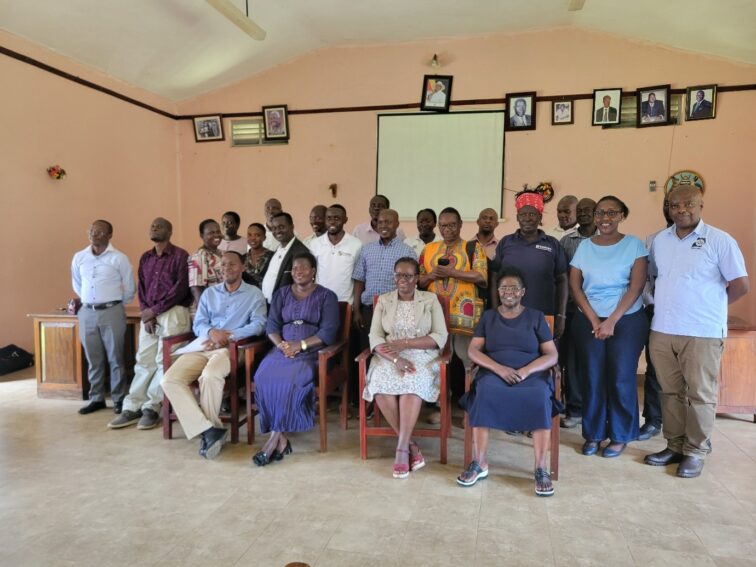
Stakeholders pose for a photo after an interactive session at Gulu district council hall Photo (By Biko Rombe)
By Biko Rombe
Gulu City
A Uganda Coordinating Mechanism (CCM) delegation overseeing Global Fund-supported programmes has identified gaps in health service delivery in Gulu District, including staffing shortages, limited access to quality care, inadequate community engagement and challenges affecting HIV treatment outcomes.
The delegation, led by CCM board member Immaculate Owomugisha, held an engagement with Gulu District officials and Global Fund implementing partners at the Gulu District Council Hall on September 1st before visiting Gulu Regional Referral Hospital and Awach Health Centre IV to assess service delivery and the impact of Global Fund-supported interventions.
Owomugisha, who represents people living with HIV on the CCM board, said the mechanism brings together government, civil society, the private sector, donors, UN agencies and other partners to oversee Global Fund-supported HIV, TB and malaria programmes.
She said the delegation was in Gulu to assess how Global Fund resources were being allocated and utilised, whether implementing partners were delivering on their programmes, and how well the district was coordinating the interventions.
She said the exercise was also intended to assess progress as Uganda closed the current funding cycle and prepared for the next 2027–2030 Global Fund funding cycle.
The delegation reviewed activities implemented through the Ministry of Finance and Ministry of Health, with TASO serving as a civil society implementing partner and organisations including Malaria Consortium, CEHAT and other community-based organisations implementing specific interventions.
Among the achievements presented to the delegation was support by Malaria Consortium through the SUMA project in 19 health facilities. The programme had reached 3,350 of a target 4,694 Village Health Teams, representing 71 percent coverage, while 25 midwives and one doctor had been trained in malaria in pregnancy, achieving the set target.
Community interventions supported through the Global Fund also included human rights dialogues involving duty bearers, law enforcement, the judiciary, legal leaders and health workers.
Seven community-based organisations had been supported to implement HIV prevention, TB, gender and human rights interventions, while mobile legal aid camps had been conducted for key populations and people living with HIV.
However, partners and district technical teams also presented several challenges affecting implementation.
These included inadequate HMIS tools, commodity shortages, transport limitations, staffing gaps and limited supervision of private health facilities and drug shops.
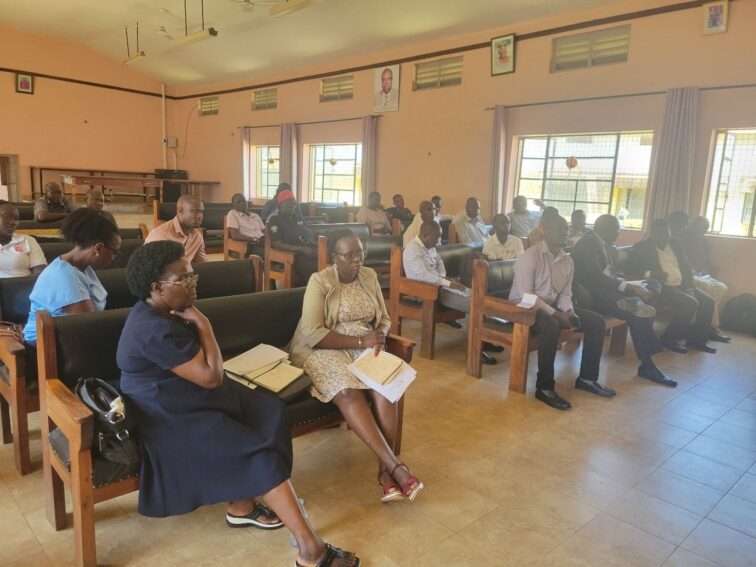
The different stakeholders while at an engagement with leaders and officials
HIV programme faces adherence and staffing concerns
The HIV programme reported concerns over adherence counselling, understaffing and other factors contributing to poor viral suppression.
Approximately 3,000 people were receiving HIV treatment in the district, with Awach Health Centre IV serving about 1,200 clients.
Uganda Cares was reported to be supporting HIV services at Gulu Regional Referral Hospital and Awach, including through two additional staff.
The chronic care model at Awach was highlighted as an approach that had helped organise HIV services, while Gulu Regional Referral Hospital had a dedicated clinic for key populations.
The district also called for additional Global Fund support for mapping key populations to improve access to services.
The delegation further heard concerns that stigma, confidentiality and safety within integrated services could discourage some people from accessing HIV services or contribute to treatment interruptions.
TB contact tracing records strong performance
Gulu District TB focal person Ojok Jacob reported that between January and June 2026, the district diagnosed 113 pulmonary bacteriologically confirmed TB cases.
All 113 patients had their contacts traced, identifying 856 contacts.
Of those, 851 were screened for signs and symptoms of TB, representing 99 percent coverage.
A total of 214 contacts had TB symptoms, while GeneXpert testing identified 10 additional TB cases, representing a 4.6 percent yield.
Of 594 eligible contacts, 588 were initiated on TB preventive therapy, representing 99 percent coverage.
Malaria remains leading OPD burden
Assistant District Health Officer for Environmental Health Yoweri Idiba said malaria remained the leading burden at outpatient departments, accounting for about 33 percent of OPD attendance.
He said malaria in pregnancy and among children remained major concerns, alongside socio-cultural practices, poor housing conditions and environmental challenges.
District highlights financing and human-resource gaps
District officials said limited local revenue was restricting their ability to directly finance health activities.
The district reported receiving only about 2.7 million shillings in local revenue during the previous financial year and said it largely depended on central government funding and in-kind support from partners.
The district said its main contribution to partner-supported programmes was human resources and participation in district-led implementation.
Officials also called for consideration of direct financing to districts, saying it could complement government and partner support.
They identified limited access to quality services, challenges associated with subcontracting health centers, poor community willingness to support programmes and severe human-resource shortages as major constraints.
Responding to the issues raised during the engagement and the facility visits, Owomugisha said the delegation had taken note of the gaps and would use the findings in discussions around the next funding cycle.
She acknowledged challenges affecting access and quality of services and said the concerns surrounding implementing partners and subcontracted facilities needed further attention.
Owomugisha also highlighted human-resource shortages as a serious issue affecting service delivery.
She said the issue of direct funding to districts would be followed up with the Minister of Health to establish how districts could be supported and what financing arrangements could be used.
On community participation, she said the poor willingness of some communities to support health programmes pointed to the need for stronger awareness and engagement, particularly in addressing social and cultural barriers.
She said the delegation would continue engaging implementing partners, including community-based organisations, through focus group discussions to obtain a clearer picture of challenges faced at community level.
As Uganda prepares for the 2027–2030 funding cycle, Owomugisha said the concerns raised during the Gulu oversight exercise would be taken into consideration as the CCM and other stakeholders discuss future priorities and funding allocations.
Upcoming on 90.9 FM
Upcoming on 94.5 FM
Upcoming on 101.4 FM
Upcoming on 104.8 FM






Comments
This post currently has no comments.