
ACTION REQUIRED TO COMBAT RISING TEENAGE PREGNANCY – OFFICIALS SAY

SIHA Network officials addressing the community of Olumini Cell, Driwala Ward, Ayivu Division in Arua City, in one of the community dialogues (All Photos by Onzoma Albert)
By Onzoma Albert
Arua City
Arua City is facing alarming teenage pregnancy crisis, with rates at 37%, significantly higher than Uganda’s national average of 24%. The root cause is largely due to lack of Sexual and Reproductive Health and Rights (SRHR) knowledge among teenagers.
During a community dialogue under SIHA Networks’ one-year Safe Choices, Strong Voices project—implemented in Arua City and Yumbe district—these issues were prominently discussed, especially concerning teenage mothers aged 14-19 years.
Several structural and social barriers contribute to this crisis. Many adolescent girls and young women are uninformed about their sexual health through comprehensive, age-appropriate education.
Kevin Inzikuru, a program associate with SIHA Network, explains that peer mentors have been recruited to help teenage mothers and girls improve their SRHR knowledge in Arua City and Yumbe district, aiming to mitigate the rising teenage pregnancy rates.
“We recruited six peer mentors in Arua City and Yumbe district that we work with under the project that have been trained to mentor and help the 40 teenage mothers we are working with and the young girls through sexual reproductive health rights” she said.
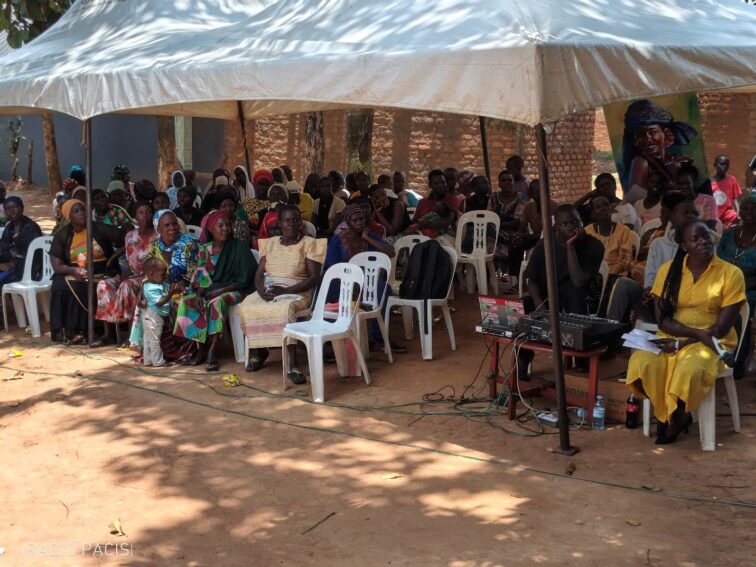
Teenage mothers and their mothers attending the community dialogue organized in Ociba trading center in Arua City.
Stigma, shame, and fear of community or parental backlash discourage open discussions about SRHR. Up to 67% of youth in the region are unaware of existing health and legal referral pathways, highlighting a critical gap in awareness.
Centenary Driciru, the Arua City Community Development Officer in-charge of Ayivu Division, acknowledges these issues and praises SIHA’s support for government efforts. She encourages teenage mothers to form groups to benefit from government programs.
“As Arua City we are willing to support the teenage mothers with the various government programs, I am requesting them to form groups and make themselves known to the department of community service so that we target them for support,” she said.
Many local health facilities lack youth-friendly services, with healthcare providers often displaying negative attitudes, insufficient privacy, or confidentiality concerns. Such shortcomings deter teenagers from seeking reproductive health services.
Edna Anguparu, a teenage mother, attributes the surge to parental neglect of failing to provide sex education to children, urging teenagers to obey their parents.
“My advice to the teenage mothers is that if there is still a chance let them go back to school and adolescent girls should as well remain in school, accept what their parents are giving to them in order to remain in school to have a brighter future ahead of them,” she said.
Rebeca Tabu, the Lugbara Kari deputy minister of gender, labor, and social development, calls on parents to provide proper sex education to their children.
“The parents don’t teach their children and have forgotten how they were taught, give time for their children and don’t fully take their responsibilities, As Lugbara Kari we are saying that parents give time and education to their children to overcome rampant teenage pregnancy cases” she said.
Harmful social norms, traditional practices, early marriages, family neglect, and high school dropout rates further increase vulnerability among young girls in the West Nile region. Local leaders emphasize the urgency of coordinated community interventions to dismantle these barriers.
Midwives and gynecologists advocate for proactive, community-based preventative measures and a shift toward non-judgmental, youth-friendly services.
Leaders from cultural and faith groups are urged to implement grassroots programs targeting harmful practices and promoting positive behavioral change.
There is a shared recognition that parents must break taboos surrounding sex education and actively guide their children to address this pressing issue effectively.
Upcoming on 90.9 FM
Upcoming on 94.5 FM
Upcoming on 101.4 FM
Upcoming on 104.8 FM


















Comments
This post currently has no comments.