
NYIO TRADING CENTER AND MARKET GRAPPLES WITH SANITATION ISSUES
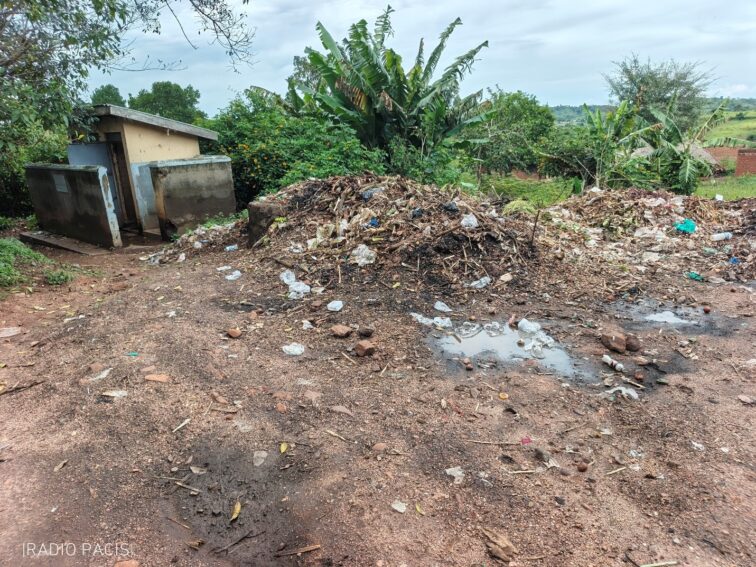
The current state of waste management, sanitation facilities and situation at Nyio Market (All photos by Onzoma Albert)
By Onzoma Albert
Arua City
Nyio Trading Center and Market, in Vurra Town Council, Arua District, is experiencing significant operational challenges primarily due to poor waste management and insufficient sanitation infrastructure. As a key hub for produce and livestock trading that attracts traders from the West Nile region and cross-border traders from the Democratic Republic of Congo (DRC), the market has seen a rapid increase in visitors that far exceeds its basic structural capacities.
The core sanitation issues include the absence of designated garbage skips, routine waste collection services, and waste segregation mechanisms. This situation results in indiscriminate dumping of waste, leading to the accumulation of organic and plastic waste heaps, which pose health risks to the community.
Dickson Ayikobua, a community member appealed to Vurra Town Council authorities to address these sanitation concerns to prevent outbreaks of hygiene-related diseases.
“We have a lot of challenges that we are facing in this place in terms of general sanitation of the trading center and market which is alarming, I think if the issue is not addressed timely in the near future we may experience serious health related infections in this area” he said.
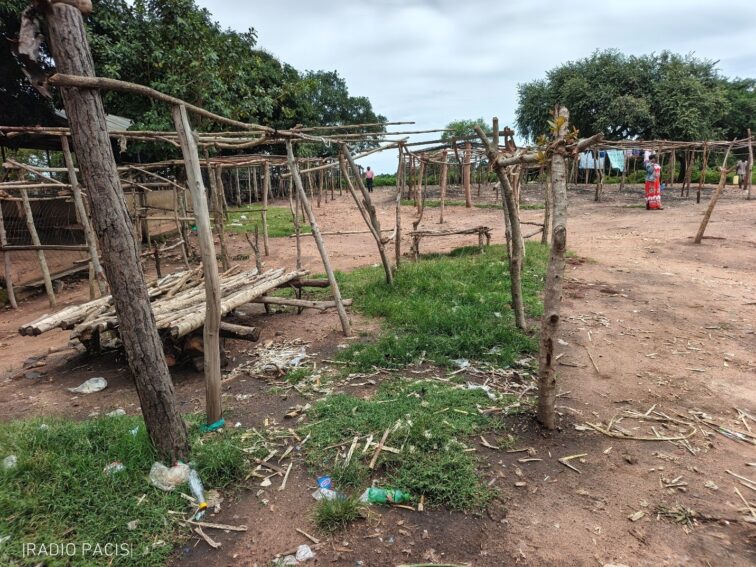
The current waste management situation in the market which has not been maintained routinely by the tenderer of the market.
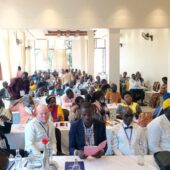
Fridah Lekuru, a project officer working with CEFORD under the SEAT project, explained that the project aims to strengthen democracy by amplifying grassroots voices and promoting transparent public reporting, thereby encouraging administrative improvements.
“This community engagement is a citizen led engagement for accountability by the duty bearers and the other of the project and engagement today is to provide a platform for the citizens to interact and discus freely with duty bearers whereby we had a number of issues raised by the community members, one of the prominent issues that featured during the engagement was the sanitation and health status of Nyio trading center and market where the health assistant responded on some of the issues raised” she said.
In response, Mildred Ayikoru, the health assistant of Vurra Town Council, acknowledged the existing challenges and urged traders and community members of Nyio to take responsibility for the waste they generate, while the health department explores options to improve sanitation.
“We have agreed with the market communities that they are going to start cleaning the market immediately after the market day, we shall as well conduct routine sanitization in the market to ensure that each and every trader collects the garbage they have produced while selling items for us to properly manage the waste generated from the trading center and market properly” she said.
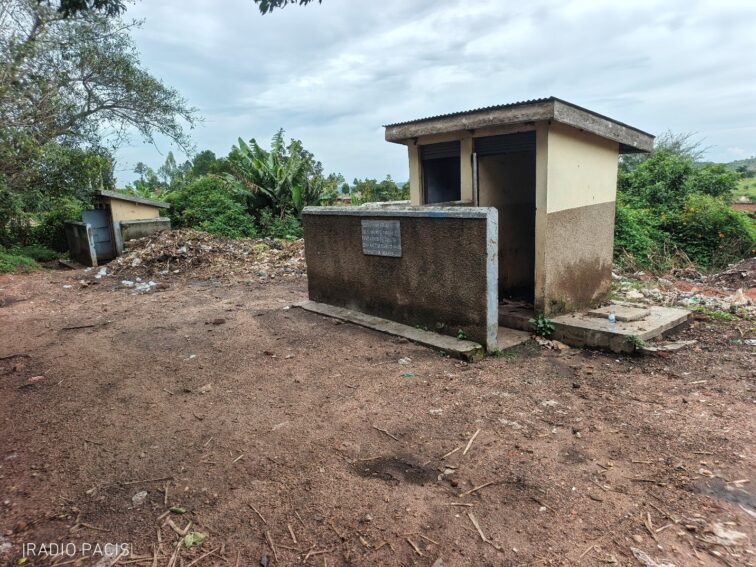
Poorly managed waste and dilapidated sanitation facilities at Nyio Market in Vurra town council, Arua district.
Despite the payment of regular market dues—standard daily and weekly fees—traders and vendors expressed frustration during a community Barraza organized by CEFORD’s SEAT project. They complained that little of the collected revenue is reinvested into essential services like drainage, market maintenance, or garbage collection. The market also lacks sufficient access to clean, public latrines and continuous-running water, creating health hazards for hundreds of vendors and buyers weekly. The accumulated waste often washes into nearby waterways or clogs drainage pathways, causing foul odors and stagnant water that serve as breeding grounds for disease vectors.
To address these issues, local leaders, traders, and environmental partners are exploring models similar to those used in other parts of Arua. These include establishing sanitation committees or brigades among vendors to manage daily cleaning schedules and advocating for the transparent allocation of a portion of market revenue towards waste transport and latrine maintenance.
Additionally, there are proposals for localized recycling or composting initiatives—similar to pilot programs under the Mayors Migration Council or urban poor initiatives—to transform organic waste into valuable products like compost or paving materials.
These efforts aim to improve hygiene and sanitation standards at Nyio Trading Center, thereby safeguarding public health and enhancing the market’s functionality and sustainability.
Upcoming on 90.9 FM
Upcoming on 94.5 FM
Upcoming on 101.4 FM
Upcoming on 104.8 FM
















Comments
This post currently has no comments.