
TIDY TOWNS VERSUS DIRTY COMMUNITIES: WHERE EXACTLY IS THE GARBAGE?
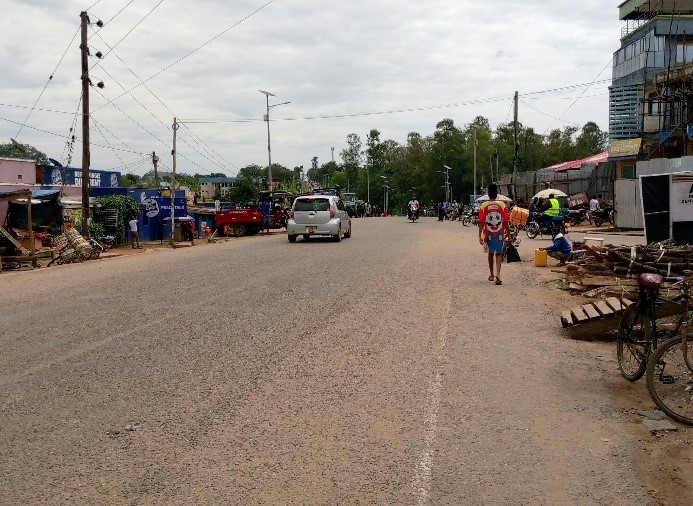
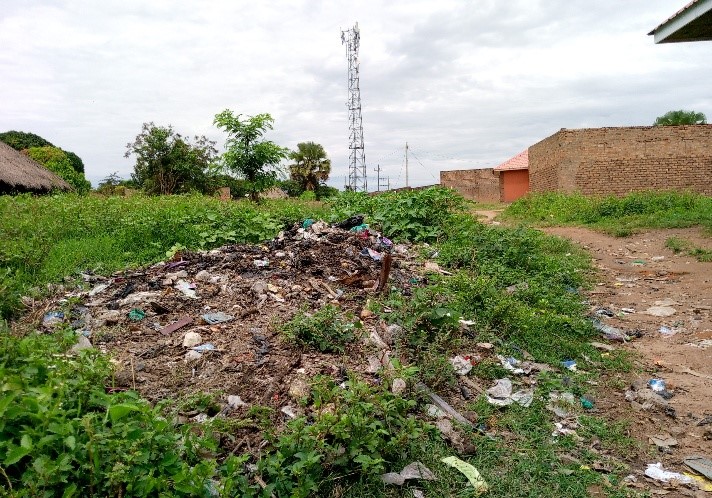
Left; a street at Yitia trading center after the third national cleaning exercise. Right; a pile of garbage on a street in Ewanyapa cell. Photo//Erema
By Erema George
Arua City
Three months into the mandatory national cleaning exercise since its roll out in July this year, the activity has picked a tremendous turn in improving the general appearance in many urban centers, towns and trading centers with residents appreciating the government for the initiative.
However, as the exercise progresses, concern has shifted towards the cleanliness of the deeper communities and homesteads, with many arguing that the activity has been misunderstood as much of the focus is on the centers while homes and the surrounding communities are being neglected.
Henry Baiga, a resident of Ewanyapa cell in Komite ward Ayivu Division in Arua city says the significance of the initiative has not been met due to wrong perception believing that more sensitization would change the mindset of the people.
“The idea was to have a national cleaning everywhere from the grassroots, the families, up to now outside the towns, trading centers and everywhere. It has been moving well but the biggest challenge is many community members think the national cleaning is supposed to be at towns, the trading centers; you will find that at the grassroots, people do not focus so much on that, they think it is only for town centers.” Baiga noted.
“I believe we need more sensitization especially the LC I’s must take it up with support from the RDCs, RCCs, and Mayors then we start from homes because our homes can’t be dirty then we believe that the towns can be well,” he advised.
In its scope of work, the national cleaning day targets Residential Areas with focus on household waste management and cleaning immediate compounds and neighborhoods, access roads extending to Commercial and Market Spaces, Public Infrastructure, Waste Transportation and Disposal.
While trading centers, towns and the city center in Arua received positive turnout for the cleaning exercise during the third national cleaning day, most of the streets of Ayiko, Oruvu, Ewanyapa and Mission cells within Ayivu division in Arua city remained untouched with piles of garbage seen on the streets, roadsides, and homes reflecting inadequate emphasis on the grassroots significance of the exercise by the responsible stakeholders.
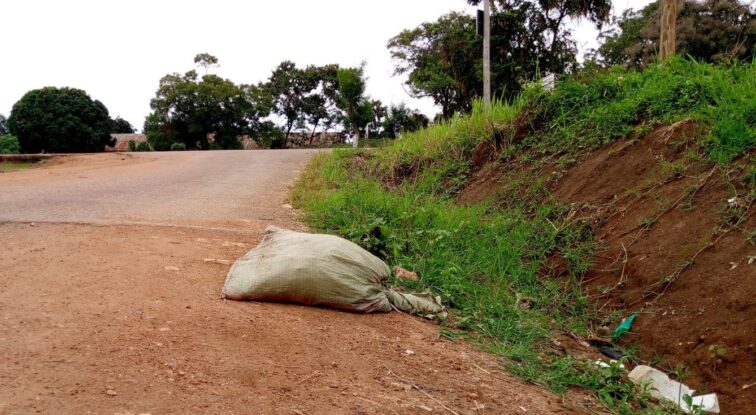
A sack containing garbage dropped along the roadside night before national cleaning day remains stuck on the streets after three hours of cleaning last Saturday. Photo//Erema.
Oluru Josephine, a health worker residing in Ayiko Cell, Alivu Pajulu ward in Ayivu division Arua city says, the concept of the exercise has not been understood by the community;
“They (community) have not understand the concept of this national cleaning day, you are supposed to start this cleanliness from your own environment.it starts from your home but you can’t do it alone, it’s like teamwork. You have start in that environment or that community you come from, together for your own safety, you do it in a group but it will benefit you as an individual,” Oluru lamented.
Meanwhile Douglas Munguchi, the vice local council I chairperson of Oruvu cell in Alivu Pajulu ward acknowledges the gap blaming it on the variation in perception by the community members.
He spoke to radio Pacis after the cleaning exercise at Yigatia Trading Center in Ediofe, “We cleaned the roadsides, the sanitary areas and we dug the rubbish pit and we are now happy. Our environment is now clean, our center is also clean and we also encourage people at homes to also do the work, not only to focus at the center but you know there are some people who take time to understand,” Munguchi stated.
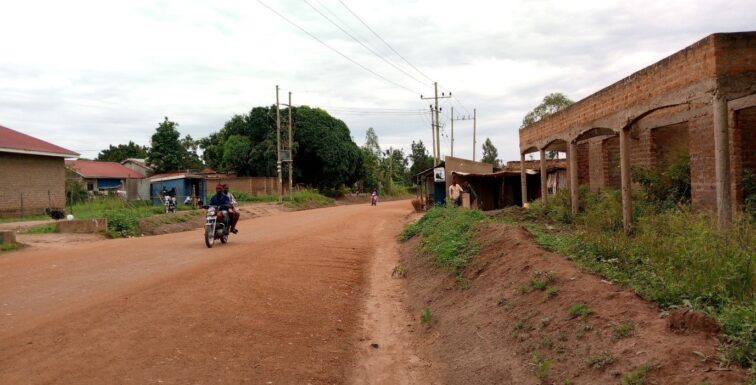
A murram road leading to Yigatia trading center after the national cleaning exercise. Photo//Erema.
The purpose of Uganda’s National Cleaning Day initiative is to improve public health, promote environmental sanitation, and foster a collective civic responsibility for clean surroundings.
Dirty homes and unclean communities cause about 24% of the global burden of disease and millions of premature deaths each year due to preventable environmental risks according to World Health Organization (WHO).
In Uganda, poor sanitation, hygiene, and dirty home environments cause up to 75% of the entire national disease burden. The vast majority of these illnesses are completely preventable and stem from inadequate Water, Sanitation, and Hygiene (WASH) services.
Major health impacts in the homes include respiratory illnesses, household air pollution, physical injuries and infections and major health impacts in the Community include Diarrheal Diseases, Vector-Borne Diseases, and Neglected Tropical Diseases among others.
According to reports from the Uganda Ministry of Health, the Economic Policy Research Centre (EPRC), and UNICEF Uganda, the health and economic consequences are severe and the mandatory monthly National Cleaning Days initiative was directly tailored to tackle Uganda’s 75% preventable disease burden.
During the launch of the program in July 2026, Prime Minister Robinah Nabbanja explicitly cited this statistic, stating that the campaign’s primary target is eradicating conditions like malaria, diarrhea, and typhoid, which thrive due to poor public hygiene and environmental neglect and ignoring the grassroots could mean continuous health burden in the country.
Upcoming on 90.9 FM
Upcoming on 94.5 FM
Upcoming on 101.4 FM
Upcoming on 104.8 FM




Comments
This post currently has no comments.