
LOCAL GOVERNMENT COMMISSION TO REWARD TOP LOCAL REVENUE COLLECTORS
URN
The Local Government Finance Commission will reward the 10 best-performing local governments in revenue management as part of efforts to increase locally generated revenue to Shillings 1 trillion by the end of the 2028/2029 financial year.
The awards will recognise local governments that excel in revenue collection, allocation and expenditure, while encouraging others to improve their performance.
Total local revenue collections have increased from Shillings 256 billion in the 2020/2021 financial year to Shillings 443 billion in the financial year ended June 2026.
The figure rises to about Shillings 491 billion when outstanding amounts owed by government agencies are included.
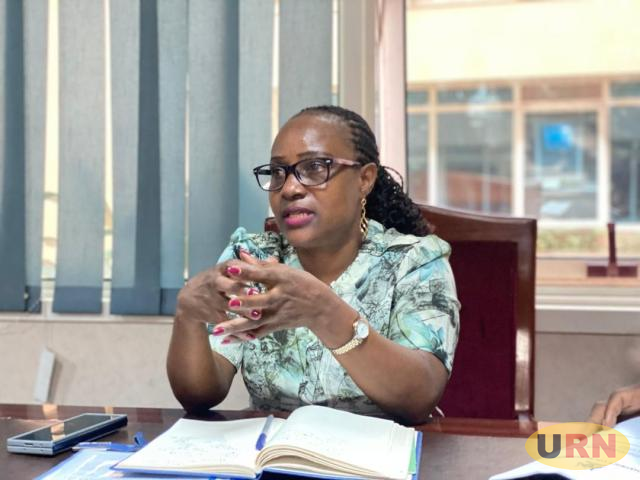
LGFC Vice Chair, Mariam Nalubega
Mariam Nalubega, the Vice Chairperson of the Local Government Finance Commission, says a survey conducted by the Commission found gaps in both revenue collection and expenditure. While some local governments collect revenue but misuse it, others fail to spend the money, even when it is available.
She says the Commission also found local governments that collect and utilise revenue appropriately.
Nalubega says the Shillings 1 trillion target is achievable if local governments enforce trade orders, digitise revenue management and curb political interference in revenue collection.
The Commission will hold the On-source Revenue Mobilisation Conference on October 15, bringing together local government leaders, ministries, departments and agencies, development partners and representatives from other sub-Saharan African countries.
The 10 best-performing local governments will receive awards at the conference. Nalubega says the recognition is intended to encourage better performance because the Commission has no mandate to penalise local governments that fail to meet their revenue targets.
Many local governments struggle to generate enough revenue to sustain their operations and continue to rely heavily on transfers from the central government.
This has fueled calls for the government to stop creating new administrative units, including districts, municipalities and cities, to contain public administration costs.
However, Fred Endema, the Commission’s Senior Manager for Revenue and Research, says local governments are collecting far less than their potential.
He cites the low number of local service tax payers compared with those registered for Pay As You Earn (PAYE) by the Uganda Revenue Authority.
According to Endema, the number of local service tax payers is less than a third of the PAYE register, despite the two taxes applying to many of the same people.
He also points to royalties from natural resources extracted within local government jurisdictions, which he says are not always remitted to the respective local governments.
Endema says the Commission is focusing on training local government revenue administrators and engaging central government ministries and agencies responsible for natural resources to ensure local governments receive their rightful royalties.
He identifies limited administrative capacity and inadequate knowledge of the law as major obstacles to improved revenue collection.
Legal restrictions on trade licensing have also raised questions about the revenue sources available to local governments.
In 2017, the Uganda Law Society petitioned against Kampala Capital City Authority over the licensing of law firms.
In 2020, the High Court quashed the trade licensing instrument, ruling that specific laws governing the legal profession take precedence over general trade licensing requirements.
The Law Society had argued that its members already paid regulatory fees to the Law Council of Uganda and that requiring them to obtain trading licences amounted to double taxation.
The ruling raised concerns about potential revenue losses if other professional bodies sought similar exemptions.
However, Adam Babale, the Secretary of the Local Government Finance Commission, says an understanding reached with the Solicitor General allows local governments to issue operational permits for a fee under the Local Governments Act.
Upcoming on 90.9 FM
Upcoming on 94.5 FM
Upcoming on 101.4 FM
Upcoming on 104.8 FM
















Comments
This post currently has no comments.