
MUTU SICKLE CELL INITIATIVE UGANDA LAUNCHES SCHOOL AWARENESS CAMPAIGN IN GULU
By Odong Stephen
Gulu
Mutu Sickle Cell Initiative Uganda, a non-governmental organization based in Gulu City, has launched a school-based sickle cell awareness campaign aimed at improving understanding of the disease among learners, teachers, parents and the wider community.
The campaign was launched at Gulu Town Primary School on Monday, October 26, 2026, with learners and teachers receiving information about the causes, symptoms, prevention of complications and management of sickle cell disease.
The initiative seeks to address widespread misconceptions, stigma and discrimination against people living with the condition, particularly children in schools.
According to the organisation’s Executive Director, Acibo Fiona Mary, the campaign was inspired by the limited knowledge of sickle cell disease in the community and the challenges faced by people living with the condition.
“What inspired me to start this initiative is the fact that many people are not aware of what sickle cell disease is. Today, we officially launched the campaign at Gulu Town Primary School, where only one pupil out of 1,500 knew what sickle cell disease was. This is alarming and shows just how little people know about the condition,” she said.
Acibo explained that a lack of awareness contributes to stigma, discrimination and isolation, leaving some children living with sickle cell disease feeling excluded from school activities and social interactions.
She said educating children from an early age would help them develop empathy for their peers and grow up with the knowledge needed to make informed decisions about their health and future relationships.
“Our goal is to ensure that everyone knows about sickle cell disease, just as many people are now familiar with HIV. We want children in both primary and secondary schools to understand what sickle cell disease is, how it affects people and how its impact can be reduced in the years to come,” she said.
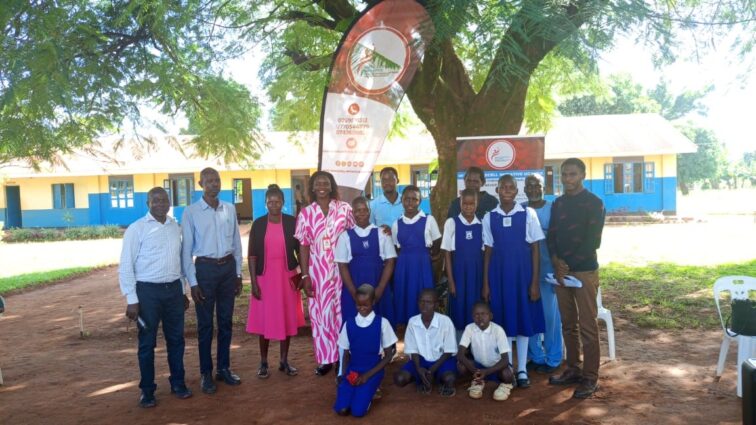
Mutu Sickle Cell Initiative ED Acibo Fiona Mary in long pink-white dress with some few staff members and learners at the launch of the campaign
Two-year campaign to reach schools across Gulu
Achibo said the initiative is planned to run for two years, during which the organisation hopes to reach schools throughout Gulu City and Gulu District. If all schools cannot be reached within that period, the organisation will consider extending the project.
Gulu Town Primary School is the first beneficiary of the campaign. The organisation also plans to establish Mutu Sickle Cell Stars Clubs in schools to sustain awareness activities beyond the initial training sessions.
Through these clubs, learners will be encouraged to share information with their classmates, families and communities while promoting acceptance and support for people living with sickle cell disease.
Acibo said the campaign is also intended to help children understand that sickle cell disease does not prevent affected learners from studying, participating in school activities or building meaningful relationships.
“Some children living with sickle cell disease believe they cannot study or live like other children. Some may even fear that they are going to die because of their condition,” she said.
“By educating students and helping them understand sickle cell disease, we hope they will accept and support their peers. They will learn to show empathy, provide care and treat everyone with dignity and respect.”
Acibo called on teachers and parents to encourage children to undergo sickle cell screening and urged families to seek reliable information from healthcare professionals.
She said her advocacy is driven partly by personal experience, having witnessed her brother live with sickle cell disease for 19 years.
She added that managing sickle cell disease can place a significant financial burden on families, making awareness, early diagnosis, appropriate care and community support especially important.
Medical expert calls for screening and improved diagnostic services
Dr. Gabriel Okurut, a final-year medical student at Gulu University who facilitated the educational sessions, explained to learners that sickle cell disease is an inherited condition affecting hemoglobin, the protein in red blood cells responsible for carrying oxygen throughout the body.
In people with sickle cell disease, red blood cells can become rigid and sickle-shaped. These cells may block blood vessels, reducing blood flow and oxygen delivery to body tissues. This can cause episodes of severe pain and other complications, including stroke and damage to bones and joints.
Dr. Okurut said awareness is particularly important because sickle cell disease is inherited and can occur when a child receives disease-causing hemoglobin variants from both parents.
Dr. Okurut emphasized the importance of knowing one’s sickle cell status and understanding a partner’s status when making reproductive decisions.
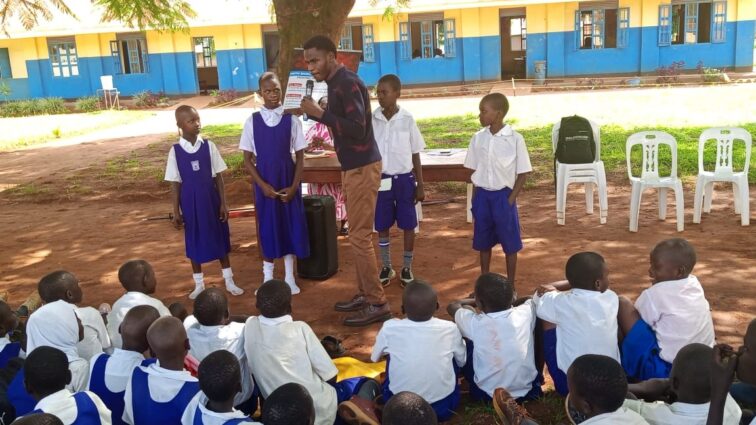
Dr. Okurut, medical student at Gulu University conducting a demonstration to learners
He also called for expanded screening services, particularly newborn screening, to enable early identification and appropriate management of the condition.
“Children should be tested for sickle cell disease as soon as possible after birth. Newborn screening should be made a priority so that the condition can be identified early and managed appropriately,” he said.
He encouraged couples to seek genetic counselling and screening before marriage or starting a family so that they can understand the possible risks and make informed decisions.
Dr. Okurut also called on the government and other stakeholders to strengthen diagnostic capacity in health facilities.
Schools and communities key to raising awareness
Dr. Okerut identified school outreach and community engagement as effective ways of educating the public about sickle cell disease.
He said schools provide an organised environment in which learners can receive information and share it with their families. Although younger children may not understand every medical detail, they can learn the basic facts and pass on important messages.
The medical student also noted that previous efforts to organise awareness runs had faced financial challenges. The initiative had hoped to raise funds through such activities to support the purchase of diagnostic equipment, but the plans had not yet materialized.
He urged parents to take responsibility for their children’s health by seeking appropriate screening and medical assessment when necessary.
He said teachers should pay attention to unusual symptoms or changes in a child’s behaviour, such as persistent fatigue, yellowing of the eyes or an unusually swollen abdomen, and communicate concerns to parents or guardians so that the child can be assessed by a qualified health professional.
However, he cautioned that such symptoms are not exclusive to sickle cell disease and should not be used to diagnose the condition without appropriate medical assessment.
Learners commit to sharing the knowledge
The awareness sessions gave learners an opportunity to explain what they had learned and how they intended to apply the information at school and at home.
Malkim, a Primary Three pupil at Gulu Town Primary School, said she had learned that sickle cell disease is inherited and that testing at a health facility can help establish a person’s status.
“I have learned that sickle cell disease is inherited from parents. The doctor told us to inform our parents that we need to know our sickle cell status. When I go home, I will ask my parents to take me to the hospital for a sickle cell blood test,” he said.
Papetra Atim Ketra, a Primary Five pupil, said the session had helped her understand that sickle cell disease can affect people regardless of their financial background.
“When I get home, I will share with my parents what the doctor taught us about sickle cell disease. If I notice a fellow learner showing signs that concern me, I will inform a teacher so that the child can receive appropriate medical attention,” she said.
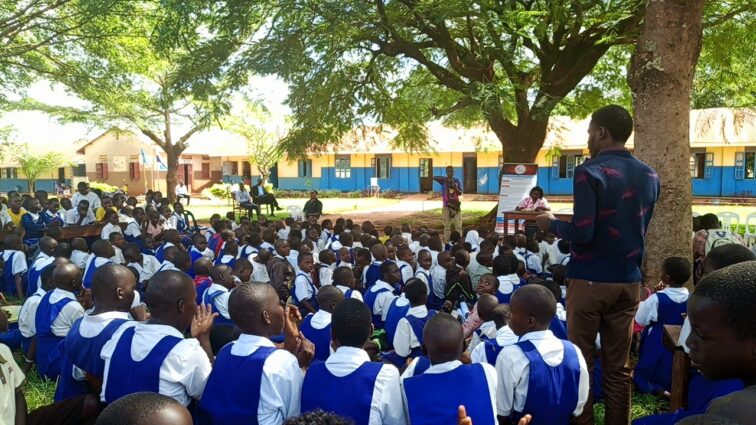
Pupils listening to awareness creation session
Another Primary Five pupil, Junior Rom Oyet, said he had learned how sickle cell disease is inherited, how people can find out their status and why screening is important.
He pledged to encourage his fellow learners to speak to their parents or guardians about testing and to share the information with neighbours and other community members.
Rom also welcomed the planned establishment of a Sickle Cell Stars Club at the school, saying it would provide an opportunity for learners to continue educating one another.
Patience Lamara, a Primary Six pupil, also welcomed the initiative, saying the proposed club would help learners extend awareness activities to other schools and communities.
“I believe the club will help us educate other children, including learners from other schools, about sickle cell disease and other health issues. Through the club, we will be able to share the knowledge we gain with other learners and help raise awareness in our community,” she said.
At Gulu Public Primary School, Cyrus, a Primary Six pupil, said the lessons had helped him understand how sickle cell disease affects red blood cells and the importance of learning about the condition from an early age.
He pledged to share the information with his classmates, including younger learners in Primary One to Primary Four, who might not have fully understood the sessions.
Cyrus also expressed interest in joining a Sickle Cell Stars Club at his school.
“I will encourage my fellow learners to join the club so that we can work together to raise awareness and make sickle cell education part of our school’s health activities,” he said.
Teachers welcome the campaign and call for continued education
David Nyeko Opira, a teacher at Gulu Town Primary School, described the awareness session as an important learning opportunity, particularly for teachers who may not know how best to support a child experiencing a sickle cell crisis at school.
He said the training had improved teachers’ understanding of the condition, its possible symptoms and the importance of working with parents to ensure that affected learners receive appropriate care.
Opira added that teachers would use school assemblies, parent meetings and planned club activities to reinforce the information.
“Some children may not fully understand the information they received today. If they discover that a fellow learner or family member has sickle cell disease, they might begin to stigmatise, discriminate against or neglect that person,” he said.
“As teachers, we need to ensure that our awareness activities continue so that learners understand the condition and know how to treat their colleagues with respect and kindness. They should understand that children living with sickle cell disease can interact, learn and play together with other children.”
The deputy headteacher of Gulu Public Primary School also welcomed the campaign, saying that many learners previously lacked basic knowledge about sickle cell disease.
He noted that some pupils had confused its symptoms with those of HIV/AIDS, highlighting the need for more education to correct misconceptions.
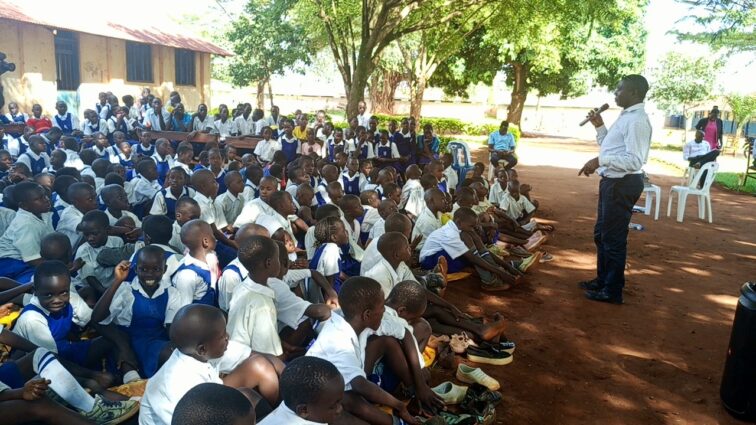
A School teacher addressing pupils during the launch
Margret Adoch Latigu, the headteacher of Gulu Town Primary School, applauded Mutu Sickle Cell Initiative Uganda for selecting her school as the first beneficiary of the campaign.
She said the information provided to learners would help them better understand sickle cell disease and encourage them to share the knowledge with their parents and the wider community.
“I am very happy and grateful to this organisation for choosing our school. We feel truly blessed that Gulu Town Primary School was the first to receive this important awareness campaign,” she said.
Latigu urged the organisation to continue its awareness activities, noting that misconceptions about sickle cell disease remain common in local communities.
A call for collective responsibility
Through its school outreach programme, Mutu Sickle Cell Initiative Uganda hopes to build a more informed and supportive community in which people living with sickle cell disease are treated with dignity and have equal opportunities to learn, participate and thrive.
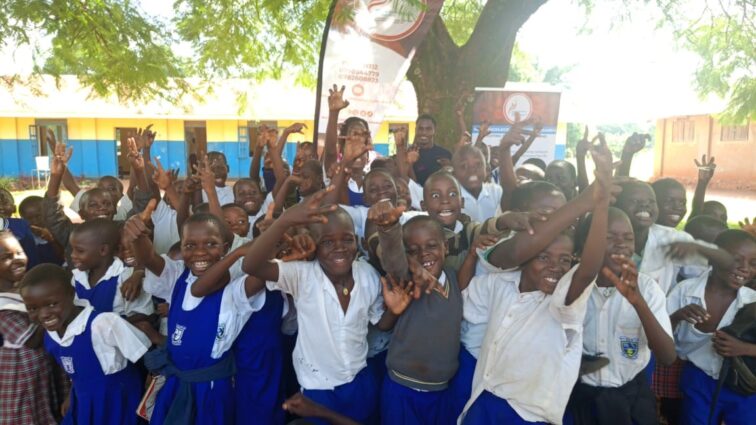
A few learners pose for a photo with Mutu Sickle Cell Initiative team
As the organisation works towards reaching schools across Gulu City and Gulu District, the planned Sickle Cell Stars Clubs are expected to provide a platform for learners and teachers to sustain the conversation and spread accurate information beyond the classroom.
The message from the campaign is clear: greater awareness, informed decisions, early medical attention and compassion can help improve the lives of people affected by sickle cell disease.
Upcoming on 90.9 FM
Upcoming on 94.5 FM
Upcoming on 101.4 FM
Upcoming on 104.8 FM


















Comments
This post currently has no comments.