
FROM MICROPHONE TO CONSERVATION: HOW A PASSIONATE COMMUNITY REPORTER DRIVES COMMUNITY MINDSET OVER PLASTIC WASTE MANAGEMENT
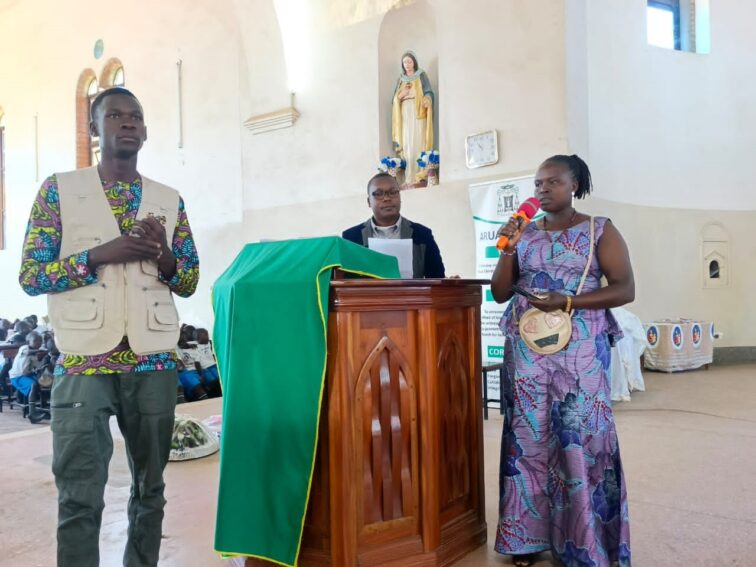
Erema George (Radio Pacis community reporter) together with Drawaru Mary (Arua City Senior Environment Officer) sensitizing congregation during church service at Sacred Heart Ediofe Cathedral Parish in Arua City. Photo// Dramadri Federick
By Dramadri Federick
Arua City
At Sacred Heart Ediofe Cathedral Parish in Arua City, a community reporter is using his microphone, passion for environmental conservation and personal engagement to inspire a change in how communities manage plastic waste.
George Erema, a 28 year old community reporter attached to Radio Pacis and based at Sacred Heart Ediofe Cathedral Parish, is taking environmental conservation beyond conventional reporting by mobilising residents, educating congregations and introducing practical waste management initiatives in public spaces.
“As a community reporter, I was trained by DW Academy on leadership, leading communities in providing solutions to the challenges affecting our communities and I took the initiative of working with my community members to address the issue of rampart plastic pollution in my community which is also witnessed elsewhere in my country. I have not left reporting news, I use story telling as a tool to bring out these challenges and seek solutions from the leaders”. Erema explains
Through community sensitization campaigns, Erema has been preaching to congregations at Ediofe Cathedral Parish, Tarantino Secondary School and Ediofe Market about the environmental and public health dangers associated with improper plastic waste disposal. His message focuses on the need for individuals and households to take responsibility for the waste they generate rather than indiscriminately disposing of it in the environment.
“In my community there’s indiscriminate disposal of plastics, you find that people buy drinks packed in plastics and they dispose these things indiscriminately and this is impacting negatively on the environment. I have seen the community positively picking it up and impressing the message passed to them” George added
He believes that protecting the environment requires more than awareness; it demands practical action and a change in people’s everyday habits.
Recognizing the influence of radio in shaping public opinion and mobilizing communities, Erema partnered with Radio Pacis to amplify his conservation message and reach a wider audience.
His involvement also extended to the 2026 Go Green Kids Festival, an environmental awareness initiative organized by Radio Pacis, where he used his experience and passion for football to attract and engage schoolchildren in environmental conservation activities.

George Erema the community Reporter captured during play sessions with children at Arua City OPM grounds. Photo//Dramadri Federick.
Through football and other interactive activities, Erema encouraged young participants to appreciate the importance of proper waste disposal, keeping their surroundings clean and protecting the environment.
“I found it interesting to work with the young children through different activities, engaging them in plastic bottles other that playing with bottles and leaving them there. I also kept reminding the children on how to properly dispose of the plastics and polythene bags which were littered everywhere. They responded positively, my joy is that some of the schools have reported positive attitudes among children towards plastic was management”.
For him, involving children is particularly important because they can become agents of behavioural change in their homes, schools and communities.
Go Green Kids Festival attracts more than 1,800 pupils
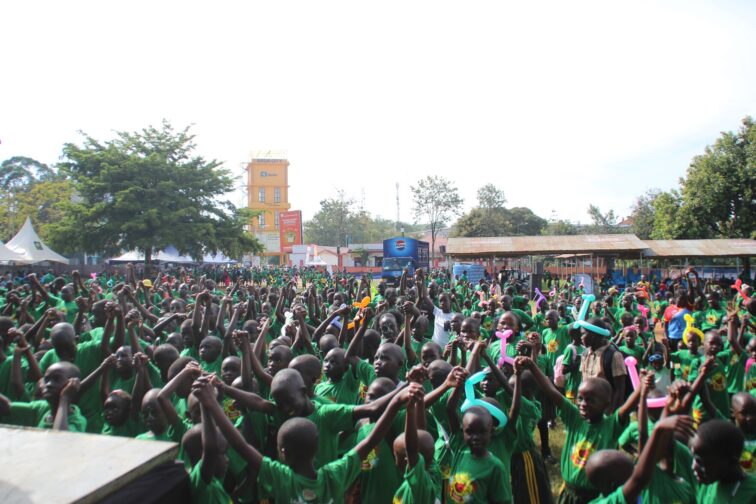
Children play during the 2026 go green kid’s festival. Photo//Dramadri Federick
Erema’s engagement with young people formed part of a wider environmental education campaign by Radio Pacis, whose 2026 Go Green Kids Festival attracted more than 1,800 pupils, surpassing the initial target of 1,000 participants.
The festival, held on October 3, 2026, at the Office of the Prime Minister (OPM) Grounds in Arua City, brought together learners from different schools for a day of environmental education, entertainment, music, games and interactive activities.
The event introduced children to practical approaches to environmental protection, including proper waste disposal, tree planting, keeping their surroundings clean and taking responsibility for protecting nature.
Some participating children said the experience had changed their understanding of environmental conservation, with several expressing commitment to practising the lessons in their homes and schools.
For the young participants, environmental protection is not merely the responsibility of government institutions and adults but a shared responsibility that begins with individual actions.
Walter Nyamua, chairperson of the 2026 Go Green Kids Festival organising committee, described the event as a success, noting that it exceeded its participation target while contributing to positive attitudes towards environmental conservation among learners.
“We had a total of upto around 1,800 children excluding their parents we had a target of about 1,000 children, Surpassing this was a huge success and our joy is that we taught the children how to manage plastic waste disposal, we also exposed their talents through different activities.” Nyamua reports

Walter Nyamua chairperson of the 2026 Go Green Kids Festival organising committee interacting with Radio Pacis founders, Fr. Tonino Pasolini and Sherry Meyer during the Go green Kids Festival. Photo// Radio Pacis Social Media
Nyamua said the festival also recognised schools that mobilised the highest number of pupils, rewarding their efforts in supporting environmental education.
St Kizito Ediofe Orphans Primary School emerged as the leading participating institution, contributing 680 pupils out of the more than 1,800 children who attended the festival.
The school was rewarded with plastic banks to support waste collection and promote responsible waste management among learners.
Meanwhile, Munguci Laura, a nine-year-old Primary Four pupil, emerged as the overall Go Green Kid of the Year.
Laura said the environmental conservation messages shared during the festival inspired her to become more conscious of the need to protect the environment.
“I like collecting Rubbish, I was motivated by the speeches and encouragement by speakers”. Munigci says.
Her recognition underscores the festival’s emphasis on empowering children to become environmental advocates rather than passive recipients of environmental education.
Joel Dralumani Akusa, deputy head teacher of St Kizito Ediofe Orphans Primary School, said participating schools were beginning to appreciate the educational benefits of the annual festival, particularly its influence on learners’ environmental awareness and behaviour.
Akusa proposed increasing the participation fee to 30,000 shillings to enable organisers to provide additional items such as bags, caps and water bottles alongside the T-shirts, which he believes could further motivate learners.
“These will increase the level of engagements, competitions and education. I like these engagements because they directly relate to the practical experiences of the learner other than theoretical teachings in classroom environment”. Akusa said
Looking ahead, Nyamua said the next Go Green Kids Festival is scheduled for October 2, 2027.
He said organisers intend to introduce additional activities, including poetry, debates and drama, to make the festival more competitive while providing children with opportunities to express their understanding of environmental conservation creatively.
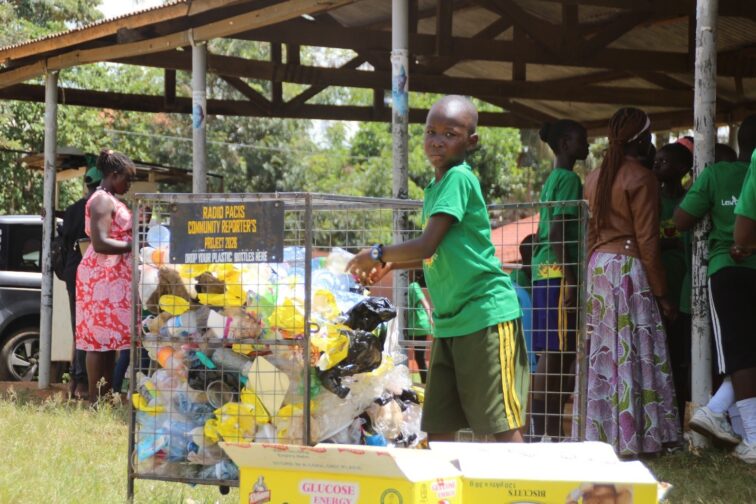
Munguci Laura, a nine-year-old Primary Four pupil of St. Kizito Ediofe Orphans Primary School was awarded the go green kid of the year 2026. Photo//Dramadri Federick.
The more than 1,800 pupils who participated in the 2026 edition represent an opportunity to extend environmental conservation messages beyond the festival grounds into classrooms, households and communities across the region.
Turning environmental awareness into practical action
But Erema’s intervention has not stopped at preaching and public awareness campaigns.
He has also distributed and installed plastic waste collection banks at strategic and busy locations, including Ediofe Trading Centre, Yigatia Trading Centre, Bishop Tarantino Secondary School and Sacred Heart Ediofe Cathedral Catholic Parish Church, the headquarters of Arua Diocese.
The collection points are intended to provide community members with accessible places to dispose of plastic waste responsibly instead of littering streets, drainage channels and other public spaces.
By placing the collection banks in busy public spaces, Erema is seeking to make responsible waste disposal a practical and convenient option for residents, traders and churchgoers.
His intervention demonstrates an attempt to bridge the gap between environmental awareness and actual behavioural change by providing communities with facilities through which they can practise what they are taught.
Religious leaders join the environmental campaign
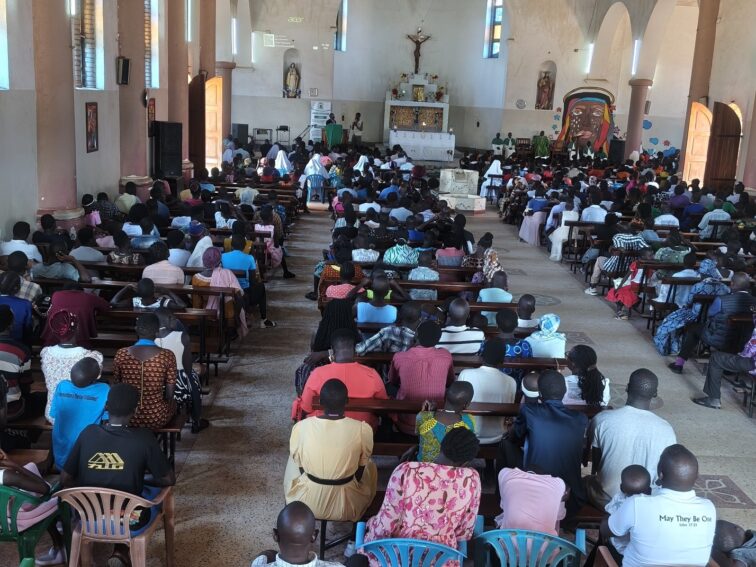
Christians listen to environmental messages during announcement time at Ediofe Cathedral Parish. Photo//Dramadri Federick
Erema’s community mobilization efforts resonate with calls from religious leaders for greater public responsibility and compliance with government environmental protection measures.
The Bishop of Arua Diocese, Bishop Odoki, has observed that several government interventions, including the ban on polythene bags commonly known as kaveera, regulation of high-emission machinery and evictions from protected areas, have not achieved the desired impact because of limited public support and compliance.
He called on Christians and the wider public to embrace government directives aimed at protecting the environment.
“This is the week we celebrate our salvation which has come through our Lord Jesus Christ. The government has given very clear directives about pollution and smoking, so here we need to listen to the government and comply for environmental protection,” Bishop Odoki said.
According to the Uganda Bureau of Statistics (UBOS) 2024 provisional census results, Christians constitute more than 80 percent of Uganda’s population. Catholics account for 36.2 percent, Anglicans 29.0 percent, while Pentecostals and Evangelicals make up 14.3 percent.
Muslims account for 13.2 percent of the population, with Uganda’s total population estimated at 45.9 million people.
Bishop Odoki noted that Arua Diocese, which serves an estimated population of about 2.6 million people, is increasingly experiencing environmental degradation and pollution.
He attributed the growing challenge partly to population pressure associated with the influx of refugees and negative community attitudes towards environmental protection.
He called for a coordinated response involving citizens, religious institutions and government agencies to address the growing environmental concerns.
The Bishop also highlighted efforts by the Uganda Episcopal Conference to discourage environmental pollution, particularly through the reduction of polythene bags and other plastic materials.
“The Uganda Episcopal Conference agreed that we should try as much as possible not to pollute the environment by use of polythene bags like kaveera and other plastics. We made a strong campaign against their use, so let’s comply with such measures,” he added.
The Bishop’s message reinforces the importance of religious institutions in influencing public behaviour, particularly in communities where churches have a significant presence and serve as important platforms for public education and mobilisation.
Growing environmental pressure raises concern
The calls for collective action come against the backdrop of growing environmental concerns highlighted in Uganda’s 2024 National State of the Environment Report published by the National Environment Management Authority (NEMA).
The report identifies increasing population pressure, urbanisation, unregulated waste disposal and inadequate waste management systems as some of the factors worsening environmental challenges across the country.
It warns that plastics are frequently discarded in residential areas, schools, hospitals, trading centres, markets, streets, roadsides and drainage channels.
According to the report, blocked drainage systems can contribute to flooding, damage infrastructure and create public health hazards by spreading contaminants.
The report further observes that Uganda’s waste management systems are struggling to keep pace with increasing waste generation, while inadequate recycling infrastructure and poor waste separation undermine the recovery of valuable materials, including plastics.
These environmental pressures underline the need for practical interventions that encourage communities to change their attitudes towards waste disposal, pollution and the sustainable use of natural resources.
Arua City struggles with mounting garbage
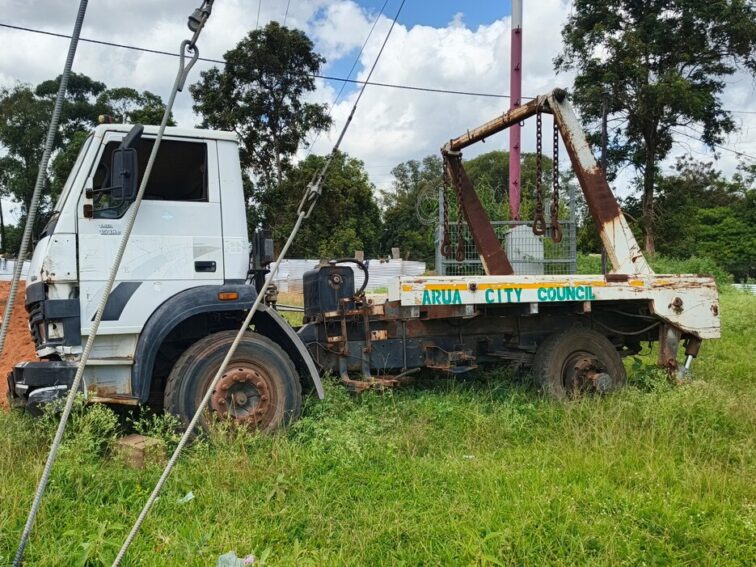
Arua City Council garbage truck recommended for disposal, pushing pressure on waste management. Photo// Dramadri Federick
Erema’s initiative has attracted the attention of Arua City authorities, with the Senior Environment Officer, Mary Dawaru, joining him in engaging residents and encouraging the adoption of proper waste management practices.
Dawaru says the initiative comes at a time when the city is facing increasing pressure from the volume of waste generated daily, coupled with inadequate resources for collection and disposal.
According to Dawaru, Arua City generates approximately 250 tonnes of garbage every day, making waste management a major challenge, particularly when residents fail to dispose of their waste appropriately.
She explains that the city currently has only three garbage trucks allocated to Arua Central Division, Ayivu Division and Arua City Council, respectively, which she says are insufficient to manage the daily waste volumes.
The limited collection capacity, she adds, makes community participation and responsible waste disposal critical in complementing the city’s waste management efforts.
Dawaru is particularly concerned about the growing volume of plastic waste finding its way into River Enyau, a transboundary river and a major tributary of the River Nile, Africa’s longest river.
She warns that “indiscriminate disposal of plastics along the river and its surrounding buffer zones threatens aquatic ecosystems, compromises water quality and poses risks to communities that depend on the river and its surrounding environment.”
She has cautioned residents living and conducting business along the riverbanks against dumping plastic waste in the river or its buffer zones, urging them to use designated waste collection points and embrace responsible disposal practices.
The growing concern over plastic pollution underscores the need for coordinated action between city authorities, community leaders, environmental advocates and individual residents.
Plastic pollution: A growing African environmental and health crisis
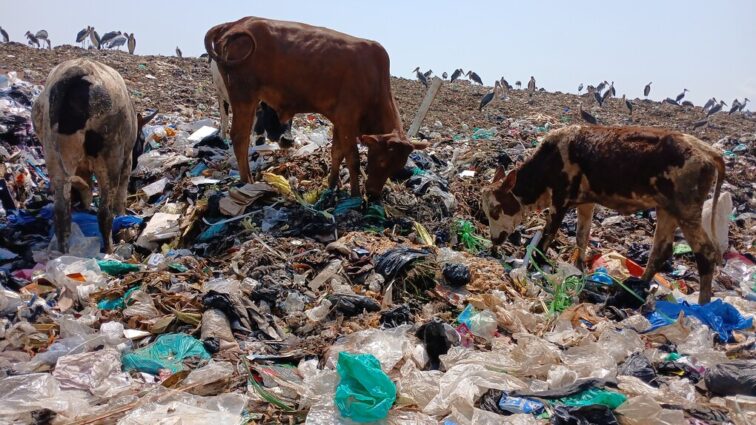
Cattle and Birds scavenge for food from poorly disposed waste at Arua city composed site. Photo// Dramadri Federick.
The challenges facing Arua City are part of a much wider environmental and public health crisis affecting communities across Africa.
According to the World Health Organization (WHO) Regional Office for Africa, the continent accounts for approximately four percent of global plastic consumption, while less than 10 percent of the world’s annual plastic production is recycled.
The WHO estimates that more than 400 million tonnes of plastic are produced globally every year, with approximately 19 to 23 million tonnes ending up in lakes, rivers and seas.
The organisation further reports that Africa’s growing population and urbanisation are driving increased consumption of single-use plastics, heightening environmental pollution and associated health risks.
Around 30 African countries have introduced bans on single-use plastic bags. However, the WHO observes that the effectiveness of these policies remains constrained by inadequate enforcement, monitoring and evaluation mechanisms.
The health implications are equally concerning.
According to the WHO, improperly discarded plastic containers can create breeding grounds for disease-carrying mosquitoes, increasing the risk of vector-borne illnesses.
Burning plastic waste, which remains a common practice in some African communities, releases toxic gases and particulate matter that can cause respiratory problems and worsen existing respiratory conditions.
The organisation also warns that plastic pollution can contaminate freshwater sources and food chains. Some plastics contain chemical substances that can leach into the environment, potentially contributing to endocrine disruption, developmental problems and increased cancer risks.
Beyond human health, plastic pollution threatens ecosystems, agricultural productivity and livelihoods through the contamination of water sources and degradation of natural habitats.
A 2024 study published in Nature on global macroplastic pollution estimated that 52.1 million tonnes of plastic waste enter the environment annually worldwide. The study identified uncollected waste as a major source of plastic pollution, particularly in developing countries.
These findings reinforce the need for stronger waste collection systems, improved recycling infrastructure, public awareness campaigns and practical interventions at community level.
For Arua City, where approximately 250 tonnes of garbage are reportedly generated daily, the challenge requires more than additional collection trucks. It also calls for sustained public awareness, accessible waste collection facilities, effective enforcement of environmental regulations and greater participation by residents.
From community reporting to practical conservation
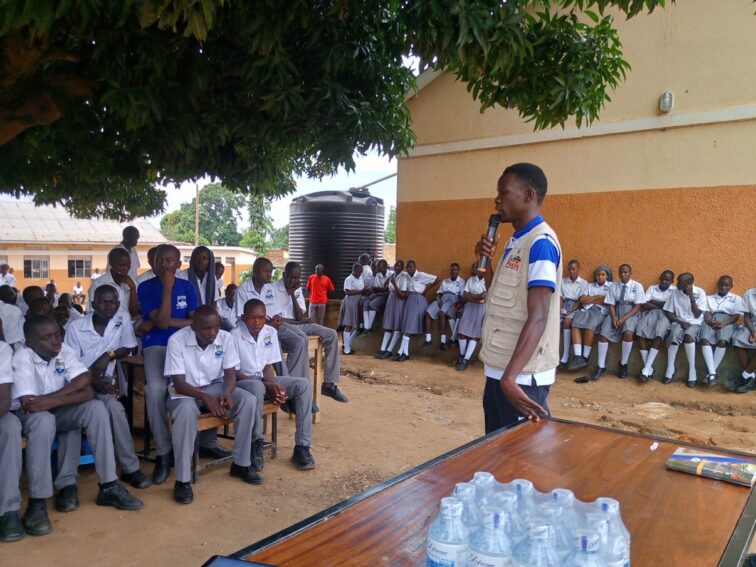
Erema George addressing learners at Bishop Angelo Tarantino Memorial Secondary School in Arua City. Photo//Dramadri Federick
For Erema, the intervention demonstrates how individuals can use their professional influence and personal commitment to address environmental challenges within their communities.
His approach also highlights the important role community journalists can play beyond reporting environmental problems. By combining public communication, community mobilisation and practical interventions, journalists can help translate environmental information into meaningful local action.
The involvement of Radio Pacis, religious leaders, schools and city environmental authorities further demonstrates the potential of partnerships between the media, faith institutions, educational establishments and government in addressing environmental challenges.
The 2026 Go Green Kids Festival provides an example of how environmental education can reach thousands of young people, while Erema’s plastic banks offer communities practical opportunities to put the lessons into action.
However, the sustainability of these interventions will depend on continued community participation, proper management of the installed plastic banks, regular collection and recycling of accumulated plastics, and support from local authorities.
Ultimately, Erema’s journey from the microphone to community conservation sends a simple message: environmental protection is not the responsibility of government alone. It begins with individuals making responsible choices about how they manage the waste they generate.
For the communities of Ediofe, that change could begin with something as simple as putting a plastic bottle in a collection bank rather than throwing it into the street or River Enyau.
And for the more than 1,800 children reached through the Go Green Kids Festival, the challenge is to turn the lessons learned into everyday habits that will protect the environment for generations to come.
As Africa grapples with the growing consequences of plastic pollution, the experience in Ediofe offers a reminder that meaningful environmental change can begin with one community reporter, a microphone and a commitment to mobilizing people to protect their surroundings.
Upcoming on 90.9 FM
Upcoming on 94.5 FM
Upcoming on 101.4 FM
Upcoming on 104.8 FM


















Comments
This post currently has no comments.