
THE 2030 PARADOX: INSIDE THE HIGH-RISK TRANSIT HUBS WARPING GLOBAL HEALTH PROGRESS

An Aerial View of Arua city center from Onduparaka Round about. Photo//Dramadri Federick
By Federick Dramadri
Arua City
This investigation reveals how the intersection of cross-border mobility, economic desperation and punitive laws is fuelling HIV vulnerabilities in Uganda’s West Nile region, exposing neglected populations and systemic failures that could derail the global ambition to end AIDS as a public health threat by 2030.
Every night in Arua City, a busy border trade hub linking Uganda to the Democratic Republic of Congo and South Sudan, young women and girls enter the clandestine sex trade, often driven by economic hardship. Their vulnerability reflects Uganda’s wider HIV challenge, with approximately 1.567 million people living with HIV and 34,000 new infections annually.
Despite prevalence stabilizing at 5.9 per cent, women remain disproportionately affected at 7.3 per cent compared to 4.1 per cent among men. These figures raise questions about whether existing HIV prevention programmes, funding and human rights protections are sufficient to protect vulnerable women and achieve the UNAIDS 2030 target of ending AIDS as a public health threat.
Local Realities: Economic Distress and Survival on Arua’s Streets
Behind the bustling business of Arua City lie the voices of young women and girls driven onto night-lit streets by sheer financial desperation, trading physical safety for daily survival. In a country where commercial sex work remains strictly illegal, these young women and girls represent a vast, invisible workforce navigating an unforgiving underground economy.
Arua City, heralded as the “Mighty City of Opportunities,” sits 475 kilometers northwest of Uganda’s capital, Kampala. Formally elevated to regional city status in 2020, it has rapidly grown into the largest urban economic engine of the West Nile region, home to over 440,540 predominantly Lugbara-speaking residents.
This vulnerability is compounded by the strategic location of Arua City and Arua District along major cross-border trade routes linking Uganda to the Democratic Republic of Congo and South Sudan. The area attracts truck drivers, traders, and other highly mobile populations, creating complex sexual networks that can make HIV prevention and treatment more challenging. Yet, beneath this commercial vitality, systemic poverty continues to funnel vulnerable young women and girls into high-risk trade.

Trade Corridors, Private Spaces, and the Risk Vector. From day to night, Arua’s economy is integrated with trade flux and survival strategies.
For many young women, the transition into sex work is a desperate bid for survival following severe personal and financial shocks. From housewife to the streets, Sharon (not her real name), a 26-year-old mother of two, migrated from Kampala to Arua hoping to build a new life after her husband died of HIV-related complications.
Driven into severe poverty and influenced by peers, she entered commercial sex work just two months ago and now deeply regrets the decision. To afford basic shelter, Sharon and three other women jointly rent a single room in an Arua suburb for 20,000 Ugandan Shillings per week, sharing a cramped space where they live and receive clients.
“I came to Arua after losing the father of my two children to HIV. Life became so hard in Kampala that when my friends told me about opportunities in Arua, I followed them. But when I reached here, the only way to survive was through this business. Four of us contribute money to rent a small room for 20,000 Shillings a week. We share that same room for sleeping and for attending to our customers.” Sharon, Commercial Sex Worker, Arua City
Sharon faces constant security threats and fears contracting or spreading infections, yet lacks any alternative source of livelihood to support her children.
“My life is in constant danger every single night. I live in fear of disease and violence, and I desperately want to leave this business. But if I step away today, how will my children eat? Without an alternative source of income, I simply cannot survive.” Sharon

Sharon’s Environment of Survival. Clandestine interior work integrates economic necessity with personal risk in private spaces. Photo//Dramadri Federick
Systemic Abuse, Exploitation, and the Lived Experiences of Peer Leaders
Sharon’s experience reflects a broader crisis across Northern Uganda, where young women routinely face human rights abuses driven by public hostility and social stigma. They endure severe violations of human dignity, including physical assault, rape, forced abortions, public shaming, and long-term psychological trauma.
Operating as a peer leader in the fast-paced transit hub of Arua City, Gloria (not real name) has spent nearly ten years negotiating high-risk encounters with mobile populations, cross-border traders, and night-time security patrols.
“Living on the streets of Arua for ten years means facing violence every single night. We deal with long-distance truck drivers and clients who refuse to pay after getting what they want, often threatening us with knives or calling night patrols to arrest us. We are beaten, gang-raped, and dragged into police cells simply for trying to earn money for our children. Society sees us as criminals, but nobody asks how we ended up here or helps us when we are abused.” Gloria, Sex Worker Group Leader, Arua City
Further east in Yumbe District, Zubeda (not real name) leads a network of sex workers in a rural-urban transitional corridor marked by refugee settlements and acute economic scarcity, where access to basic healthcare commodities is virtually non-existent.
“In Yumbe, the humiliation goes deep into the community because everyone knows you. We operate under extreme poverty with very little access to condoms or health services, and when girls get pregnant, they are forced into unsafe backstreet abortions. Cultural leaders and community members shun us, treating us like outcasts. But as peer leaders, we have to stand together, share the few health supplies we get, and protect the younger girls from total destruction.” Zubeda, Sex Worker Group Leader, Yumbe District
Regional Context: The Prevalence Puzzle Across Eastern Africa
The struggle unfolding in Arua City reflects a broader regional crisis. As highlighted in Development Aid reporting, Eastern Africa stands as the world’s second worst-hit region after Southern Africa, grappling with alarmingly high prevalence rates that vary significantly by location.
Uganda holds the highest adult HIV prevalence in the East African Community at 5.0%–5.1%, despite having achieved the 90-90-90 targets by 2020 while Tanzania has an overall adult prevalence rate of 4%, but suffers from severe regional discrepancies—ranging from 0.5% in Zanzibar to an alarming 11.4% in Njombe. Adolescent girls and young women shoulder the greatest burden, accounting for 80% of new infections in the country.
Kenya has made notable progress, reducing adult prevalence from 10% in the mid-1990s to 4.5% by 2020. On the other hand Rwanda maintains a stable rate of 3%, while Burundi stands at an estimated 0.9%, disproportionately impacting women and south Sudan has approximately 2.5% of individuals aged 15–49 are living with HIV, where conflict and limited health infrastructure heighten risk among key populations like sex workers.
EAST AFRICAN COMMUNITY ADULT HIV PREVALENCE (%)
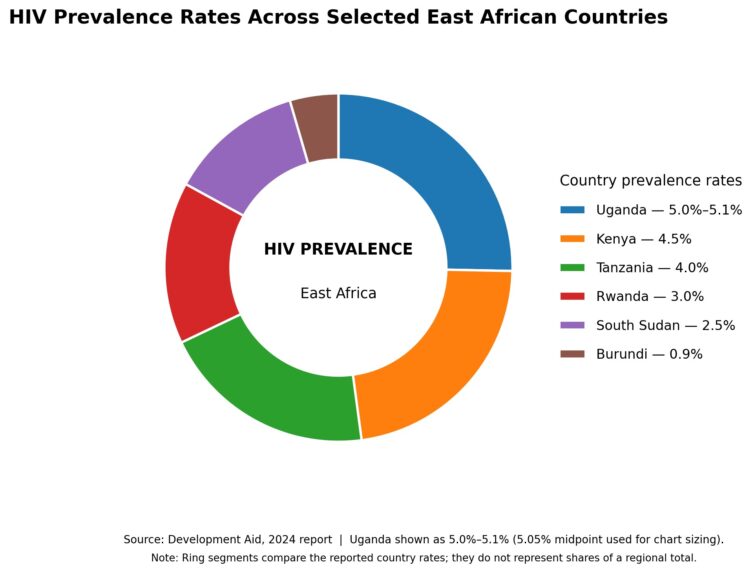
Eastern Africa is the world’s second most affected region after Southern Africa. This chart illustrates how Uganda carries the heaviest HIV burden in the East African trade bloc (5.0%–5.1%), turning cross-border commerce hubs like Arua—which link Uganda to South Sudan and the Democratic Republic of Congo—into active, high-risk viral transmission corridors.
Public health experts and sociologists point to a complex interplay of social stigma, cultural taboos, economic hardship, and healthcare access barriers across the region:
“Stigma prevents individuals from disclosing their status or seeking vital healthcare services. This fear leads to late diagnoses and heightened transmission rates… The government has made headway in providing anti-retroviral therapy, but access remains a critical issue, especially in remote regions.” Dr. Miriam Karanja, Public Health Expert in Infectious Diseases
“In several East African cultures, open discussions about sexual health remain taboo. This silence fosters misinformation and perpetuates behaviors that heighten vulnerability to the virus.” Professor Ahmed Abdi, Sociologist
“We provide vocational training and financial literacy programs to empower individuals, especially women, to achieve financial independence. When people are economically stable, they are less prone to engage in risky behaviors that could lead to HIV transmission.” Henry Magala, Country Program Director, Uganda Cares
Data Insights: Local Health Vulnerabilities and Epidemiological Realities
To contextualize the ground realities in West Nile against formal national evaluations, the Ministry of Health released the preliminary findings of the 2025 Uganda Population-based HIV Impact Assessment (UPHIA 2025). Delivered at the Uganda Media Centre by the Minister of Health, Hon. Dr. Chris Baryomunsi, the assessment serves as a critical national accountability instrument during a time of shifting external financing. The national data revealed that adult HIV prevalence stands at 5.9% overall (7.3% among women and 4.1% among men), corresponding to approximately 1,496,000 adults living with HIV.
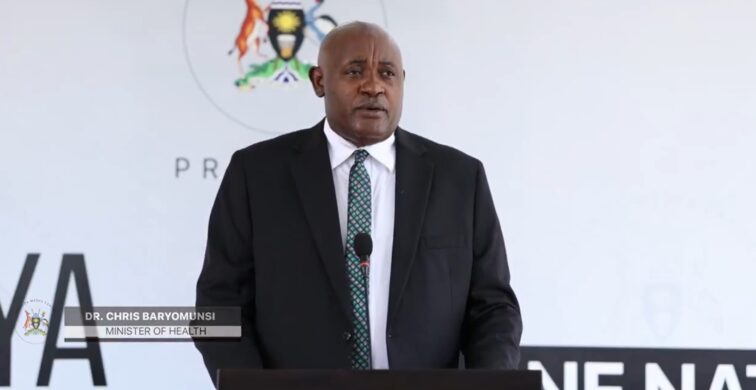
Dr. Chris Baryomunsi during press briefing at Uganda Media Centre. Photo Credit// Uganda Media Centre.
Addressing the nation on the objectives and overarching significance of this data, Hon. Dr. Chris Baryomunsi, Minister of Health, emphasized the necessity of disciplined resource allocation and targeted primary health interventions:
“UPHIA 2025 is more than a survey report. It is a national accountability instrument and a timely evidence base for the next phase of Uganda’s health reforms. At a time when the external financing environment is changing and resources must be used with greater discipline, it helps Government set priorities, protect essential gains and hold itself accountable for measurable results. The headline message is encouraging, but it is also clear about where we must focus. Almost everyone who knows they are living with HIV is on treatment, and almost everyone on treatment has suppressed the virus. Our biggest remaining gap is at the very start: about one in seven people living with HIV do not know their status.” Hon. Dr. Chris Baryomunsi, Minister of Health
Complementing these national figures, Rigorous local health studies reveal a complex demographic profile that challenges common misconceptions about who engages in commercial sex work in West Nile. Recent surveys conducted by the Makerere University School of Public Health across Arua District and Arua City revealed that 40% of female commercial sex workers are married, with 9% officially married and 31% cohabiting. Furthermore, the data indicates that 30% of those engaged in commercial sex work are living with HIV/AIDS, contrasting sharply with the national prevalence rate of 5.1% reported in the Ministry of Health 2024 Outlook.
Elaborating on these findings, Benard Amaga, the Arua City Health Inspector and City HIV Focal Person, provides crucial local context regarding how economic pressures drive married women into urban trade centers.
“The survey conducted by Makerere University School of Public Health reveals a reality we must confront directly in our health planning: sex work is no longer just an activity for single or unemployed youth. A staggering 40 percent of these women are married or cohabiting, carrying the financial burdens of entire households. When 30 percent of them are living with HIV, the risk of rapid transmission between commercial networks and domestic households becomes an acute public health concern for Arua City.” Benard Amaga, Arua City Health Inspector & HIV Focal Person
Echoing these operational challenges, Dr. Pontious Apangu, the Arua City Principal Medical Officer, expressed deep alarm over the rising infection numbers in urban centers driven by open, unprotected sex work.
“We are extremely worried about the high rate of new HIV infections emerging from our urban centers. The sheer volume of open and unprotected sexual activity directly contradicts our public health interventions and threatens to derail our progress toward ending HIV by 2030. Without immediate behavioral shifts, sustained commodity supplies, and targeted outreach to key populations, urban trade hubs will remain major drivers of the epidemic.” Dr. Pontious Apangu, Arua City Principal Medical Officer.
This Makerere University survey data dismantles the belief that commercial sex work is confined to isolated or single youth, demonstrating how economic distress forces married women into street sex work to maintain household basic needs. Because 30% of this cohort is HIV-positive—six times higher than the national baseline married workers inadvertently form a transmission bridge between commercial networks and domestic family homes.
Marital Status Breakdown among Female Sex Workers by Age
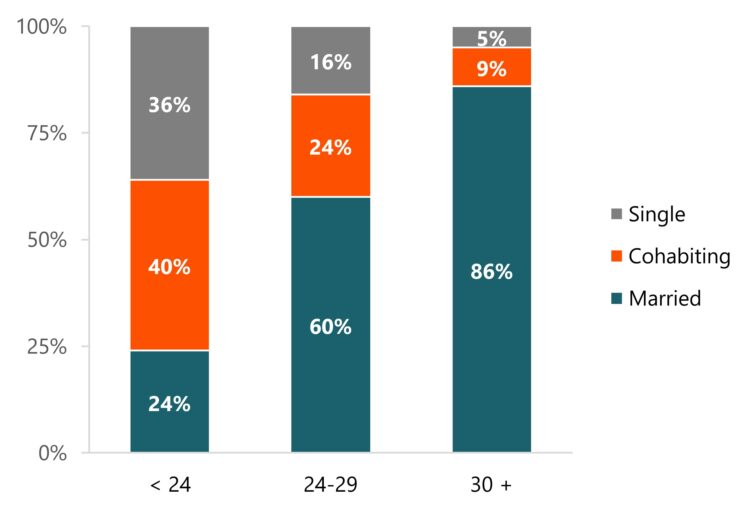
Source: Makerere University School of Public Health.
This chart dismantles the myth that sex work in regional transit hubs is done solely by single or unemployed youth. Combined, 40% of the sex workers surveyed are married or cohabiting. Driven by extreme poverty, married women enter the clandestine sex trade to pay rent and feed their children, turning sex work into an underground household survival strategy. Female sex workers in Arua City face an HIV prevalence rate (30%) six times higher than the national average (5.1%). Because 40% of these sex workers live with husbands or partners, this high concentration creates a direct epidemiological bridge—rapidly carrying the virus between mobile trade networks (truck drivers and traders) and domestic family homes.
Youth Impact, Cultural Resistance, and Institutional Perspectives
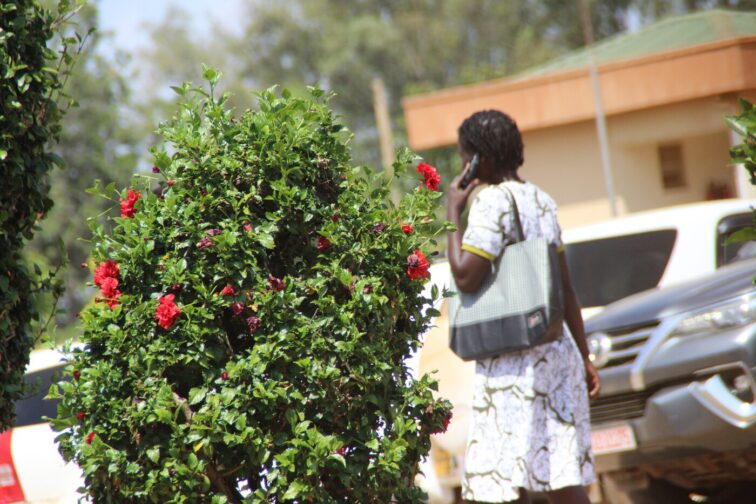
Gloria is now connecting to her peers for the business of the night. Photo// Dramadri Federick
A 2022 survey on Knowledge, Attitudes, and Practices regarding Sexual Reproductive Health and Gender-Based Violence conducted by the United Nations Population Fund (UNFPA) and Reproductive Health Uganda (RHU) declared an outbreak of commercial sex activities in Arua City, with young children among those leading the trend. Atidra Phillip Rooney, the Reproductive Health Uganda Branch Manager for Arua Station, emphasizes the acute vulnerability of youth across the district.
“Our study showed a deeply concerning trend among young people in Arua. Out of 424 youth interviewed, school dropout rates linked to early sexual activity and forced circumstances were alarming. We are seeing children drawn into sexual activity and commercial exploitation long before they understand the reproductive health consequences.” Atidra Phillip Rooney, RHU Branch Manager, Arua
The study documented significant gender differences in school disruption among the 424 surveyed youth, revealing that 12.2% of boys dropped out of school due to early marriage and financial pressures related to child fatherhood, while 9.8% of girls dropped out due to early pregnancy and forced child marriage.
Traditional institutions in the region view the expansion of commercial sex work as a breakdown of social order. Lugbara Kari, the cultural institution representing the Lugbara people, maintains strict prohibitions regarding public sexual morality.
“Marriage has lost its meaning in our society. It is deeply shameful that poverty and socio-economic hardship are driving our women into commercial sex work. Cultural values are being shattered because families can no longer afford basic survival.” Opika Isaac Cabinet Minister for Health, Lugbara Kari
Cultural elders reinforce that open sex work is strictly forbidden under traditional law.
“Open sex and commercial exploitation among the Lugbara people is a taboo punishable under our cultural customs. Lugbara Kari has issued strong pronouncements to uphold morality, protect human dignity, and restore social order among our people.”Andama Richard Ferua, Lugbara Cultural Elder
Legislative Overlap vs. The Reality of Enforcement.

Uganda’s legal framework heavily criminalizes commercial sex through statutes such as the Penal Code Act of 1950, the Anti-Pornography Act of 2014, the HIV/AIDS Prevention and Control Act of 2014, the NGO Act of 2016, and the proposed Sexual Offences Bill of 2024.
Despite these strict measures, local officials, district leaders, and legal experts observe a fundamental failure in enforcing these laws.
At the grass-roots administrative level, Ivan Sukuru, the lower local leader of Upper Bibia Cell in Arua City, points out the internal compromises within local law enforcement that undermine statutory prohibitions.
“Implementing these laws on the ground is almost impossible. The very law enforcers tasked with arresting prostitutes and ending commercial sex are often the same individuals participating in the act or profiting from it behind closed doors. When perpetrators and enforcers are mixed together, the law becomes unenforceable.” Ivan Sukuru, Lower Local Leader, Upper Bibia Cell, Arua City
Taking a broader governance perspective, Alfred Okuonzi, the former Arua District Local Council V Chairman, argues that rigid statutory enforcement infringes on fundamental human freedoms and destabilizes social harmony.
“Enacting and aggressively enforcing these punitive laws is turning Uganda into a hostile environment where citizens can no longer enjoy the basic liberty of human relationships and love affairs without state interference and harassment.” Alfred Okuonzi, former Arua District Local Council V Chairman
From a courtroom standpoint, Counsel Abibo Fred Arowa of Snai Associates & Partners details how technical legal gaps render statutory penalties practically ineffective during prosecution.
“The legal framework governing prostitution in Uganda is fundamentally flawed. Proving the actual criminal act of commercial sex before a court of law requires strict evidentiary standards that are rarely met. As a result, the law remains redundant on paper while opening doors for police harassment and extortion.” Counsel Abibo Fred Arowa, Snai & Partners Advocates
Structural Crisis: Funding Shortfalls, Fiscal Deficits, and Global Fund Responses (2021–2025)
As Sharon, Gloria, and Zubeda face dangerous conditions on the streets, many of their peers battle untreated sexually transmitted infections passed on to thousands of men across Uganda who refuse HIV testing and medication. The national situation is severely worsened by a deepening structural financial crisis and external funding shifts.
Dr. Peter Midiope, Head of HIV/AIDS Prevention and Control at the Ministry of Health, in a zoom interview emphasizes that behavioral backdrops and legal stigma severely hamper national prevention programs.
“Despite all the national efforts and programs put in place to reduce HIV prevalence and new infection rates, public attitudes and behavioral non-compliance remains a massive backdrop. Fast-growing urban centers including Kampala and our 15 regional cities are recording extremely high annual infection figures as prostitution spreads, contributing to over 900,000 of Uganda’s 1.49 million cases. Fort Portal City leads with an adult prevalence of 12,200 cases.” Dr. Peter Midiope, Head of HIV Prevention & Control, Ministry of Health
To understand why funding cuts stall public health progress, key medical interventions must be evaluated by their operational requirements. Daily Antiretroviral Therapy (ART) suppresses viral load to undetectable levels so the virus cannot be transmitted sexually (U=UU=UU=U), though any interruption leads to viral rebound and drug resistance.
Pre-Exposure Prophylaxis (PrEP) requires continuous supply chains and clinic check-ins for HIV-negative individuals at high risk. Prevention of Mother-to-Child Transmission (PMTCT) relies on uninterrupted maternal therapy to protect infants during pregnancy and delivery, while Contact Tracing requires dedicated healthcare workers to identify and test sexual partners.
Data compiled from Daily Monitor reporting, parliamentary records, the Uganda AIDS Commission, and UNAIDS reveal a progressive widening of financial gaps between 2021 and 2025.
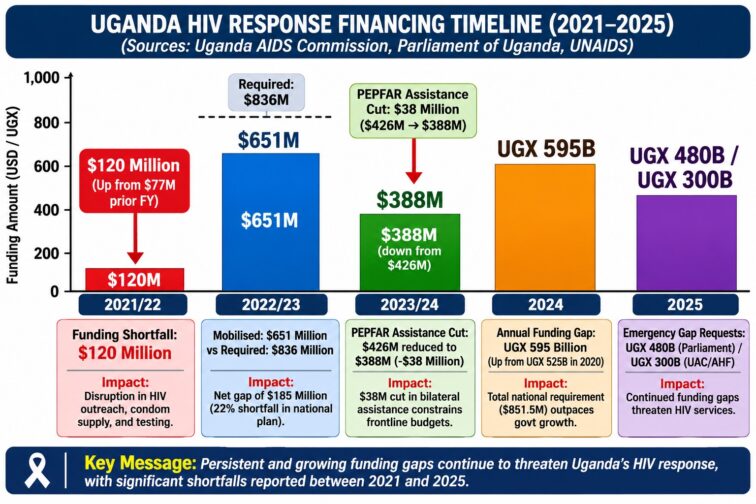
This timeline proves that Uganda’s healthcare crisis is not a sudden accident, but the result of five consecutive years of cumulative financial erosion. Year after year of declining international aid systematically crippled community outreach, condom distribution, and frontline clinics right as world leaders set their 2030 elimination targets.
Data from the Ministry of Health Knowledge Management Portal and the Uganda AIDS Commission’s National AIDS Spending Assessment show that foreign donors funded 82% of Uganda’s HIV response in 2019/20 and 80% in 2020/21. While domestic financing increased by 24.6% from $80.6 million in 2020 to $100.4 million in 2024, total national requirements grew by 16.2% from $732.5 million to $851.5 million.
This data illustrates the Budget Growth Paradox. Even though Uganda increased its direct contribution by nearly $20 million (+24.6%), overall national healthcare needs grew by $119 million (+16.2%). As a result, the national funding deficit expanded by nearly $100 million, deepening Uganda’s dangerous dependence on unpredictable foreign aid.
In a March 19, 2025 assessment, UNAIDS revealed that foreign assistance cuts caused serious delivery disruptions across Uganda.
HEALTH SUPPLY CHAIN BOTTLENECK (2025 UNAIDS ASSESSMENT)
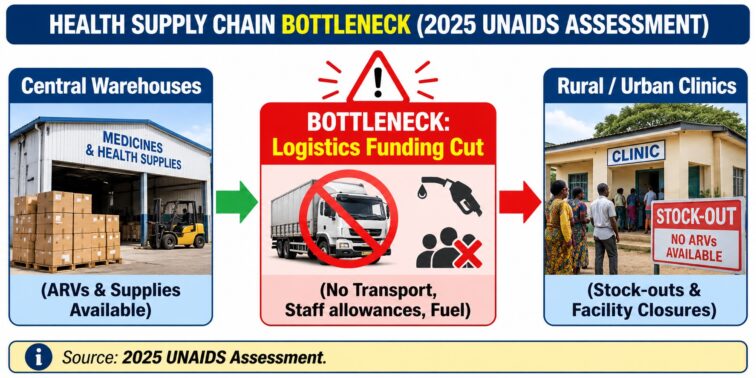
Having antiretroviral drugs stored in national central warehouses does no good if health centers have no resources to distribute them. Cuts in foreign aid specifically eliminated funding for “last-mile” logistics fuel, delivery vehicles, and staff stipends causing local drop-in clinics for sex workers to run dry despite medication physically existing in the country.
Amidst these structural financial bottlenecks, international institutional bodies have scaled up coordinated responses to stabilize treatment and supply chains. In April 2026, the United States and the Global Fund to Fight AIDS, Tuberculosis and Malaria announced an expanded joint commitment to reach 3 million people with long-acting lenacapavir (LEN) for PrEP through 2028. Highlighting the strategic imperatives behind these institutional efforts, international health authorities emphasized the urgency of overcoming supply and adherence barriers:
“This expanded commitment in partnership with the United States reflects both the scale of the opportunity and the urgency of the moment. Long-acting lenacapavir could reshape HIV prevention by overcoming some of the structural challenges that have long constrained uptake. The task now is to translate scientific progress into broad, equitable access — at speed and at scale.”
— Peter Sands, Executive Director of the Global Fund
“This is a pivotal moment in the fight against HIV. We are delighted that first deliveries have already been completed within our planned timelines across nine countries. This reflects strong collaboration across partners and a shared commitment to move quickly. By expanding our supplier base through both the original and generic manufacturers, we are working to ensure sustainable, affordable access at scale.” Hui Yang, Head of Supply Operations at the Global Fund
“The level of country demand we are seeing is both encouraging and urgent. Countries recognize the transformative potential of LEN to reach populations that have not been adequately served by existing tools. Our focus now is on supporting rapid, responsible introduction — ensuring that programs are ready to deliver and communities can benefit as quickly as possible.” Mark Edington, Head of Grant Management at the Global Fund
Hope for Sustainable Interventions Across Africa & Innovative Medical Rollouts
To achieve the global ambition of eliminating HIV/AIDS as a public health threat by 2030, governments across Africa and globally have shifted from temporary emergency interventions to a systemic, long-term sustainability model anchored by the UNAIDS Global AIDS Strategy 2026–2031.
Under the newly ratified 2026 UN Political Declaration on HIV/AIDS, global leaders have recommitted to specific milestones to slash new infections and AIDS-related deaths by 90% compared to a 2010 baseline.
Eight African Countries Receive $40 HIV-Prevention Injection

Testing blood sample for HIV. Photo Credit// Getty Images.
Uganda is among the Eight African countries that have begun receiving shipments of the breakthrough HIV-prevention injection lenacapavir, a twice-yearly drug priced at about $40 per person annually. Health officials say this innovation could radically reshape efforts to curb infections in the region hardest hit by the virus.
The countries in sub-Saharan Africa (SSA) receiving shipments are among 18 representing roughly 70% of the HIV burden in the region covered by United States drug maker Gilead Sciences’ voluntary licensing agreements with generic drug makers. Gilead initially delivered supplies of the injectable pre-exposure prophylaxis (PrEP) to Eswatini and Zambia, before expanding shipments to South Africa, Zimbabwe, Kenya, Lesotho, Uganda, and Nigeria.
Sub-Saharan Africa accounts for roughly two-thirds of people living with HIV globally. Data from UNAIDS shows that about 1.3 million people were newly infected with HIV in 2024, with women and girls representing more than 60% of new cases in the region.
“This innovation reduces the challenge of adherence, offering a more discreet and convenient option for many people, particularly young people, women, and key populations who often face stigma or barriers to consistent care,” shares Dr. Kutyyi Ango Dada, a Nigerian medical doctor and public health advocate.
The first real-world implementation in low- and middle-income countries involved South Africa as part of a study funded by Unitaid and led by Wits RHI at the University of the Witwatersrand. South Africa’s regulator (SAHPRA) approved the drug in October, making it the first country in SSA to do so.
South Africa’s Health Minister, Aaron Motsoaledi, confirmed a national rollout beginning in early 2026. The prevention shot has also been approved in Botswana, Malawi, Namibia, and Tanzania, with shipments expected in Rwanda later in the year.
Under a global access agreement, Gilead and six partner pharmaceutical manufacturers—including one based in Egypt—are producing the drug for 120 low- and middle-income countries at around $40 per person annually, down from an estimated list price of about $28,000 in wealthier markets.
Gilead has pledged to supply the medicine at no profit for up to two million people until generic production meets demand in countries supported by the Global Fund and PEPFAR. The agreement also includes an oral starter regimen priced at up to $17, with implementation support from the Clinton Health Access Initiative and Unitaid.
Scaling Up Access: Highlights from AIDS 2026
At the 26th International AIDS Conference (AIDS 2026) in Rio de Janeiro, Brazil, initial data from Eswatini, Malawi, Mozambique, and Kenya revealed that demand for lenacapavir is already outpacing supply.
Through a collaborative program involving the U.S. State Department, the Global Fund, and Gilead Sciences, partners aim to reach at least three million people with lenacapavir (LEN) by the end of 2028. Across the first nine rollout countries (Eswatini, Kenya, Lesotho, Mozambique, Nigeria, South Africa, Uganda, Zambia, and Zimbabwe), 191,620 doses have already been delivered representing roughly 14% of the planned total of over one million doses for 2026.
Nearly 66,000 people have newly started on lenacapavir across 900 sites, and over 10,000 healthcare providers have been trained on its administration.
“Our goal is not just to launch LEN. It’s to get countries to use it strategically,” noted Professor Ingrid Katz, Director of the Yale Institute of Global Health and Chief of Evidence and Programme Innovation at the US Department of State.
PEPFAR & Community Integration
The U.S. government, through PEPFAR, announced a groundbreaking commitment to expand lenacapavir access across 8–12 high-burden African countries starting in 2026. Equally critical will be strong community engagement to build trust, address stigma, and reach those most affected—especially adolescent girls and young women in sub-Saharan Africa.
Integrating lenacapavir into maternal health services, youth-friendly clinics, and existing HIV programs will accelerate progress toward the UNAIDS 95-95-95 targets ensuring 95% of people living with HIV know their status, 95% of those diagnosed receive treatment, and 95% of those on treatment achieve viral suppression.
Sustainable Pathways, Global Frameworks, and Structural Interventions
To address the cascading crisis visible in trade corridors like Arua City, UNAIDS, alongside the Global HIV Prevention Coalition, globally launched the HIV Prevention 2030 Global Access Framework in March 2026. Built as a blueprint for country-led and community-led execution, the 2026 framework sets concrete targets for national governments to achieve by 2030.
Aligning Arua City’s response with this 2026 global framework requires structural shifts put forward by community, health, and legal authorities, cultural leaders, religious leaders and civil society actors say establishing dedicated vocational training and micro-enterprise funds to address the primary economic driver forcing women into commercial sex work due to financial hardship, Adjusting policy barriers to allow key populations to seek antiretroviral therapy (ART), pre-exposure prophylaxis (PrEP, including long-acting injectables like lenacapavir), and reproductive healthcare without facing legal exposure, arrest, or police extortion.
Establishing cross-border health tracking frameworks with dedicated HIV and STI testing tailored to long-distance transport workers and mobile traders to mitigate epidemiological risk along the trade corridors linking Uganda, South Sudan, and the Democratic Republic of Congo and expanding national budget allocations to strengthen domestic supply chain autonomy, ensuring distribution networks operate independently of external donor shifts ahead of the 2030 global deadline could be sustainable options for Africa to achieve the global HIV targets.
Epidemiological models and institutional analyses indicate that achieving global 2030 HIV elimination targets in regional hubs like Arua City depends on how effectively national and international policies address the underlying socio-economic drivers, legal barriers, and health financing deficits facing vulnerable populations.
Upcoming on 90.9 FM
Upcoming on 94.5 FM
Upcoming on 101.4 FM
Upcoming on 104.8 FM





Comments
This post currently has no comments.