
THE FOREST THAT MONEY COULD NOT SAVE
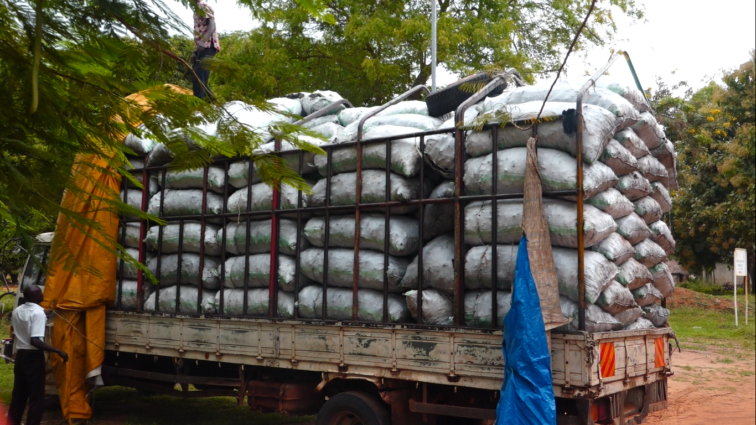
Inside Uganda’s Mount Kei Central Forest Reserve, where conservation finance, poverty and cross-border exploitation collide. Photo//Dramadri Federick
By Dramadri Federick
For Adiru Onesta, the forest surrounding her home in Uganda’s West Nile region was once a source of livelihood that came at a cost to the environment. Like many households living around Mount Kei Central Forest Reserve, families depended on activities such as charcoal burning, timber cutting and farming to survive.
Today, Onesta says her family is increasingly finding income from the forest without destroying it.
A founding member of the St Egyito Eyere Eyere Community Forest Management Group, she is among residents who have embraced beekeeping, crafts and farm production as alternative sources of income.
The group reportedly received 300 beehives, of which 230 have been colonised. Onesta says the initiative has helped transform her household finances, with average monthly income rising from approximately UGX300,000 to UGX1 million.
“I have been able to pay my four children in universities and tertiary institutions and others are now working. We get some money as a family from the sale of crafts which I make while others from the farm produce,” she says.
She adds that training on forest conservation has changed how her family views the natural resource.
“We no longer think of clearing forests since we were trained on the benefits of not tampering with the forest by burning charcoal, cutting logs, timber among others, which leave the area bare.”
For Onesta, conservation is no longer simply about protecting trees. It is also about ensuring that families can earn a living without destroying the natural resource on which their future depends.
But her experience presents a difficult question for conservation authorities: if community-based alternatives can reduce pressure on forests, why does Mount Kei continue to face extensive degradation, illegal exploitation and disputes over human settlement?
A conservation treasure under pressure
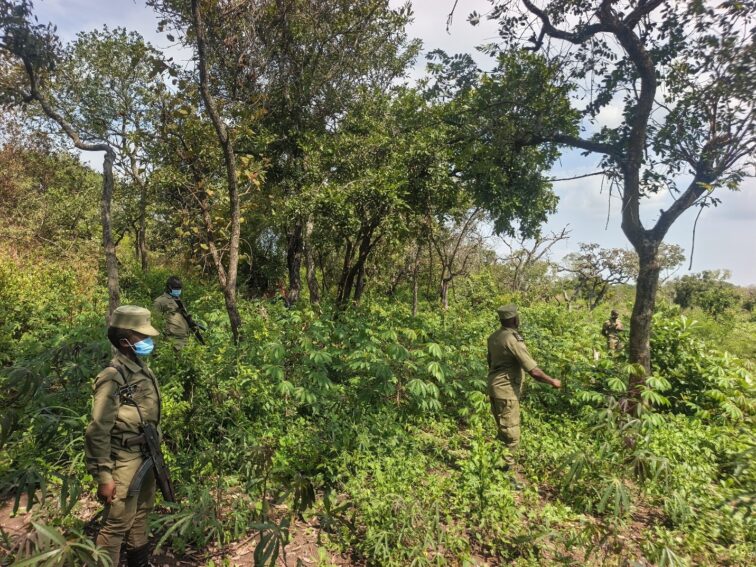
Police officers monitoring the levels of degradation of Mount Kei Central Forest Reserve in Yumbe district. Photo//Dramadri Federick.
Mount Kei Central Forest Reserve covers approximately 40,689 hectares, or 406.89 square kilometres, across Koboko and Yumbe districts, close to Uganda’s border with South Sudan.
Its landscape includes woodland and savanna habitats that support a range of wildlife and plant species. The reserve has also been recognised for its biodiversity, including its birdlife and other wildlife.
However, its conservation history is marked by the loss of one of its most significant animals: the rhinoceros.
The area was formerly associated with a rhino sanctuary. Regional insecurity, insurgency and political instability contributed to the loss of the rhino population, leaving behind a conservation landscape whose protection remains contested.
Koboko District Chairperson Mambo Ashraf says the loss of the rhinos was followed by what he considers inadequate attention to the reserve’s protection.
He argues that the Uganda Wildlife Authority (UWA) paid less attention to the area after the rhinos were wiped out during the insurgency and prolonged political instability that affected the region.
For Ashraf, the loss was not merely the disappearance of an animal species but the weakening of protection for what he describes as an international conservation treasure.
“We cannot let this forest die, or else we demand back our land for Agriculture.” He states
His account raises questions about the continuity of government conservation efforts after the sanctuary lost its rhinos, and whether the institutional attention given to the area changed as a result.
The historical circumstances surrounding the loss of the rhinos and the subsequent management of the reserve require further examination through UWA records and official conservation documents.
The National Forestry Authority (NFA) later took on management responsibilities for the forest reserve. Yet the pressure on the forest has continued.
Local estimates suggest that approximately 7,000 hectares of the reserve have been degraded. Authorities and forestry officials also estimate that about 7,000 people are living inside the reserve, spread across five villages and two markets.
Separate reporting by NTV Uganda has cited more than 8,000 residents accused of encroaching on the reserve. The figures reflect different estimates and assessments, but both point to the scale of the human settlement challenge.
Residents cultivate crops such as maize and cassava, while others are involved in charcoal burning, timber cutting and splitting logs for commercial use.
The result is a difficult conservation dilemma: how to protect a legally designated forest reserve while addressing the livelihoods and settlement concerns of thousands of people who depend on the land.
The people, the forest and the unresolved question of land
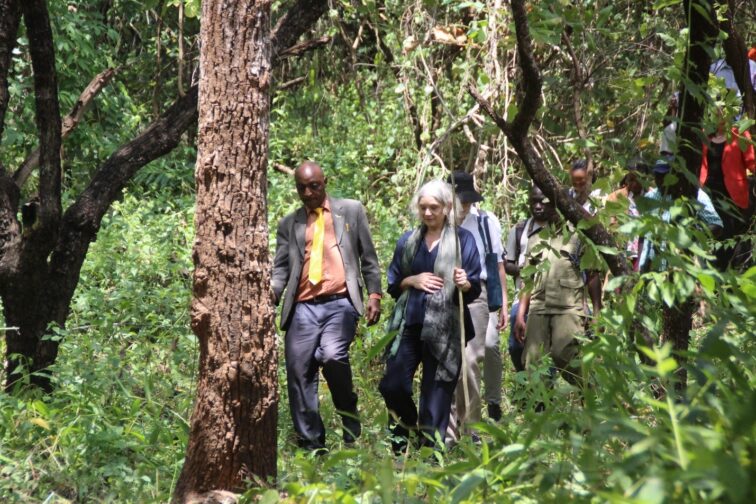
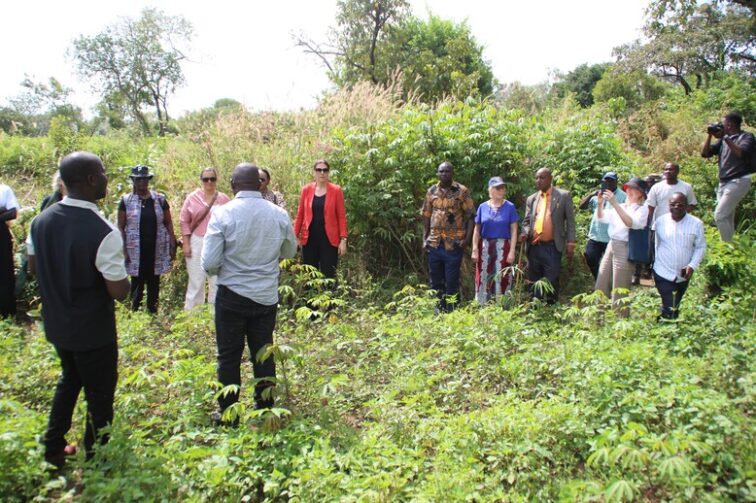
During a joint visit to the area, heads of delegation from Sweden, the Netherlands, Ireland and Denmark reportedly observed five villages and two markets within the reserve.
The presence of established settlements and markets illustrates the complexity of enforcing conservation rules in a forest landscape where communities have lived and conducted economic activities for years.
Koboko Resident District Commissioner Samuel Hashaka Mpimbaza acknowledges the challenge of removing thousands of residents without a clear and carefully managed process.
“We have agreed that the 7,000 people is a big number and you cannot wake up one day and simply say they should go,” he says.
His remarks highlight the need for government to reconcile forest protection with the rights, livelihoods and welfare of affected communities.
But local leaders also question the effectiveness of government interventions and the timing of conservation enforcement.
Ashraf says communities cannot be expected to shoulder the burden of conservation without meaningful engagement and practical alternatives.
“When did NFA come to this forest? Where were they when the people were burning the charcoal, splitting logs, and all these land clearance? What interventions did they do?” he asks.
He adds: “For me, I side with the communities to say that if there is no meaningful engagement, then we need our land back.”
His position reflects a wider tension between conservation authorities and residents who feel that restrictions on land use have not been matched by sufficient consultation, compensation or livelihood support.
The challenge is not simply whether people should remain inside the reserve. It is also whether government has a credible plan to address settlement, restore degraded areas and prevent further destruction without pushing already vulnerable households into deeper poverty.
Cross-border exploitation and the limits of enforcement
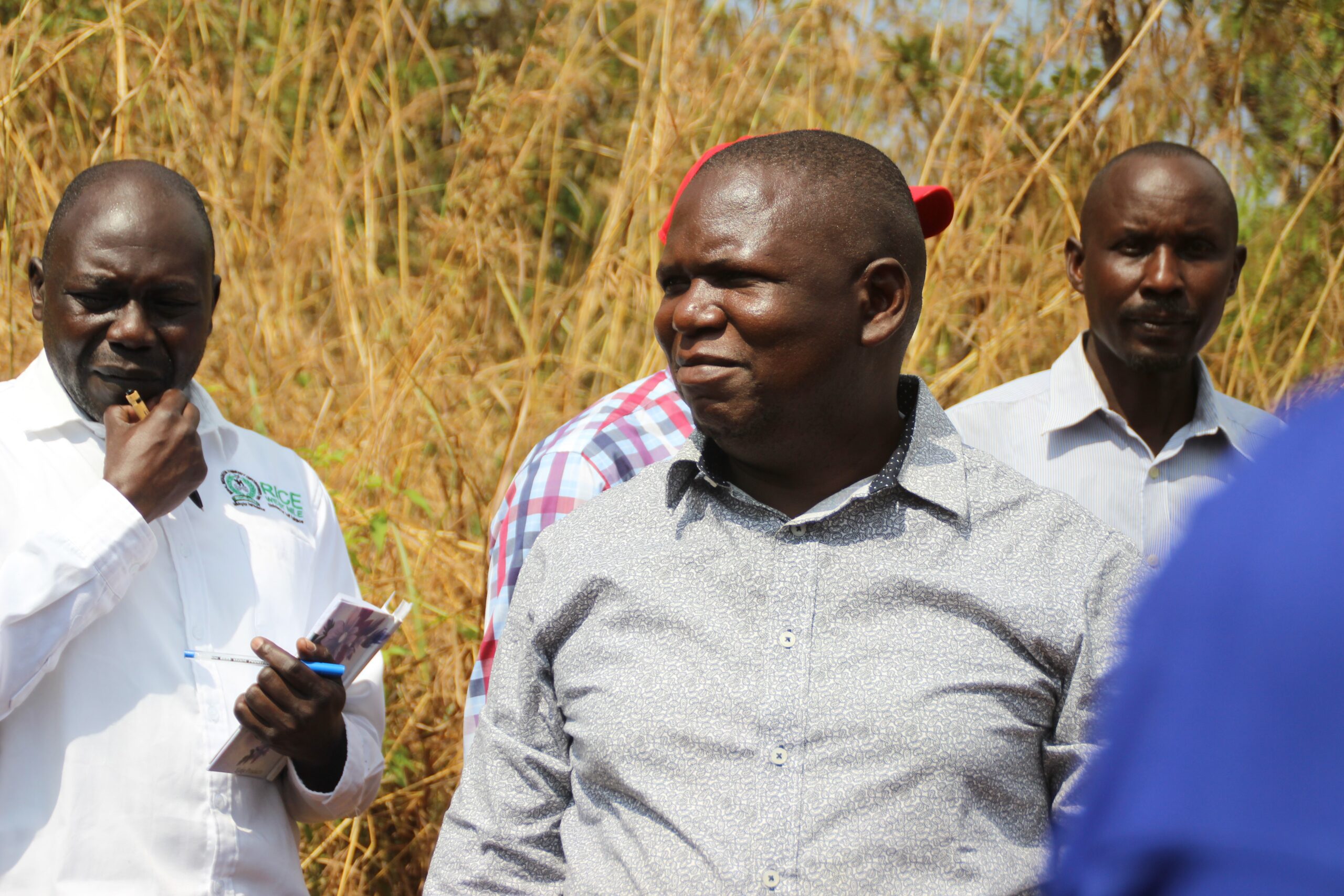
Harunah Busobozi, NFA forest officer attached to Mount Kei Sector. Photo//Dramadri Federick
Beyond local settlement and farming, forestry officials say Mount Kei faces another challenge: the alleged involvement of cross-border actors in the commercial exploitation of forest resources.
Harunah Busobozi, an NFA forest officer attached to Mount Kei Sector, alleges that some South Sudanese nationals cross into the reserve to transport timber and charcoal.
“We have been having a lot of issues with the South Sudanese who come with lorries to ferry logs inside the forest and get cleared at their borders before they cross to Uganda with either the charcoal or logs,” he says.
Busobozi further alleges that some of the individuals involved are armed.
“Some of them are rebels; they come with their guns,” he says.
The allegations were disputed in late October 2026 by Peter Jackson Golo, Administrator of Kerwa Boma in South Sudan’s Kajo-Keji County. Golo dismissed claims that the charcoal trade along the Uganda–South Sudan border supports or aids rebel activity.
His response introduces an important distinction in the debate: the existence of cross-border charcoal trade does not, on its own, establish that the trade finances or supports armed groups.
The competing accounts underscore the need for independent evidence to establish whether armed actors are involved in the trade, how the charcoal and timber move across the border, and whether any proceeds support rebel activity.
Police records, security reports, customs documentation and accounts from authorities on both sides of the border would be necessary to establish the scale and organisation of the alleged trade. The relevant South Sudanese security and customs authorities should also be asked to clarify what controls exist along the border.
According to information provided by local sources, the protection presence includes approximately 11 UPDF personnel, police officers from Ludara Sub-county and three NFA forest officers.
The scale of the forest, the number of people living within it and the competing accounts of cross-border activity raise questions about whether the current enforcement arrangements are sufficient.
The issue is particularly important because forest degradation does not stop at administrative boundaries. Once trees are removed, the consequences extend to biodiversity, soil quality, water systems and the livelihoods of communities that depend on the landscape.
Millions committed to conservation, but implementation falls behind.
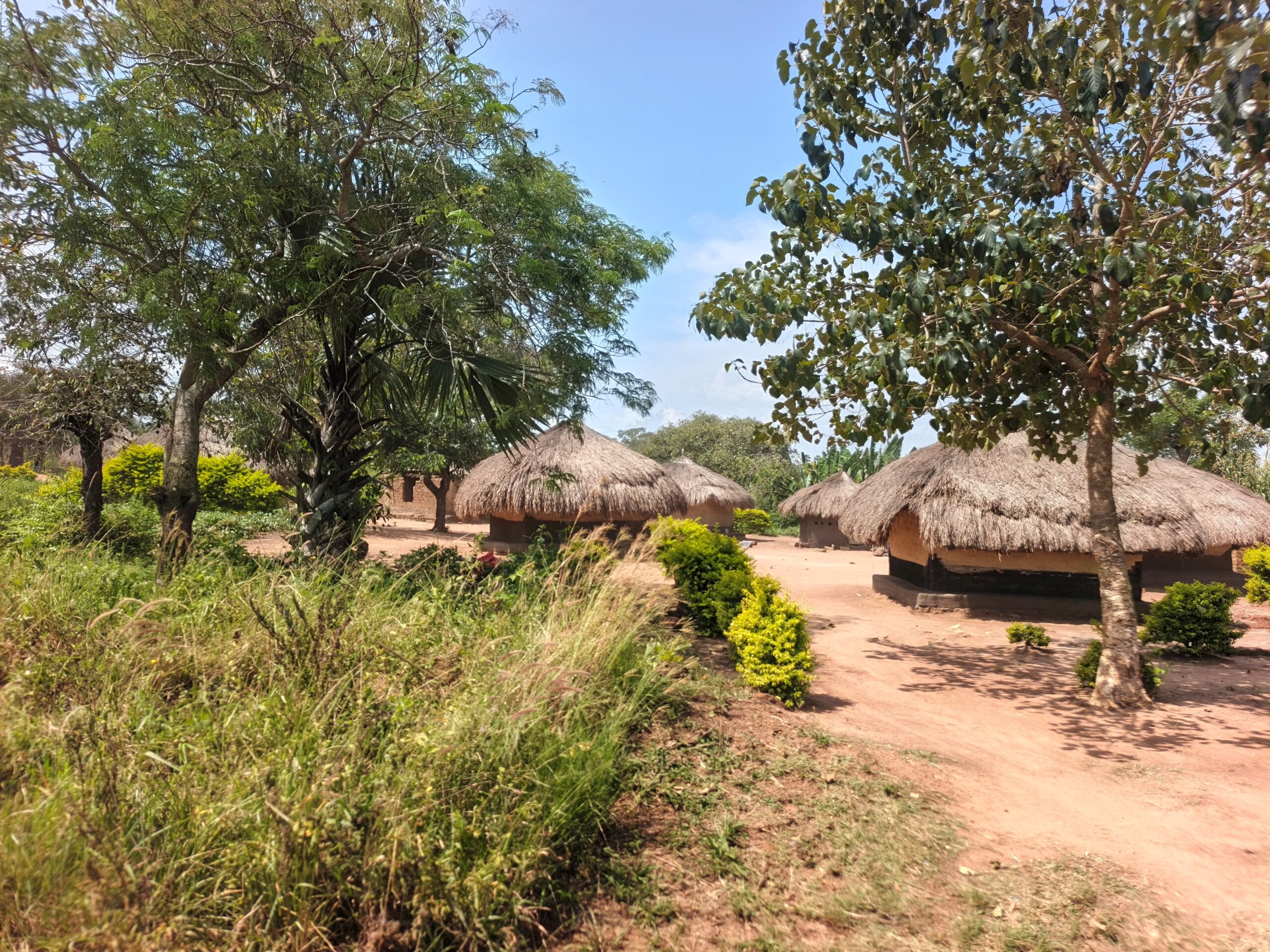
Houses found inside the forest. Photo// Dramadri Federick
Mount Kei’s challenges are unfolding against the background of Uganda’s wider investment in forest and protected-area conservation.
One of the major interventions is the World Bank-supported Investing in Forests and Protected Areas for Climate-Smart Development (IFPA-CD) Project.
The six-year programme, launched in March 2022 after being signed by the World Bank in March 2020, was designed to improve the sustainable management of forests and protected areas while increasing benefits to communities living around them.
The project involves the Ministry of Water and Environment, the National Forestry Authority and the Uganda Wildlife Authority, working with other government institutions and district local governments.
Its financing framework includes USD148.2 million from the International Development Association through the World Bank and USD30 million from the Government of Uganda. An additional USD30 million from global climate funds was anticipated.
The project covers selected protected areas in the Albertine Rift and West Nile, including seven national parks, four wildlife reserves and 27 central forest reserves, as well as 19 refugee-hosting districts.
Its interventions include forest restoration, improved protection of natural habitats, investment in tourism infrastructure, community livelihoods and increased tree cover on private and community land.
However, a December 2024 Value for Money audit by the Office of the Auditor General identified significant delays and low utilisation of funds.
The audit found that by September 30, 2024, the project had utilised only 33.9 per cent of the USD43.5 million disbursed to implementing agencies.
The findings raise concerns about the pace at which conservation investments were being translated into activities on the ground.
The most poorly performing component was Component Three, which targeted increased tree cover on community and private land and support for farm forestry and fuelwood supply in refugee-hosting areas.
It had absorbed only 1.4 per cent of the USD9.8 million disbursed for it.
Key activities, including agroforestry development and the establishment of fuelwood lots on private land, had experienced delays of between 18 and 22 months.
The audit also identified delays in civil works under other components, including construction of staff accommodation, roads, visitor facilities, picnic sites and other protected-area infrastructure.
Some planned activities were subsequently removed or reduced in scope because of implementation delays and low absorption of funds.
These included proposed zip lines, a canopy walkway and fire towers. The target for enrichment planting in central forest reserves was reduced from 17,000 hectares to 5,000 hectares, while the target area for private plantation development subsidies was reduced by 59 per cent to 15,000 hectares.
The Auditor General attributed the overall underutilisation largely to delayed procurement approvals, lengthy review processes between implementing agencies and the World Bank, and delays involving other government approval institutions.
Government management, in its response, cited the effects of COVID-19, lengthy procurement procedures and repeated reviews before the World Bank issued procurement no-objections. It also outlined measures including monthly coordination meetings, procurement tracking and staff training.
The audit findings are significant because the project was intended to strengthen conservation and improve community benefits within a defined implementation period.
However, they should not be interpreted as proof that funds were stolen or misappropriated. The report documented implementation delays, underutilisation and changes to project activities.
Importantly, the audit’s national findings do not establish how much funding was specifically allocated to or spent in Mount Kei. The reserve was not among the NFA central forest reserves identified in the audit’s physical inspection sample.
This distinction matters. National conservation expenditure and restoration figures cannot automatically be presented as achievements or failures at Mount Kei.
The audit did, however, report wider NFA achievements, including the production of 982,878 seedlings, enrichment planting across 3,284 hectares and restoration of 1,745 hectares in Bugoma, Kagombe and Rwensambya central forest reserves.
It also reported procurement of 5,940 beehives and related equipment to support livelihoods around forest reserves.
These achievements demonstrate that conservation and livelihood interventions have been undertaken in other locations. The outstanding question is what comparable, measurable support has reached the communities and degraded sections of Mount Kei.
Can conservation pay for itself?
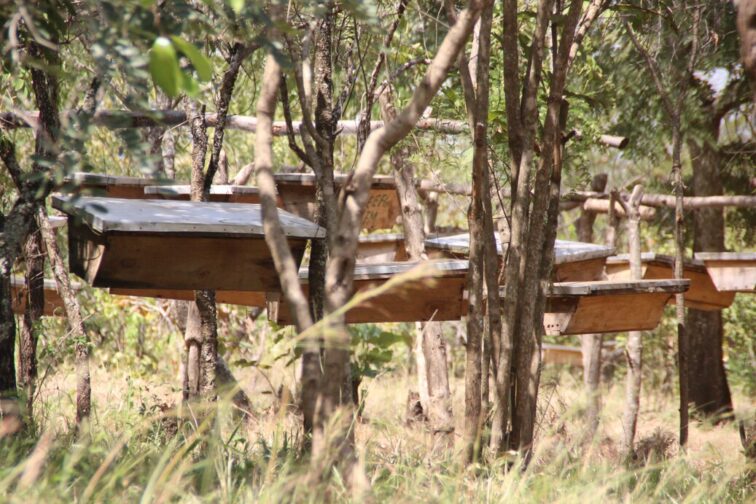
For communities around Mount Kei, the experience of Onesta’s group offers a possible model for reducing pressure on the forest.
Beekeeping, crafts and improved agricultural production can provide income without requiring households to depend on charcoal burning and timber extraction.
But such initiatives need to be sustained, expanded and supported by access to markets, technical assistance and reliable financing.
A few successful community groups cannot reverse degradation across a reserve covering more than 40,000 hectares.
The scale of the problem requires a coordinated programme involving forestry authorities, district leaders, local communities, security agencies and development partners.
Northern Region Youth Member of Parliament Elma Kapel Challa has also warned that environmental degradation and changing weather patterns could worsen food insecurity if communities and local governments fail to prepare.
She says districts need meaningful budgets and stronger involvement of young people in protecting forests and other protected areas.
“We have predicted that there’s going to be a lot of hunger due to crop failures and yet districts have not prepared for this anticipated weather event. We must have meaningful budgets and ensure the young people invest their energy in protecting the forests and other protects areas”. Challa explains
Her concerns underline the connection between conservation, climate resilience and household livelihoods.
As forests disappear, communities risk losing more than trees. They also lose resources that support agricultural production, biodiversity and environmental stability.
A new restoration proposal, but whose interests come first?
Another development that could shape Mount Kei’s future is a proposed large-scale reforestation and carbon project associated with Hummingbirds and Equatoria Forestry Company Ltd.
According to the project’s publicly presented plans, the initiative proposes restoration and conservation activities across approximately 42,000 hectares, including 20,000 hectares of native forest restoration and 10,000 hectares of teak plantations on degraded land.
The developer also presents projections of carbon benefits, employment and community development, with anticipated carbon-credit revenues over the project’s proposed 48-year period.
These are project proposals and projections, not verified restoration outcomes or evidence that communities have already received benefits.
The scale and duration of the proposal raise important questions about land rights, carbon ownership, environmental impact and the future of the reserve’s natural ecosystem.
Before such an initiative can be considered a conservation success, the public needs access to the environmental and social impact assessment, land-use agreements, carbon-rights arrangements and community consultation records.
For communities already facing uncertainty over their land and livelihoods, a long-term carbon project should not become another arrangement made without their meaningful participation.
The accountability questions Mount Kei cannot escape
Mount Kei’s story is not simply one of people encroaching on a forest. It is a story of a former wildlife sanctuary, regional conflict, institutional responsibility, poverty, cross-border allegations and conservation investments whose local impact remains insufficiently established.
The loss of the rhinos during years of insecurity marked a major setback for the area’s conservation history. The concerns raised by Ashraf about subsequent institutional attention deserve answers from UWA and other responsible authorities.
The NFA, which now has forest management responsibilities, must also explain the current state of protection, the extent of degradation, the number of people living inside the reserve and the resources available to address the problem.
The Ministry of Water and Environment and the implementing agencies of the IFPA-CD Project need to provide clear records of activities undertaken in Mount Kei, funds allocated to the reserve, expenditure, restoration targets and measurable outcomes.
The World Bank should clarify the project’s implementation performance, the status of any extension requests and the extent to which delayed activities were eventually completed.
Security and customs authorities in Uganda and South Sudan also need to clarify the allegations of cross-border timber and charcoal exploitation, including the disputed claim that the trade supports rebel activity.
Onesta’s experience demonstrates that alternatives can work when communities receive practical support and see direct benefits from conservation.
But her story is only one part of a much larger challenge.
Mount Kei cannot be saved by enforcement alone, nor by announcing large conservation budgets without transparent implementation and measurable results.
Its future will depend on whether government institutions can protect the forest, address legitimate community concerns and ensure that conservation finance translates into real improvements on the ground.
For a forest that once sheltered rhinoceroses and remains an important ecological asset along Uganda’s international border, the question is no longer whether it deserves protection.
The question is whether the institutions and investments entrusted with saving it can finally deliver.

Comments
This post currently has no comments.