
KIDEPO ELECTRIC FENCE PROJECT STALLS OVER LAND DISPUTE
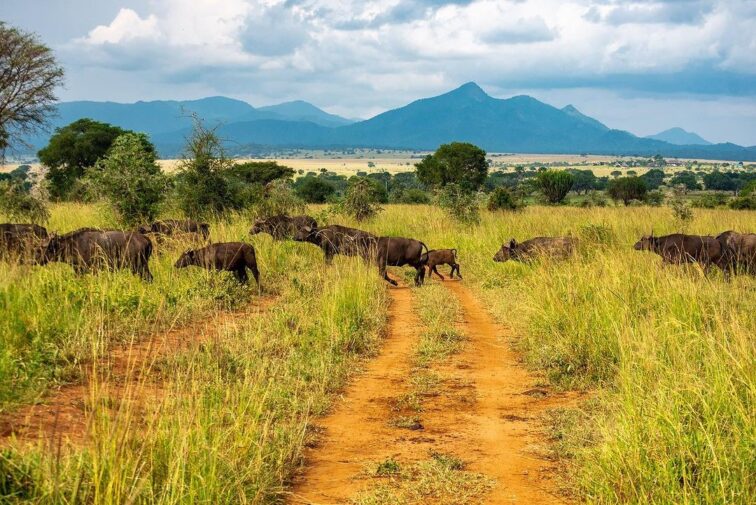
The stunning landscape of Kidepo Valley National Park in northeastern Uganda. Photo file: Uganda Wildlife Authority (UWA)
By Proscovia Achomo
Gulu City
The planned construction of a 292-kilometre electric fence around Kidepo Valley National Park
has stalled following a dispute between communities and the Uganda Wildlife Authority (UWA) over the proposed alignment of the fence.
The project, ordered by President Yoweri Museveni in 2024, was intended to reduce persistent human-wildlife conflict in communities surrounding the park, where elephants and other wild animals frequently leave the protected area and enter gardens and settlements.
However, while communities say they urgently need protection from wildlife, they are also demanding assurances that the fence will not extend the park boundary or threaten their land.
Dr. Eric Morris Enyel, the Kidepo Conservation Area Chief Warden, said the disagreement is largely a result of mistrust and inadequate community sensitization. He said some residents believe the electric fence is intended to mark the park boundary and take over their land. “The electric fence is purely for protection of crops and livelihoods. It is not for boundary marking,” Enyel said.
Enyel said UWA is reviewing its community engagement strategy and will return to affected communities to explain the purpose and proposed alignment of the fence before construction resumes.
In Karenga District, local leaders say the concern is not about the fence itself, but where it is being placed.
Peter Dan Okongo, the Chairperson of Karenga District, said UWA had identified positions for fence poles and pathways in areas that communities consider their land. He said this has heightened fears over land security.
“There was no objection to the fence itself. The dispute began when a proposal was put forward to extend the fence beyond the agreed boundary. Our concern is simply the security of our land,” Okongo said.
Okongo said the need for protection is becoming more urgent as wildlife attacks increase. He said seven people have been killed by elephants in Karenga District in recent months, while elephants, buffaloes and other wild animals are increasingly moving closer to settlements.
Smith Opon, the Vice Chairperson of Kitgum Municipality, said six people in the district have reportedly been killed by elephants, with women among the most affected.
He said many of the attacks happen when residents are working in their gardens. “People are being attacked while they are in their gardens, and most of those affected are women,” Opon said.
Opon said the deaths demonstrate the urgency of finding a lasting solution to human-wildlife conflict. However, he said government interventions must be implemented through proper consultation with communities whose land could be affected.
He said residents in Orom Sub-County and surrounding areas have been cultivating and using land that they were later informed falls within the national park. This, he said, has created fears that the government could be attempting to take their land.
Opon called for clear information about the official park boundaries, the proposed fence and any support or compensation for communities that may be affected.
Susan Nsambu Nakawuki, the state minister for Tourism, Wildlife and Antiquities, said the project has been delayed partly because of resistance from some communities.
“We would have put the fence long ago, but the community was not cooperative,” Nakawuki said.
She said wildlife continues to move beyond the park, citing an incident in which more than 200 elephants crossed into Agago District.
Nakawuki said the fence would help prevent wildlife from destroying crops and threatening human lives.
“We don’t want to see any family crying over a life that has been lost,” she said.
But UWA Executive Director Dr James Musinguzi says the electric fence should not be the only solution to human-wildlife conflict.
Musinguzi has urged communities around Kidepo to borrow a leaf from communities living around Bwindi Impenetrable National Park, where farmers grow crops that are less attractive to wildlife.
He said communities around Kidepo could plant crops that elephants and other wild animals are less likely to eat, particularly along the park boundary, creating a buffer between wildlife and settlements.
The approach, he said, could help discourage animals from entering gardens while allowing communities to continue farming.
Musinguzi’s proposal would complement the planned electric fence and other measures aimed at reducing human-wildlife conflict.
The government has allocated about Shs15 billion for wildlife-deterrent fencing around several national parks, with about Shs3 billion expected to support fencing around Kidepo. UWA has already constructed part of the planned fence in Karenga District.
Kidepo Valley National Park covers about 1,442 square kilometres in northeastern Uganda, mainly in Kaabong and Karenga districts, and is connected to the wider Acholi area including Kitgum, Lamwo, and Agago districts, near the South Sudan and Kenya borders.
Upcoming on 90.9 FM
Upcoming on 94.5 FM
Upcoming on 101.4 FM
Upcoming on 104.8 FM



















Comments
This post currently has no comments.