
AMURU VHTS STRUGGLE WITH TRANSPORT, EQUIPMENT AND CONNECTIVITY
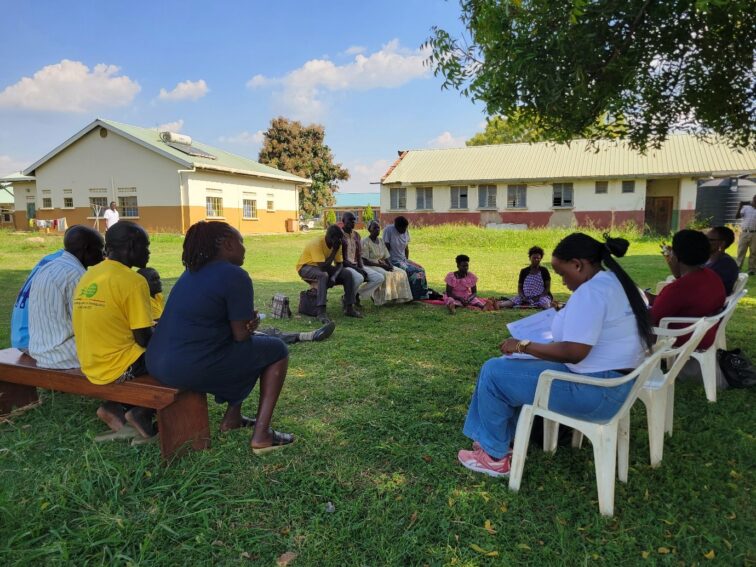
The CCM board members while interacting with VHTs at Atiak HC IV
By Biko Rombe
Gulu City
Village Health Teams (VHTs) in Amuru District are facing transport, equipment, training and internet connectivity challenges that are affecting their ability to deliver and report community health services.
The challenges were highlighted during a Global Fund Country Coordinating Mechanism (CCM) Board oversight meeting held on September 2, 2026, at Amuru District Headquarters.
The district health team told the CCM Board that VHT start-up kits and transport support remain major challenges, while some newly recruited VHTs lack adequate knowledge of basic community health services and integrated community case management.
The team also reported that system downtime, limited data and poor internet connectivity affect electronic reporting, particularly in hard-to-reach areas.
Rain and flooding were cited as another challenge, affecting VHT activities, coordination meetings and attendance.
Because VHT work is voluntary, the district said some community health workers may prioritize farming and other household activities over attending coordination meetings.
Despite the challenges, the district reported progress in VHT coordination and mentorship.
According to the district health presentation, 218 VHT coordination meetings had been conducted against the set targets, while integrated visits, mentorship and coaching by extended VHTs had achieved 100 percent performance.
However, participation in post-community dialogue meetings remained low, with 106 people attending out of 275 planned participants, representing 39 percent.
The district also reported that it had planned two human rights and gender-protection workshops but had not conducted any by the time of the review.
Mary Mbiide Tabaro, a CCM Board delegation member who works with TASO, said the challenges facing VHTs must be considered alongside the fact that they are volunteers and therefore experience high attrition.
She said equipment provided to VHTs, including medicine boxes, bags and the tablets planned for community health extension workers, should be treated as work equipment rather than personal property so that it can be handed over to replacements when VHTs leave.
Tabaro also called for VHT coordination meetings and support visits to be used as training opportunities because funding for community activities is becoming increasingly limited.
She said training for Community Health Workers is planned between September and December under United States Government funding, rather than Global Fund support.
The district health team said the countrywide shift from paper-based to electronic reporting is also creating new demands for VHTs.
The Principal Recipient is expected to support VHTs with electronic gadgets, but the district said the devices must be accompanied by training and reliable connectivity if they are to improve reporting.
Immaculate Owomugisha, the lead of the CCM Board delegation, said the board had taken the concerns about VHT facilitation seriously.
She said the board would follow up the matter with the Ministry of Health’s community health department and TASO to determine what support could be included in the next Global Fund funding cycle beginning in January.
Owomugisha said electronic reporting of community health activities was another issue requiring attention because gaps in data could affect programme planning and decisions on how resources are allocated.
The district also called for stronger coordination among implementing partners and community-based organisations so that available resources can be combined rather than supporting separate activities.
Denis Ocaka, the Amuru District Laboratory Focal Person, said the district is already using data to identify communities with a high malaria burden and guide targeted outreach activities.
He said teams have been conducting community dialogues and targeted outreaches in hard-to-reach areas, including landing sites, while working with partners to address transport challenges.
Ocaka said strengthening community-level interventions is important because residents in remote areas face long distances to health facilities.
The CCM Board also raised concerns about inconsistent supplies of malaria commodities, with the district reporting situations where anti-malarial medicines arrive without rapid diagnostic tests, while at other times the tests are available without the medicines.
The board said improving the supply chain, supporting consistent commodity procurement and aligning deliveries with facility demand would be important in strengthening community health services.
The district said it would continue taking a stronger leadership role in coordinating VHT activities while working with implementing partners to keep community health services running despite the funding, transport, weather and connectivity challenges.
Upcoming on 90.9 FM
Upcoming on 94.5 FM
Upcoming on 101.4 FM
Upcoming on 104.8 FM
















Comments
This post currently has no comments.