
ARUA FARMERS QUESTION UNIFORM FMD VACCINATION FEES NATIONWIDE
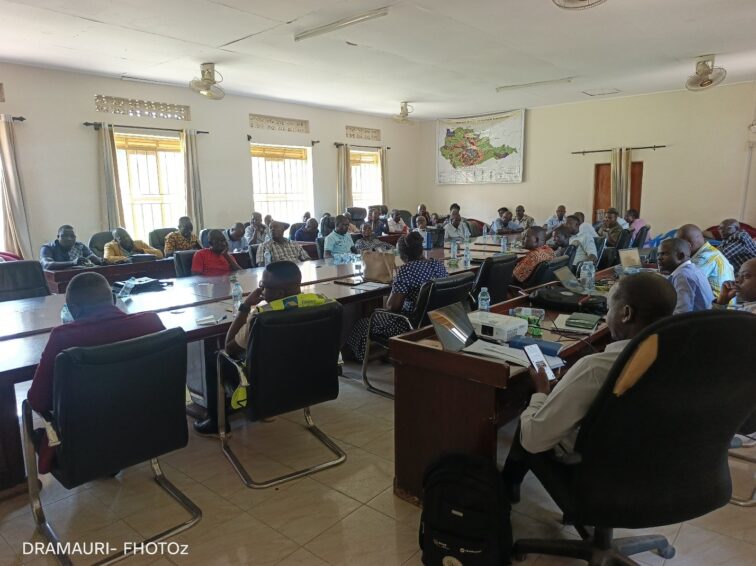
MAAIF Officials, Arua city extension officers and farmer representative during an engagement on Friday, photo by Morish Dramadri
By Morish Dramadri
Arua city
Farmers in Arua City have called on the Ministry of Agriculture, Animal Industry and Fisheries (MAAIF) to adopt a more affordable pricing model for the implementation of the government’s mandatory bi-annual Foot-and-Mouth Disease (FMD) vaccination programme, citing their income levels and the value of livestock breeds kept in different regions of the country.
Under the new national policy on FMD vaccination, farmers are required to contribute Shs8, 000 per head of cattle and pig and Shs4, 000 per goat and sheep during every vaccination cycle.
The charges form part of a cost-sharing arrangement provided for under Uganda’s Animal Diseases Control Act.
The policy comes at a time when the livestock subsector continues to play a significant role in Uganda’s economy.
In the 2025/2026 financial year, livestock contributed about 4 percent to the national Gross Domestic Product (GDP) and accounted for between 17 and 21 percent of agriculture’s contribution to the economy.
Government argues that protecting the sector from devastating diseases such as FMD is critical to sustaining production, safeguarding livelihoods, and maintaining access to regional and international livestock markets.
However, farmer representatives have questioned the uniform pricing structure, arguing that livestock values vary across regions and that the costs could be burdensome for small-scale farmers.
“A cow in western Uganda can cost up to Shs5 million, while ours here may cost around Shs2 million. The pricing should be adjusted according to the region,” one farmer argued.
Others questioned why government could not fully subsidize vaccination for vulnerable farmers and expressed concerns about the effectiveness of the programme, given the numerous livestock trading points and movement corridors across the country.
In response, Dr. Samuel Lule, Senior Animal Nutritionist at MAAIF, defended the cost-sharing model, explaining that the vaccination charges are based on scientific requirements rather than the size, breed, or market value of the animals.
“The cost is not based on the size of the animal but on the vaccine dose required. It is based on science, not breed or size,” Dr. Lule explained.
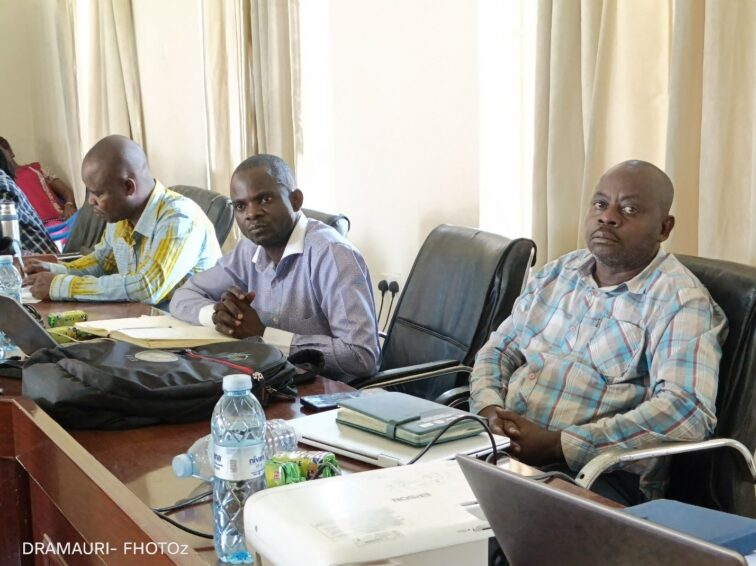
MAAIF officials, Dr. Samuel Lule (in square shirt), Dr. Okuyo Charles Bosco (middle) during the engagement with farmer representative, photo by Morish Dramadri
Foot-and-Mouth Disease is a highly contagious viral disease that affects cloven-hoofed animals, including cattle, sheep, goats, and pigs. The disease causes high fever and painful blisters in the mouth, on the teats, and between the hooves, resulting in severe weight loss, reduced milk production, lameness, and significant economic losses.
Although Uganda does not have a consolidated national estimate of losses caused by FMD over the last decade, studies conducted during outbreaks in parts of eastern Uganda indicate that affected households lose an average of USD 323 per outbreak cycle.
The losses arise from animal deaths, reduced milk production, loss of animal traction for farming, abortions, and treatment and disease management expenses. In infected cattle, milk production can decline by as much as 80 percent, while mortality among young calves remains particularly high.
Robinson Draga, the Arua City Agricultural Officer, challenged farmers to view vaccination as an investment rather than an expense, emphasizing the importance of protecting livestock from preventable diseases.
“Value your animals. We want milk and meat, and these come from healthy livestock. The day FMD wipes out our animals, it will be too late. Consider this cost as part of production,” Draga urged.
Similarly, Jackson Dratibi, the Deputy Mayor of Arua City, encouraged farmers to embrace the cost-sharing arrangement, arguing that government is shouldering a significant portion of the vaccination costs.
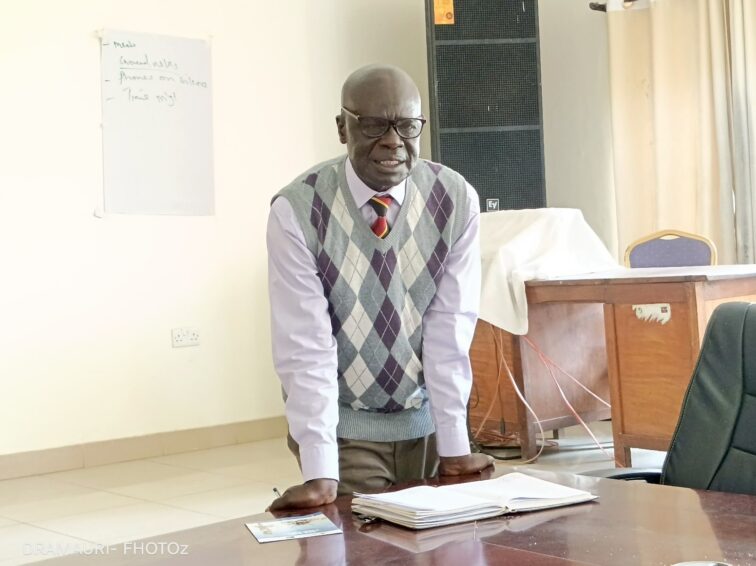
Arua city deputy mayor His Worship Jackson Dratibi speaking during the engagement, photo by Morish Dramadri
“Government is not shifting the burden to farmers. Rather, it is helping farmers by sharing the cost of protecting their livestock,” Dratibi said.
Under the new MAAIF policy, farmers are required to vaccinate their animals every six months during two annual vaccination cycles conducted between July and August and January and February.
The ministry has also warned that unvaccinated animals will be barred from livestock markets and will not qualify for movement permits or export certification.
Government hopes the mandatory vaccination programme will strengthen national disease control efforts, reduce livestock losses, and enhance Uganda’s competitiveness in regional and international livestock trade.
Upcoming on 90.9 FM
Upcoming on 94.5 FM
Upcoming on 101.4 FM
Upcoming on 104.8 FM












Comments
This post currently has no comments.