
ARUA TRAUMA CENTRE CLOSURE LEAVES PATIENTS WITHOUT SUPPORT
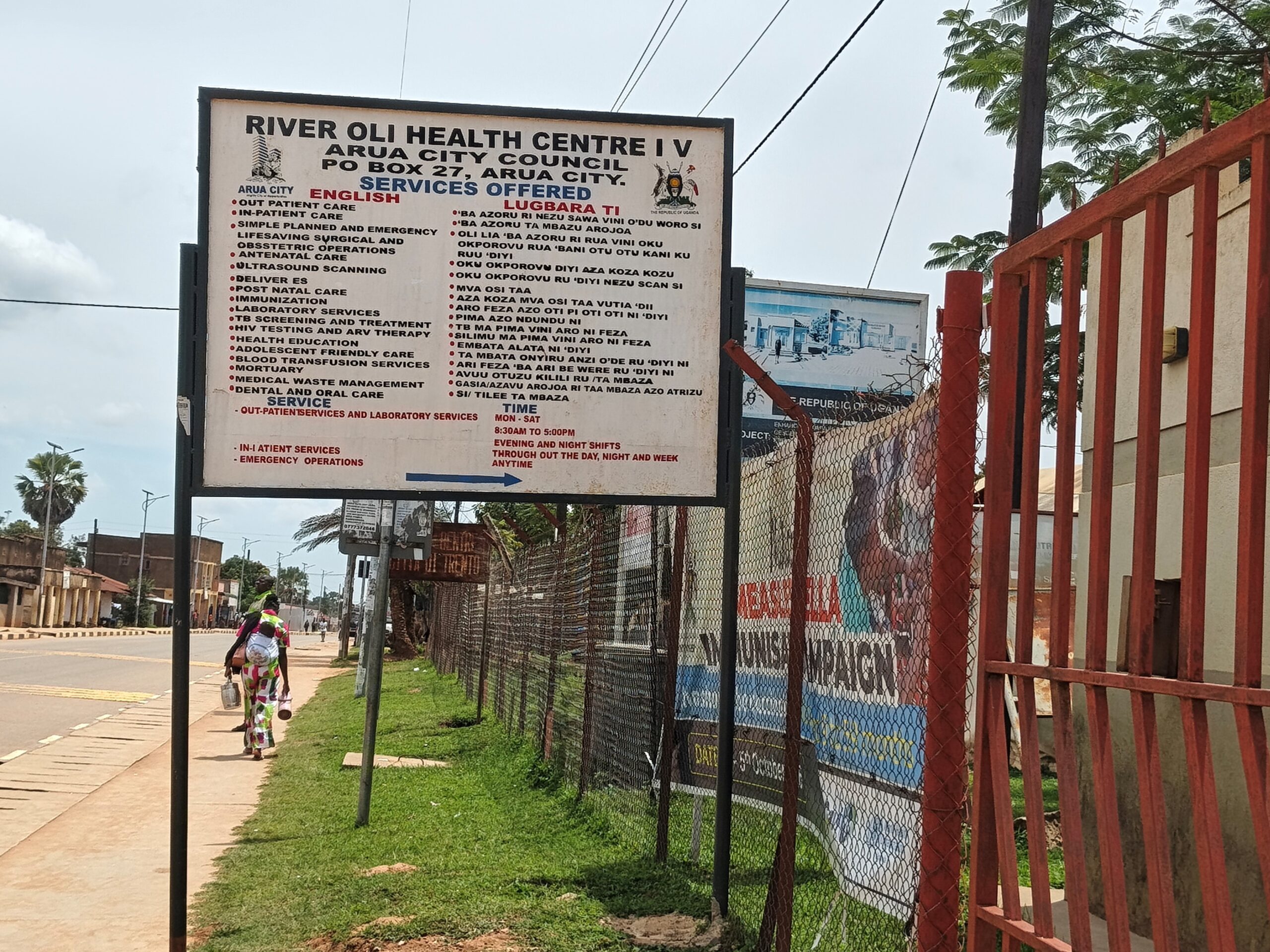
Signage at the entrance of Oli Health Center IV. Photo// Dramadri Federick
By Dramadri Federick and Asara Charity
The non-functionality of the Trauma Healing Centre at Oli Health Centre IV in Arua City is affecting access to mental health services for trauma survivors.
On 5th June 2025, the South Sudanese Refugees Association, SSURA, officially handed over the more than 140-million-shilling Trauma Healing Centre and staff house to Arua City authorities. The facility was established with funding from the Swiss Agency for Development and Cooperation, SDC, and technical support from Cities Alliance to strengthen mental health services and improve accommodation for healthcare workers in the region.
However, following the expiry of the project in July this year, SSURA withdrew its staff, leaving the facility largely idle and patients without the counselling services previously offered there.
The Monitoring and Evaluation Officer at SSURA, Dancan Onzima, says during the project period, 130 para-social workers, teachers and health workers were trained in trauma identification and referral, enabling the programme to support more than 10,000 clients.
“The programme ended in July because of funding. Even though the SSURA counsellor is no longer there, the referral pathway clearly states that such cases can still be referred to the mental health unit of Arua City. We handed over the facility to Arua City to be managed by Oli Health Centre IV,” Dancan said.
Currently, the facility is being used as office space by city staff.
Observations by Radio Pacis during a visit to the facility on September 30, 2026 found that the Health Inspector of Oli Health Centre IV and the Arua Central Division Health Educator have shifted their offices to the Trauma Healing Centre.
Justine Orodriko, the Health Inspector at Oli Health Centre IV, says the centre previously played an important role in supporting both refugees and host communities.
“At this trauma centre, we had a counsellor who used to come and help us counsel those who had trauma, but at the moment, it is not being done,” Justine said.
Uganda is facing a growing mental health and trauma burden, with diagnosed mental health cases reportedly rising by 71 percent, from 494,326 in 2021 to more than 843,000 in 2024.
Health experts also report that up to 90 percent of psychiatric patients in Uganda have experienced adverse childhood experiences, including witnessing domestic violence, physical neglect and bullying.
Upcoming on 90.9 FM
Upcoming on 94.5 FM
Upcoming on 101.4 FM
Upcoming on 104.8 FM










Comments
This post currently has no comments.