
BODA-BODA STAGES IN ARUA CITY MUST BE REGULATED, STAKE HOLDERS PROPOSE
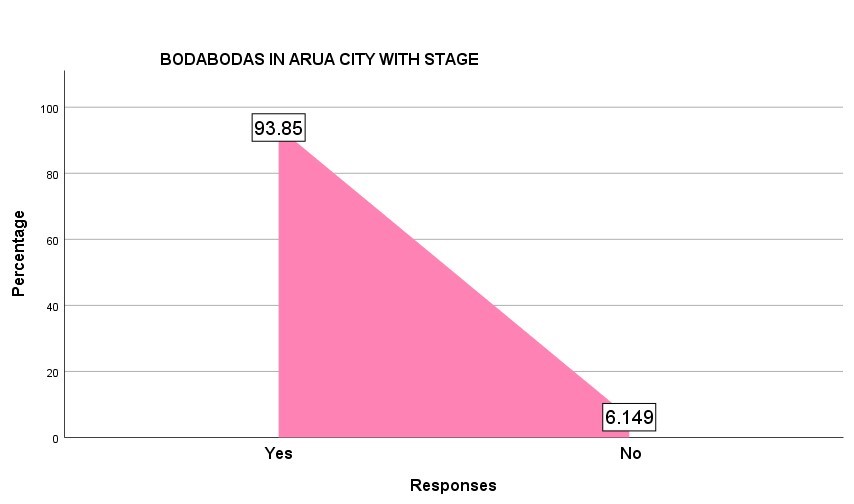
Source: Decisive Research and Training organization
By Godwin Abedican
Arua
Stake holders in Arua City are appealing for the regulation of Boda-boda stages in the city to ease congestion on the main roads and streamlining of the boda-boda industry operations.
A research carried out by Decisive Research and Training Organization (DRTO) in December 2024, to analyzed the industry’s demographic, economic, and operational dynamics while identifying significant challenges and opportunities for intervention indicates that, most Boda-boda riders (86.1%) operate without a registered stage, while only 7.8% are affiliated with a registered stage.
Whereas 93.9% operate from a stage, most of these stages may not be formally registered.
Against this background, Dribareyo Fiona, the Assistant Resident City Commissioner (RCC) attached to Arua Central Division says that, involvement of all stake holders is key in having this regulation done.
“The first thing is let’s work to bring the stake holders on board especially through the city council. Let’s find ways of making all these Boda-boda riders operating in the different stages to be organized. My advice to the association leaders is to ensure that they have all the Boda-boda stages in the city. When we work on that I am sure every other thing will become easy. Things like sensitization can easily be held because it will be easy for them to come when we organize such,” she said.
The majority of riders (93.9%) are affiliated with a specific stage, while only 6.1% are not. This indicates that stages play a critical role in the organization and operation of the Boda-boda industry in Arua City.
That means out of every ten rides, one is not affiliated to a stage. According to the Boda-boda leaders’ records, Arua City has more than 200 Boda-boda stages not formally registered for their official records.
According to the management of the Boda-boda association, the Boda-bodas who registered with an association are only those affiliated to the SACCO.
Alioni Sunday, the Chief Executive Officer (CEO) Decisive Research and Training Organization, the lead researcher in the findings says that, with a lot of information at hand from the research, it is easy to make references to the findings to push for the desired changes.
“We see many stages springing up almost daily, people just come in groups and say “let us be here” and they start calling it’s a stage which remains nit formally registered. Much of this data is here and I am sure that we shall continue to inform the public regularly on what is happening such that every individual can know his or her responsibility in having a better Boda-boda sector in Arua city,” Alioni revealed.
According to Adrole Thomas, the General Secretary Arua City Boda-boda Rider’s Association, from the research they have key take away that they can use to enhance their operations with some operations already on-going in line with the same.
“Currently we are doing stage verification in Arua city center especially the central division. We already have 87 Boda-boda stages which have been verified. Currently, stages are all over and are causing congestions. This undertaking is the responsibility of both the association and the city clerk’s office. We are going to liaise with the top offices to make sure we regulate these Boda-boda stages and make sure that they look organize,” Adrole said.
For a stage to be registered, the riders are expected to come in a group, elect their group or stage leaders and then report to the area LC 1 chairperson and the land lord then the report is taken to the association officers.
The office then makes a site visit to the proposed stage and recommends accordingly looking at factors like pavements which need to be avoided, the road parts covered by a suggested stage site among other factors before proposal is the approved for the registration.
The boda-boda industry serves as a crucial pillar of the informal economy, providing livelihoods for many, particularly young men and employs the second largest number if youths in the country after agriculture.
While stages play a critical role in the organization and operation of the boda-boda industry and lack of regulation of the same indicates a lack of formal registration within the industry, which affects organization of the industry.
Upcoming on 90.9 FM
Upcoming on 94.5 FM
Upcoming on 101.4 FM
Upcoming on 104.8 FM















Comments
This post currently has no comments.