
CLIMATE SHOCKS AND RISING FUEL COSTS DRIVE SHARP FOOD PRICE INCREASES IN ARUA CITY
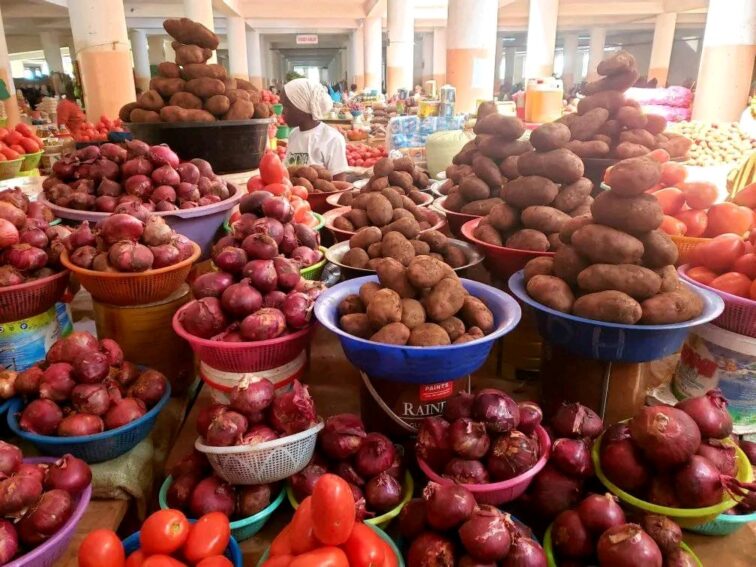
Some of the commodities from Arua Central Market whose prices have been affected by the prolonged dry spell. (Photo by Onzoma Albert)
By Onzoma Albert
Arua City
Arua City is experiencing significant increases in the prices of commodities and fresh produce, primarily due to a prolonged dry spell and highly unpredictable rainfall.
These climate shocks have caused localized crop failures, which in turn have led to supply shortages. The shortages directly impact major trading hubs such as the Arua Main Market.
This situation leaves fewer affordable options for local consumers. Price data from Arua Central Market indicates notable increases across various staples.
For instance, beans currently range between UGX 4,000 and UGX 5,000 at wholesale shops, and UGX 5,000 to UGX 6,000 at retail outlets per kilogram. Maize grains have surged from UGX 1,100 to UGX 1,600 per kilogram.
Groundnuts have risen from UGX 4,500 to UGX 7,000 per kilogram, and Sesame (Simsim) has increased from UGX 4,500 to UGX 5,000. Millet grain prices now range between UGX 3,000 and UGX 4,000, up from UGX 2,000, while sorghum prices are between UGX 2,000 and UGX 3,000, up from UGX 1,500.
Additionally, the cost of 20 liters of cooking oil has gone up from UGX 115,000 to UGX 138,000. Smaller quantities such as half a liter are now sold at UGX 4,000, and 1.5 liters at UGX 12,000. A five-liter costs UGX 38,000.
Prices for paste have also increased; a small container from UGX 7,000 to UGX 8,000, while a big tin now costs UGX 14,000 to UGX 15,000. Cassava flour prices range from UGX 1,500 to UGX 2,000 per kilogram, with 50kg going for UGX 65,000 and 100kg for UGX 130,000 or more.
Ali Abujere, a wholesale produce dealer, attributes these fluctuations to unpredictable weather patterns and poor rainfall distribution, which have significantly lowered yields of major staples like cassava, beans, maize, and vegetables.
“The price of beans has currently shoot-up and whoever is preparing to purchase beans in large quantity should prepare good amounts of money to purchase beans, we cannot tell when exactly the prices will stabilize again due to the changing climatic conditions experienced everywhere in the country” he said.
Monica Drilebaru, a retail vendor, notes that the prolonged dry spell has also affected the quality of commodities, contributing to increased prices.
“Our suppliers are complaining of too much sunshine which is affecting the growth and yields of crops in the garden, the current quality of commodities we are dealing with has totally been affected by the harsh climatic conditions, we currently have poor quality of produce in the market due the changing weather pattern making us to struggle to find good quality products” she said.
Arua City serves as a strategic logistical hub, local food stocks are often purchased by traders who supply profitable cross-border markets in South Sudan and the Democratic Republic of Congo (DRC).
Beyond weather issues, regional fluctuations in fuel prices have increased transportation costs to upcountry markets, further inflating retail prices for imported staples.
Upcoming on 90.9 FM
Upcoming on 94.5 FM
Upcoming on 101.4 FM
Upcoming on 104.8 FM



















Comments
This post currently has no comments.