
FARMERS DEMAND MECHANIZATION TO BETER SUPPLY VALUE ADDITION FACILITY IN ARUA CITY
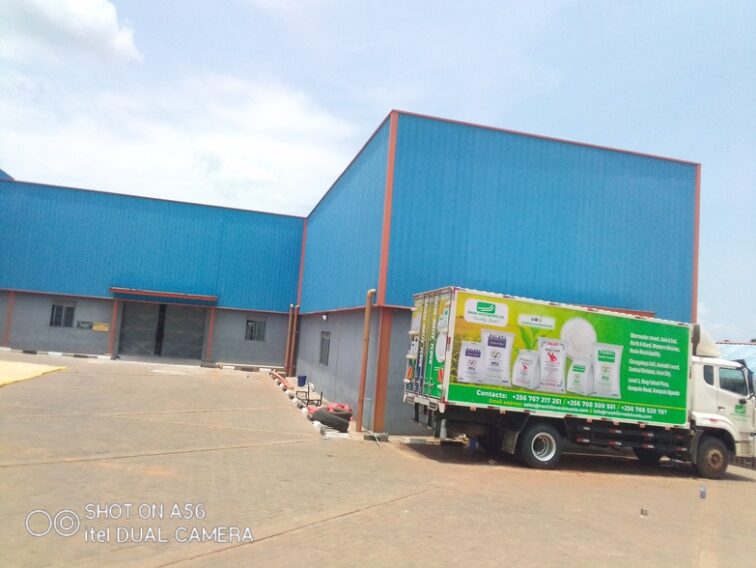
The value addition facility in Awindiri, Arua city.
By Sunday Amandi
Arua city
Lack of sufficient agricultural mechanization and capital is derailing local supply of produce in the value addition facility established in Arua city, as farmer’s reliance on slow, manual labor restricts farm size, lowers operational efficiency, and increases crop loss leading to low level of harvest.
Manual tools like hand hoes limit the amount of land a household can clear, plow, and plant, preventing large-scale production.
Christine Ayikoru, a model farmer in Arua district says, with low level of mechanization and small capital for production, most farmers lack capacity to produce on large quantities,
“For a bigger production, it needs mechanization, but here our farmers do not have mechanization, farmers only struggle on their own on small scale, you cannot open a big land for planting, financially people are week, for a bigger production, you have to put in money for you to produce mores,” Ayikoru said,
According to Bandua Nicodemus, the local council three chairperson for Drajini sub-county in Yumbe district, who is also a commercial farmer, formation of cooperatives for the local farmers would address a number of these challenges,
“Am going to mobilize and sensitize all the farmers in the sub-county to grow more maize and cassava, because there is already ready market which was not known, in my own opinion, there should be cooperatives, if cooperatives could be formed in each sub-county, all these crops could be collected and brought in one position and have uniform price to avoid exploitation of farmers,” Bandua said.
Joseph Olubpot, the director for Rwahi investment, the company running the facility urges the local farmers to produce and supply directly to the facility as they work with the local leaders to get solutions to some of the challenges,
“Because of the involvement of middle men, our local people charge little money, and the middle men are the ones to benefit, they charge for example maybe 500 shillings per kilogram, then the middlemen come and sale to the value addition at 1200 shillings, together with the local leaders, we are trying to reach out to them, we are not actually segregating that we need big quantities, but I also encourage people to come in groups, “said Olubpot.
Agricultural cooperatives can increase agricultural production by pooling resources to lower input costs, share heavy machinery, and improve market access; and Village savings and loan groups inside cooperatives provide low-interest loans for sudden farm emergencies or long-term upgrades.
Upcoming on 90.9 FM
Upcoming on 94.5 FM
Upcoming on 101.4 FM
Upcoming on 104.8 FM















Comments
This post currently has no comments.