
FEATURE: WHEN FREE HEALTHCARE ISN’T FREE IN ARUA
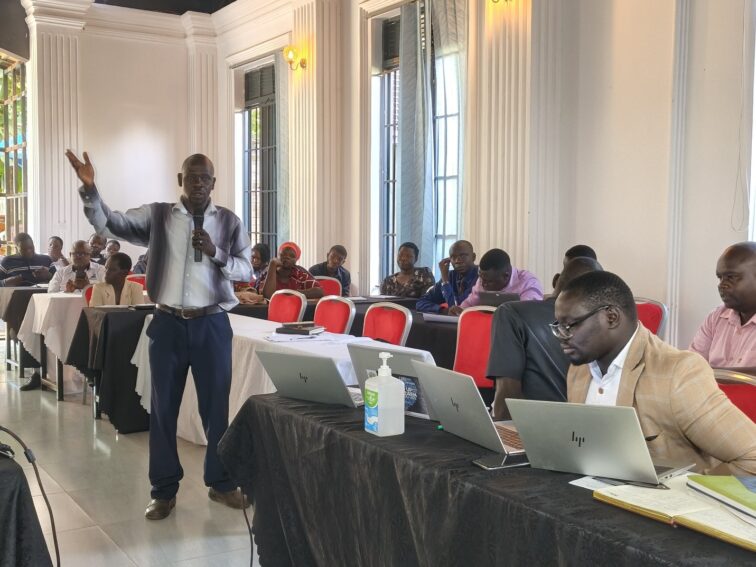
Dr Apangu Pontius the Arua City Health Officer Presenting the Health Status Report during the City’s Annual Health Performance Review at Hunters Nest Hotel in Arua city.
By Dramadri Federick
Arua City
Patients seeking care at public health facilities in Arua City are being forced to spend money on medicines and diagnostic services that are supposed to be available through Uganda’s public healthcare system, as chronic funding shortages contribute to repeated stock-outs.
Health officials in the northwestern Ugandan city say the problem is putting additional pressure on households, particularly those who rely on government facilities because they cannot afford private healthcare.
Official records from the Arua City Health Department indicate that government funding available for medicines and health consumables amounts to about Shs300 ($0.08) per resident per year, compared with an indicative allocation of approximately Shs1,993 ($0.53) per person cited by health officials.
The funding gap has raised concern among health officials, local leaders and patients, who say shortages are undermining access to healthcare and shifting costs back to households.
Arua City Health Officer Potious Apangu says the city’s 13 Public health facilities experienced drug stock-outs at different times during the 2025/2026 financial year.
He says the shortages are creating tension between health workers and patients, particularly when patients are referred to private drug shops to purchase medicines.
“We are receiving drugs worth 300 shillings per resident per year, and you find now patients grumbling, quarrelling and making noise. Others are even calling supervisors to ask why they are sent to buy drugs when public health facilities are supposed to provide everything for free.”
Audio.
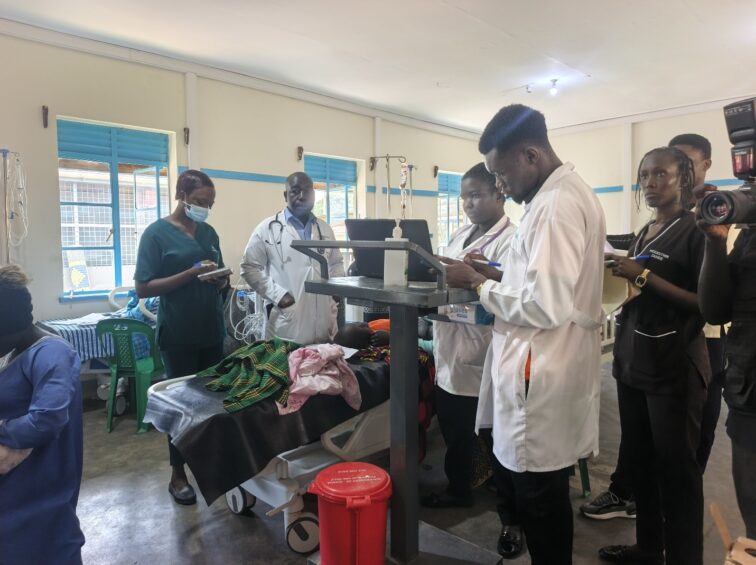
Patients feel the impact. Health personnel at the Paediatric Ward in Arua Regional Referral Hospital attending to a patient. Photo// Dramadri Federick
For residents who depend on public health facilities, drug stock-outs can mean unexpected expenses, delayed treatment and, in some cases, returning home without the medicines prescribed by health workers.
Suzan Aitasi, a resident of Chongoloya Cell in Awindiri Ward, visited Oli Health Centre IV for treatment. She says the absence of medicines forced her to spend money at a private drug shop.
“I came here expecting to get the medicine because this is a government health facility, but I was told it was not available. I had to look for money and buy it from a private drug shop. For someone who does not have money, I don’t know what they are supposed to do.”
For Muzamil Adriko, the challenge extended beyond medicines. After taking his brother, who had suffered a fracture, to Arua Regional Referral Hospital for an X-ray, Adriko says they were referred to a private facility, Arua Radiology, for the service.
He says the additional costs can be overwhelming for families already struggling to meet their daily needs.
“I had to sell a cow at 900,000 shillings to take my brother outside for treatment. These health workers are just here to provide medical advice but not treat people. Sometimes you are told to go and buy the medicine outside, yet you came to the government facility because you cannot afford private treatment. When you don’t have the money, you just go back home without the medicine.”
The experiences of Aitasi and Adriko illustrate how inadequate public financing can shift the cost of healthcare back to households, even when services at government facilities are expected to be provided without direct payment.
The numbers behind the shortage.
Official records show that Arua City, with a population of 380,824 people, spent Shs793.5 million approximately ($211,000) on health consumables during the 2025/2026 financial year, against a planned allocation of about Shs708.2 million ($188,000).
This expenditure translates to approximately Shs2, 083 ($0.55) per resident.
However, health officials separately cite about Shs300 per resident per year as the government funding available for medicines and supplies.
The two figures measure different things. The Shs793.5 million represents total expenditure on health consumables during the financial year, while the Shs300 per resident figure refers to the level of government funding officials say is available for medicines and supplies.
Health officials argue that the resources available are insufficient to guarantee consistent access to essential medicines across all government facilities.
Anguyo Bony, who represented the Ayivu Division Town Clerk during Arua City’s annual health performance review, is calling for stronger advocacy by policymakers to increase health-sector financing.
“It is shocking to say we are now treating each patient at 300 shillings per year. What can this money do? Policymakers should help us in this before we register serious outbreaks.”
He says increased financing would enable health facilities to maintain adequate stocks of essential medicines and improve healthcare delivery.
Uganda’s health financing burden falls on households
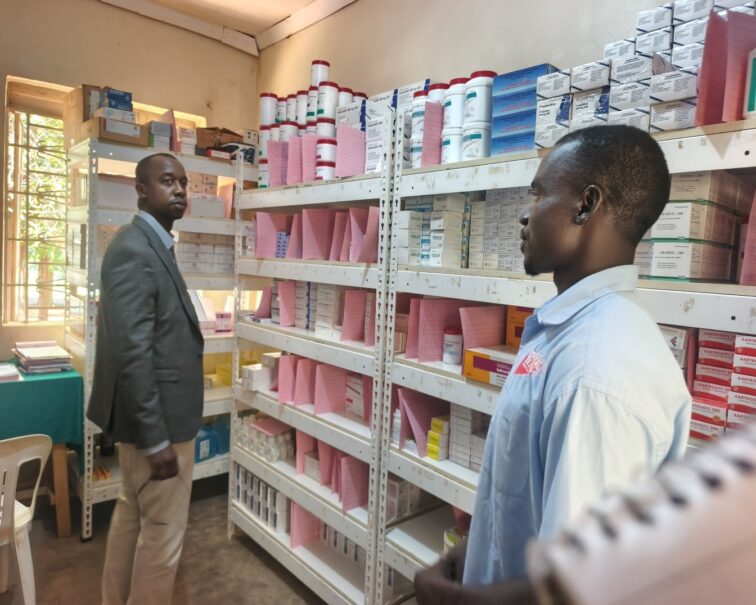
Dr.Ayume Charles Minister of State for Primary Health Care during a visit to Yinga Health Center III. Photo// Dramadri Federick.
Arua’s experience reflects a broader problem in Uganda’s health system, where households continue to shoulder a significant share of healthcare costs.
Data from the Ministry of Health’s National Health Accounts show that Ugandans’ out-of-pocket health expenditure increased by Shs88.3 billion, from Shs2.21 trillion in 2019/2020 to Shs2.30 trillion in 2020/2021.
Recent estimates from Center for Economic Research Policy CERP indicate that households finance about 34.1 percent of healthcare expenditure directly, meaning more than one-third of healthcare costs are borne by patients and their families.
For low-income households, such expenses can force families to borrow money, sell assets or delay or abandon treatment when they cannot afford medical costs.
Uganda’s health spending also remains below the 15 percent target set under the 2001 Abuja Declaration.
The Ministry of Health has identified high out-of-pocket expenditure, low insurance coverage and dependence on donor financing among the major weaknesses in Uganda’s health-financing system.
Declining donor support adds pressure
The financing challenge is being compounded by changes in external funding for Uganda’s health sector.
According to the Center for Health, Human Rights and Development (CEHURD), Uganda’s health sector is facing growing funding pressures as external donor financing declined from 49 percent in 2022 to 23 percent, following foreign-aid cuts and policy changes.
CEHURD says more than 46 percent of funding required for essential health commodities remains unfunded, including a 99.6 percent shortfall for non-communicable disease commodities and a 90.3 percent gap for sexually transmitted infection and opportunistic infection medicines.
The decline in external financing is increasing pressure on government to raise domestic health spending, with inadequate resources threatening to worsen medicine stock-outs and increase healthcare costs for households.
This raises a critical policy question: how will government protect access to essential healthcare as external health financing declines?
Insurance remains limited as NHIS awaits implementation
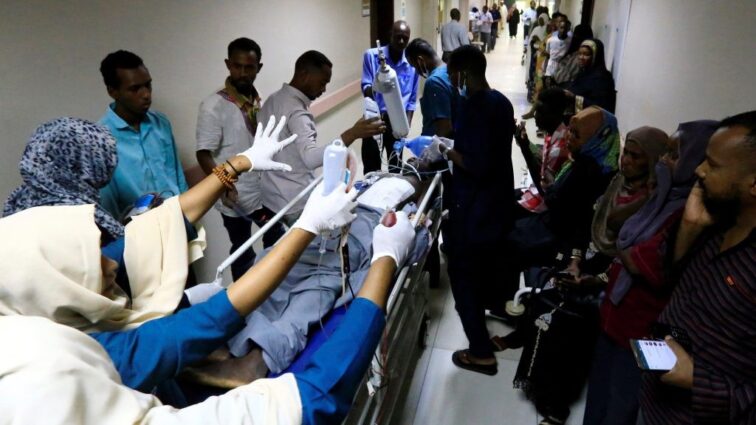
A patient under care in the private wing at Mulago National Referral hospital being rolled through the corridor// Photo courtesy IRA
The financing challenge has renewed attention on Uganda’s proposed National Health Insurance Scheme (NHIS), which is intended to reduce out-of-pocket healthcare costs and move the country closer to Universal Health Coverage.
Uganda has historically had very low formal health-insurance coverage. A 2018 FinScope report on the uptake of insurance services in Uganda found that only 1% of Ugandan adults had formal insurance, whereas the 2024 National Population and Housing Census final report shows that the Uganda’s health insurance coverage remains critically low, with only 1.1% of the population covered under any health insurance policy, with low public awareness, mistrust and limited products identified among the barriers to uptake.
The Ministry of Health reported in 2025 that formal insurance coverage remained below five percent and identified fragmented pooling of health resources and high out-of-pocket spending as major challenges to health financing.
The proposed NHIS is intended to create a broader system of risk pooling and financial protection.
Previous proposals included mandatory annual contributions of Shs15, 000 for informal-sector workers, while formal-sector employees would contribute through payroll-based deductions, with proposals including a 4 percent contribution from salaries or pension pools.
However, the proposed scheme has faced delays and continuing discussions over its design and financing model.
Current Ministry planning documents envisage the NHIS Bill being passed during the 2026/2027 financial year, followed by establishment of the scheme, enrolment and eventual expansion to informal-sector members.
For residents such as Aitasi and Adriko, however, the real test of any health-financing reform will be whether it reduces the amount families have to pay when medicines, diagnostic services or other essential care are unavailable in public facilities.
Health financing and national priorities
Uganda’s national budget for the financial year 2026/27 totals UGX 84.3 trillion, focusing heavily on production, value addition, and the 10-fold growth strategy.
Mercy Ocotoko, Executive Director of Women Effort for Inclusive Development (WEID), says inadequate investment in healthcare threatens the productivity and wellbeing of Ugandans.
She argues that government needs to reconsider its budget priorities as healthcare financing pressures increase.
“Uganda’s health budget for the running 2026/27 financial year dropped to Shs5.23 trillion, down from Shs5.87 trillion in the previous year, yet budgets for non-priority areas like security and State House operations are increasing, and the same citizens are paying heavy taxes. There’s need for budgetary repurposing.”
She says stronger investment in health would help reduce the financial burden on households while improving access to essential services.
Prevention could reduce pressure on facilities
Meanwhile, Florence Eyotaru, Principal Assistant Town Clerk and Deputy Town Clerk of Arua Central Division, says increased health financing should be accompanied by greater investment in sanitation and disease prevention.
“If your environment is very clean, it is very rare that you are going to fall sick anyhow.”
She argues that preventing disease could reduce pressure on already under-resourced public health facilities.
Government promises reforms

Health service seekers washing their hands at the entrance of Arua Regional Referral Hospital. Photo// Dramadri Federick
Dr Charles Ayume, Minister of State for Primary Health Care, says government is investing in upgrading health facilities while exploring new approaches to health financing in response to declining donor support.
Ayume, who is also the Koboko Municipality Member of Parliament, says Uganda is strengthening partnerships with other countries to address gaps in healthcare financing, expertise and pharmaceutical production.
“We believe that Uganda’s relationships with other governments will offer a better ground for our health professionals to gain experience and expertise and boost our pharmaceuticals industry that will address the country’s medical needs. But once the National Health Insurance Scheme becomes operational, it will be a game changer.”
Uganda’s global health commitments
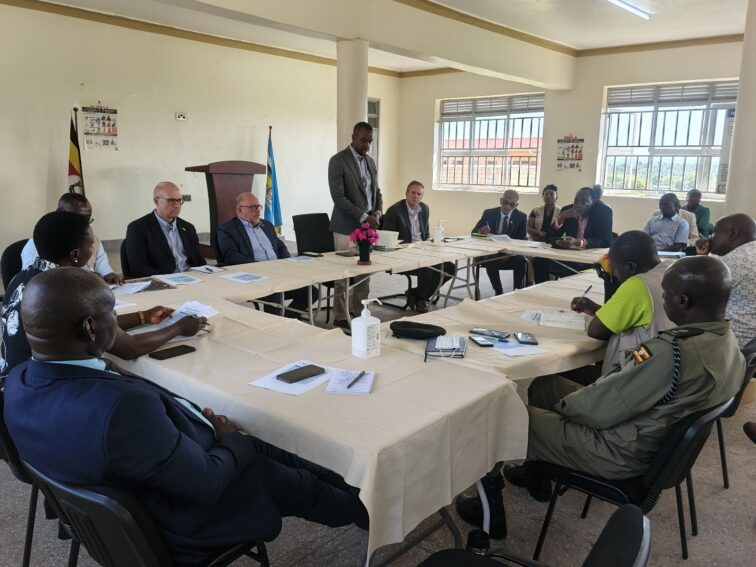
Uganda’s Global partners led by the US Acting Ambassador Michael Cleverly during the monitoring of United States support in Uganda’s Health Sector at Imvepi Refugee Settlement. Photo//Dramadri Federick
The financing challenge also raises questions about Uganda’s progress toward its international health commitments.
Under Sustainable Development Goal 3 (SDG 3), Uganda has committed to ensure healthy lives and promote well-being for all at all ages.A central component of SDG 3 is Target 3.8, which calls for Universal Health Coverage, including access to essential healthcare services and medicines while protecting people from financial hardship.
Uganda has also endorsed United Nations political declarations on Universal Health Coverage in 2019 and 2023, committing to expand access to essential health services and reduce financial hardship caused by healthcare costs. The 2018 Astana Declaration on Primary Health Care further recognises primary healthcare as a foundation for achieving Universal Health Coverage and building sustainable health systems.
Yet for some residents of Arua, these commitments remain difficult to reconcile with the reality at public facilities.
When medicines are unavailable and patients are referred to private providers, the financial risk shifts back to households the very burden that Universal Health Coverage seeks to reduce.
Who pays when healthcare is free?
The experience of Arua illustrates a paradox at the heart of healthcare financing. Observations and testimonies from patients and attendants show that whereas healthcare in public facilities may be officially free at the point of service, medicines and other consumables are unavailable or diagnostic services cannot be provided, the cost does not disappear. It is transferred to the patient.
For families with savings or assets, that can mean an unexpected financial burden. For poorer households, it can mean borrowing money, selling livestock or going without treatment.
As Uganda confronts declining external health financing and debates the future of National Health Insurance Scheme NHIS, the country’s challenge is not simply to increase the amount of money going into healthcare.
For residents of Arua, the question is straightforward; Can Uganda’s health system deliver the medicines and services it promises without forcing patients to pay again?
The answer will be an important measure of whether Uganda’s commitments to SDG 3 and Universal Health Coverage are translating from international policy commitments into affordable healthcare for ordinary citizens.

Comments
This post currently has no comments.