
GULU SAFE ROADS CAMPAIGN CALLS FOR COMMUNITY ACTION AS STAKEHOLDERS PUSH FOR FASTER EMERGENCY RESPONSE
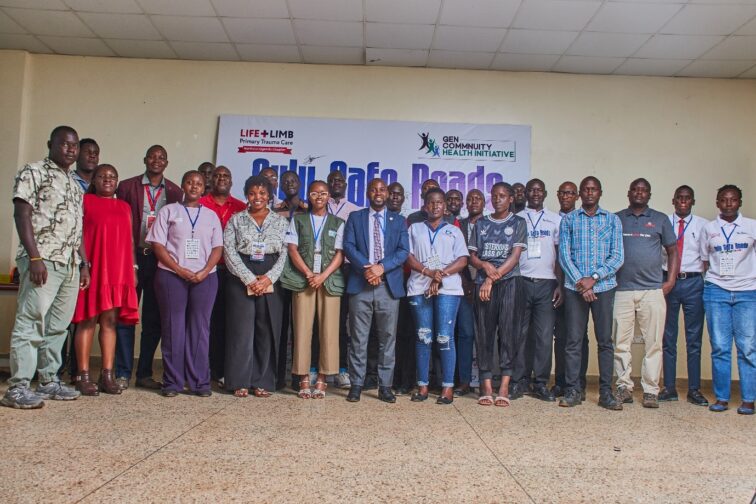
Stakeholders pose for a group photo after a successful dialogue (All photos by Biko Rombe)
By Biko Rombe
Gulu
Stakeholders in Gulu City have called for a stronger community-led approach to road safety, urging road users, health workers, police, transport operators, government and other institutions to take shared responsibility for preventing crashes and improving the survival of victims when accidents occur.
The call was made during the Gulu Safe Roads Campaign 2026 community dialogue held at Gulu University New Library, bringing together actors from the health sector, academia, traffic police, boda boda leadership, civil society, insurance, the media and transport sector to discuss the causes of road crashes and practical ways of reducing deaths and injuries.
Dr. Eric Ssennuni, a medical doctor, global public health specialist, founder and chief strategist at GEN Community Health Initiative and lead of the Gulu Safe Roads Campaign 2026, said the campaign is aimed at making Gulu a model city for road safety while ensuring that victims receive timely care after crashes.
He said although some crashes may be unavoidable, deaths and permanent disabilities can be reduced through timely intervention and basic lifesaving skills.
Ssennuni cited the case of a 24-year-old man who sustained a thigh fracture in a road crash and was brought to a health facility by community members about 45 minutes later, but died after significant blood loss. He said such cases demonstrate why communities should be equipped to provide basic first aid before victims reach health facilities.
He challenged stakeholders to move beyond waiting for injured people at hospitals and instead strengthen emergency response at the scene of crashes.
He also said road crashes have consequences beyond deaths and physical injuries, including psychological trauma, loss of income and disruption of education when family members are injured and require prolonged treatment.
Ssennuni said the campaign intends to develop a policy brief from the dialogue and present it to relevant stakeholders, with the aim of identifying why people continue to die in road crashes and what different actors can do to address the problem.
As part of efforts to improve emergency response, P1 Medical Center donated a first aid kit to Gulu Traffic Police. Ssennuni said the donation responds to a gap identified among traffic officers who often arrive at crash scenes but lack equipment to provide effective immediate assistance to injured victims.
He described the donation as an important contribution to timely care and said it could benefit the wider Gulu community.
The campaign lead said the dialogue deliberately brought together people with different experiences and responsibilities rather than focusing on the number of participants.
He said representatives from health, academia, media, insurance, civil society, boda boda associations and transport companies were able to contribute to discussions and develop solutions that can be implemented across the city.
Chairperson of the Gulu West Boda Boda Association, Mr. Ocen Emmy, said reducing road crashes requires the involvement of every road user and should not be left to boda boda riders alone.
He said rider training, enforcement of association by-laws and proper motorcycle inspection are important, while parents must also stop giving motorcycles to children below the required age.
Ocen said boda boda leaders have a responsibility to ensure riders are trained and that motorcycles meet basic safety requirements, including having proper brakes, indicators and number plates. He also called for wider road safety education because pedestrians, drivers, passengers and other road users all interact on the same roads.
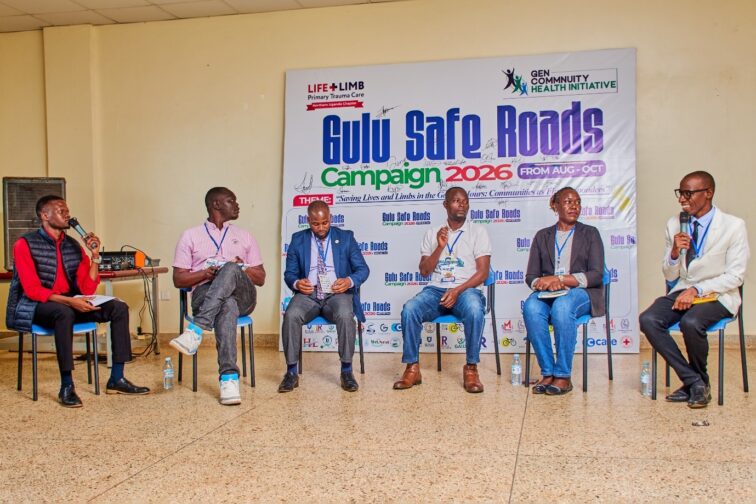
A panel discussion
Clinical psychologist and Executive Director at Wellness International, Dr. Susan Akwii, focused on the often-overlooked mental health consequences of road crashes.
She said road safety should include consideration of a person’s mental state before driving or riding, the psychological response immediately after a crash and the long-term effects that can affect victims, witnesses and families.
Akwii also condemned the practice of people recording crash scenes and sharing disturbing images on social media instead of assisting victims. She said psychological first aid should begin at the scene by helping victims remain calm, addressing their immediate needs and connecting them to appropriate services.
People who continue experiencing nightmares, distress or other symptoms after a traumatic incident, she said, should seek professional support.
Representing the Dean of the Faculty of Medicine at Gulu University, Senior Lecturer Dr. Felix Bongomin said the university contributes to road safety through training, community-based education, research and partnerships with health facilities.
He said students are exposed to communities and health facilities where they assess service capacity while gaining practical experience in emergency and clinical care.
Bongomin said the Faculty of Medicine works with facilities including Gulu Regional Referral Hospital, St. Mary’s Hospital and other health centres, while also engaging government institutions and other partners.
He said strengthening the capacity of health workers and facilities remains important in ensuring road crash victims receive appropriate care.
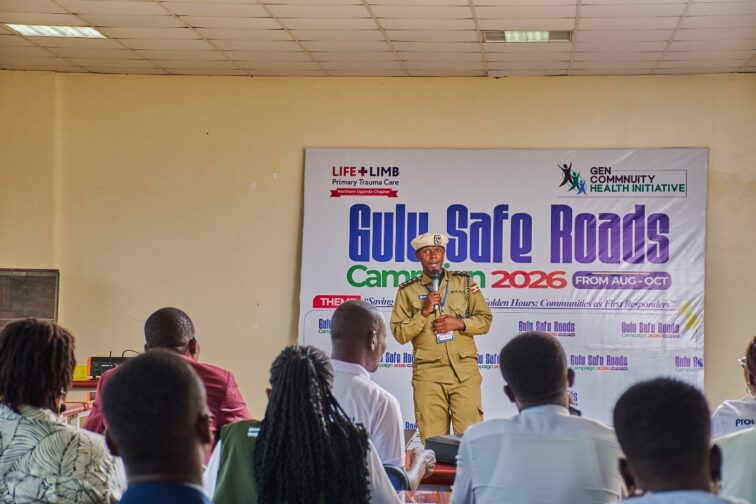
ASP Niwagaba Bruno addressing the different stakeholders during the engagement (Photo by Biko Rombe)
Gulu Traffic Police Chief and Chief Guest at the dialogue, ASP Niwagaba Bruno, said road crash investigations generally point to four major factors: road conditions, vehicle conditions, weather conditions and human factors.
He explained that poorly designed roads, dangerous corners and inadequate warning signs can increase the risk of crashes, recommending measures such as speed humps and reflective signposts in high-risk locations.
Bruno also urged motorists to take personal responsibility for checking their vehicles before using the road, particularly tyres, mirrors and other safety components.
He stressed that vehicle condition can contribute to crashes and warned motorists against using worn-out or defective tyres and driving vehicles without essential safety features such as side mirrors.
He further identified inadequate training and poor understanding of road signs and markings as another challenge. Bruno said many people learn to drive informally and may know how to control a vehicle without understanding what road markings and signs are communicating. He urged road users to properly understand traffic regulations and exercise responsibility because reckless behavior by one road user can affect many others.
The dialogue also highlighted the need for road users to understand how to behave in different road and weather conditions and to recognize that responsible road use protects not only the individual but also passengers, families and other road users.
The Gulu Safe Roads Campaign says its broader goal is to make road safety a shared community responsibility, with stakeholders expected to translate the discussions into practical actions.
Ssennuni said Gulu cannot achieve its ambition of becoming a model city for socioeconomic transformation while young people continue losing their lives or becoming disabled in road crashes.
He urged every road user and institution to identify their role in improving road safety and act on it, saying a safer Gulu requires collective responsibility both in preventing crashes and ensuring timely assistance to those involved when they occur.
Comments
Upcoming on 90.9 FM
Upcoming on 94.5 FM
Upcoming on 101.4 FM
Upcoming on 104.8 FM















Lamara Patricia Tina
5 September 2026 at 11:52 AM
I want to join safe roads