
MENSTRUATION FORCES VILLAGE GIRLS OUT OF SCHOOL IN WEST NILE
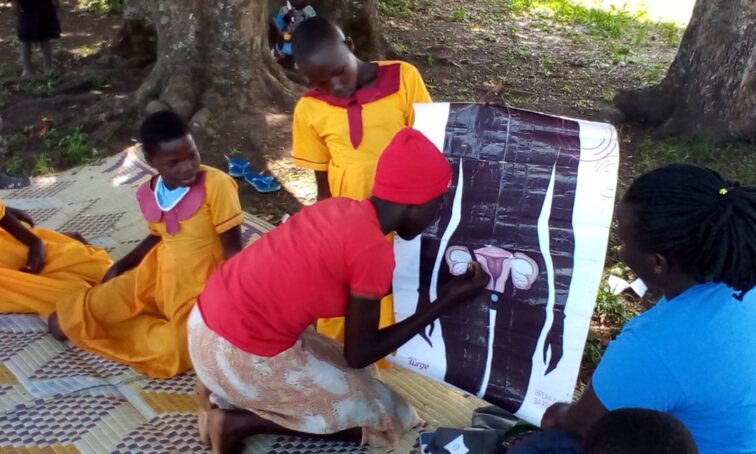
Teenage girls learning about menstruation. Courtesy photo
By Erema George
Arua City
The burden of menstrual management by school age going girls has been sighted as a key factor contributing to low retention of girls in school particularly in rural settings.
While addressing learners and stakeholders during the 2026 Diocesan Education week in a health talk session at Logiri girl’s Secondary School, Vincent Andama, the health inspector for Logiri Sub County in Arua district acknowledges the gap that exists in supporting the adolescent girls in managing the situation which he says contributes a lot to the high drop out of teenage girls;
“Many girls have dropped out of school because of this menstrual syndrome whereby girls just feel, the blood that comes out of them is something they can be shameful of,” Andama confirmed.
Menstrual hygiene management in West Nile schools faces severe challenges due to poor sanitation infrastructure, a lack of affordable products, and deep-seated social stigma.
While there is no single absolute headcount for the total number of girls who drop out of school due to menstruation across the entire West Nile sub-region, district data and national estimates indicate that it is a leading driver of school dropouts, affecting thousands of girls annually.
Andama is now appealing for capacity building to aid the production of reusable pads in schools, and sensitization of the girls and their counter parts on menstruation, as a way of supporting the girls’ retention in school;
“Reusable pads are affordable compared to manufactured pads which are expensively sold and you find in many cases households don’t afford. So we are advocating for reusable pads for girls so that girls can be able to easily have and use them. Menstrual health education and counseling is also what we want to advocate for in every school and then we are encouraging boys to support these girls when they see them showing signs of menstruation period,” Andama explains.
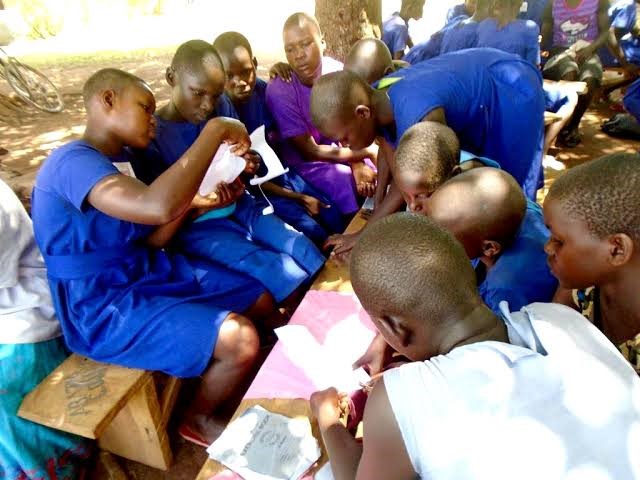
Girls making reusable pads at school- courtesy photo.
The Arua diocese education secretary Rev. Fr. Emmanuel Asega has urged the senior woman teachers to always support the girls in understanding the changes that take place with their body. He is optimistic that promoting the reusable pads in rural schools can be a game changer, urging schools to seek help from the diocesan education department to assist in capacity enhancement to aid their production;
“Reusable pads can be made locally. In the secondary schools in town area, many of the girls now know it because they have been taught by their senior woman teachers, so for these rural schools, please dear head teachers, senior woman teachers, and school management committee, let the school find a way of training these girls, training the senior woman teachers even the male teachers on how to produce local pads,” Fr. Asega urged.
Research shows that a lack of menstrual pads and poor menstrual hygiene management significantly disrupt adolescent girls’ education, leading to regular absenteeism, reduced classroom participation, and a higher risk of dropping out.
Retaining girls in school when facing menstrual challenges requires a holistic approach that combines physical infrastructure, affordable products, education, and social stigma reduction.
When these elements are integrated, studies show school attendance during menstruation can more than double. Interventions such as upgrading School Infrastructure (WASH), Distributing Menstrual Products & Materials, Comprehensive Menstrual Health Education, and Shifting Social Norms and Combating Stigma plays important roles.
Upcoming on 90.9 FM
Upcoming on 94.5 FM
Upcoming on 101.4 FM
Upcoming on 104.8 FM


















Comments
This post currently has no comments.