
MOVEMENT RESTRICTION BLAMED FOR INCREASED LIVESTOCK PRICES IN ARUA CITY
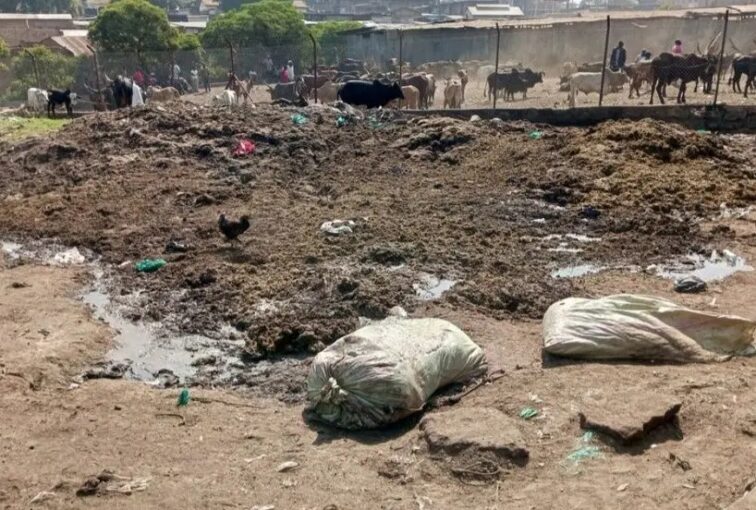
Arua City Abattoir
Herbert Munguleni
Arua City
Livestock prices continue to rise up in Arua city living many traders and farmers in the business struggling for continuity of their businesses.
The increase in prices has been linked with the Ebola virus movement restrictions that has been put on livestock like cows, goats and sheep from Northern Uganda to Arua City which is the major supplier.
Dr. Odongo Ezatiru, the Veterinary officer, Arua City abattoir, acknowledged the increase in prices of livestock to the restriction that has been put upon animals that are coming from Acholi and Lango sub-regions the major suppliers of Arua city.
“For the last three to four weeks we have been experiencing a shortage in supply of animal’s reason being the border, the road blocked so the traders cannot access Arua City abattoir market. I think this could have been attributed because of the current situation of Ebola in Uganda, this has also affected the meat supply in the city,” he said.
With meat prices increasing by at least three thousand shillings per Kilogram, farmers weigh the increase on the shortage of animal supplies at the abattoir.
Ishmael Ratib Toko, the Clerk of the goat traders at the abattoir, affirms that goat meat prices have risen as far as UGX 25,000 per kilo.
“Since the number of animals has reduced, two things have happened, the prices of animals have increased and this has also made the prices of meat to increase, we used to find a kilo of goat’s meat at UGX 21,000 but now you can find a kilo of goat’s meat at UGX 24,000 and some places at 25,000,” he said
With no signs of Ebola ending soon, farmers in Arua city are urging the government to consider them and weigh on the ban for equality looking at the fact that other regional abattoirs are operating normally.
Abdul Edema Abbasi, a farmer in Arua city says farmers are currently depending on neighbouring countries for livestock and the local farmers within the West Nile Region.
“Cows from Kaya are the ones helping us here, so our cows in Uganda, the government of NRM on the other side is allowing people to work but, on our side, we have been blocked, so who are the Ugandans and who are the not Ugandans, the government should tell us,” he said
As the blockage on cattle from Northern Uganda continues to take effect at Packwach, farmers will have to resort to available livestock to sustain the supply chain as consumers endure the rising costs.
Upcoming on 90.9 FM
Upcoming on 94.5 FM
Upcoming on 101.4 FM
Upcoming on 104.8 FM












Comments
This post currently has no comments.