
MPS SPLIT OVER PROPOSED LAW TO SUPPORT SMALLHOLDER FARMERS
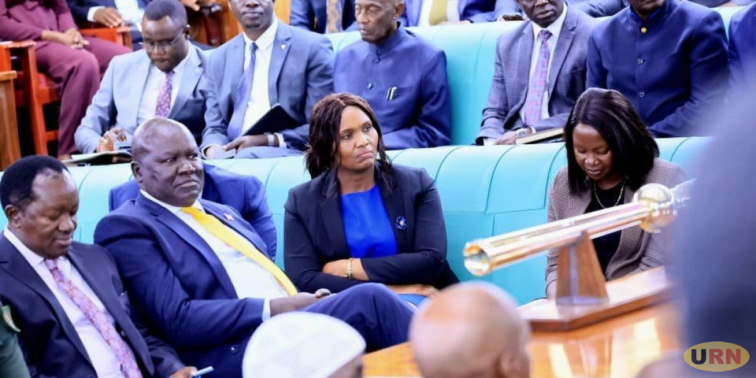 A plenary sitting chaired by Deputy Speaker Thomas Tayebwa on Tuesday
URN
Members of Parliament have split over a proposal to enact a dedicated law to transform smallholder farming and strengthen farmers’ resilience to climate shocks.
The disagreement followed a motion tabled by Sironko District Woman Representative Asha Nabulo during Tuesday’s plenary sitting chaired by Deputy Speaker Thomas Tayebwa. Nabulo wants the Government to develop and enact legislation to establish a national programme to transform smallholder farmers and build climate resilience.
She said smallholder farmers continue to face persistent challenges that undermine the productivity, profitability and competitiveness of agriculture across the country. Nabulo argued that a well-designed and properly implemented national programme could transform smallholder agriculture, enable Uganda to supply food to markets across East and Central Africa and lift 89 per cent of small-scale farmers out of poverty.
Nyabushozi County MP Wilson Kajwengye supported the proposal, arguing that Uganda’s financial system has not adequately responded to the needs of small-scale farmers. “Financing has not been tailored towards small-scale agriculture,” Kajwengye told Parliament, pointing to what he described as a mismatch between existing credit arrangements and the realities of farming households.
However, the proposal faced resistance from Government and some legislators, who questioned whether a new law would address problems that existing policies and laws have failed to resolve.
Government Chief Whip Dr Jane Ruth Aceng acknowledged the concerns raised in the motion but said its objectives are already covered by Uganda’s existing agricultural legal and policy framework.
Adjumani District Woman Representative Jesca Ababiku was more categorical, saying the priority should be enforcing existing laws rather than creating new ones. Ababiku argued that Uganda does not need another legal framework to support smallholder farmers, saying the main problem was the poor implementation of existing laws.
Napak District Woman Representative Faith Chuna proposed that the motion be halted in favour of immediate measures to address the pressures facing farmers. She called for targeted Government support to help smallholder farmers cope with current agricultural shocks.
Uganda already has a range of policies and laws aimed at supporting agricultural development and addressing climate change.
The National Agriculture Policy, 2013 provides the overarching framework for transforming agriculture from predominantly subsistence production into sustainable commercial farming. It focuses on increasing productivity, household incomes, food and nutrition security, value addition and access to markets.
The National Climate Change Act, 2021 provides the main legal framework for climate-change governance, including adaptation and mitigation measures and the integration of climate considerations into Government planning.
Other instruments include the National Climate Change Policy, 2015, the National Adaptation Plan for the Agricultural Sector, climate-smart agriculture programmes and strategic plans implemented by the Ministry of Agriculture, Animal Industry and Fisheries. The Government has also introduced financing and agricultural support mechanisms, including the Parish Development Model, agricultural credit programmes and irrigation initiatives.
Despite these interventions, smallholder farmers remain highly vulnerable to climate shocks because much of Uganda’s agriculture depends on rainfall. Drought, flooding, erratic rainfall, pests and declining soil productivity can quickly reduce yields, cut household incomes and push up food prices.
Limited extension services, inadequate irrigation and agricultural insurance, fragmented institutional responsibilities and uneven implementation at local-government level have also made it difficult to translate national policies into tangible improvements for farmers.
Upcoming on 90.9 FM
Upcoming on 94.5 FM
Upcoming on 101.4 FM
Upcoming on 104.8 FM





Comments
This post currently has no comments.