
MUNI UNIVERSITY TO TAKE CLIMATE CHANGE ACTION TO NEIGHBORHOOD
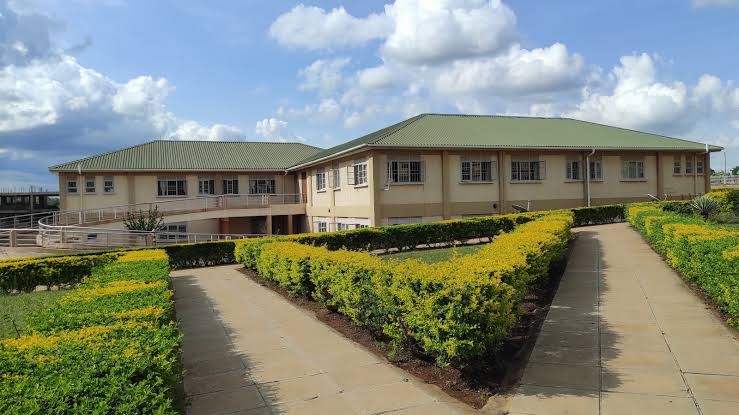
Muni University
By Erema George
Arua City
The communities living along the buffer zones of Asa stream in Onzivu ward, Ayivu division in Arua city are set to benefit from a tree planting initiative under Muni university’s faculty of agriculture and environmental sciences, climate change mitigation and adaptation project.
This initiative follows a concern by the environmental stakeholders on the ongoing mismanagement of the natural resource by the communities resulting from the human activities hence threatening the survival of the stream.
Addressing the households, Harriet Orodriyo, the focal person in charge of the project implementation at the university faculty of agriculture noted the amount of water in the stream is reducing drastically as a result of the various human activities such as sand mining, cultivation at the source among others impacting on the stream negatively, urging the community to cooperate with the university in order to save the situation;
“Today we’ve come to combine efforts in our capacity on how we can preserve the water for the future generation. So what we can do with the university is to plant trees at the sources,” Orodriyo said.
Among the communities targeted include; Kumura cell, Ayibiri cell, Agbirici cell and Jokiva cell all in Onzivu Ward.
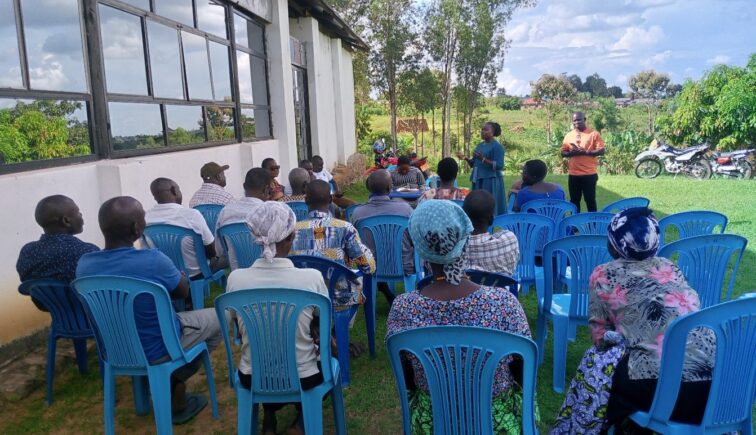
Arua City senior environment officer Mary Dawaru addressing the community during the sensitization in Kumura Cell. Photo//Erema.
The Arua City senior environment officer Mary Dawaru appealed to the affected communities and individuals to be ready to support the tree planting project;
“Those owning land near the water should be ready to show the boundaries to the team so that we plant the trees and other vegetables.” Dawaru appealed.
Section 55 of Uganda’s National Environment Act, 2019 outlines strict restrictions on the use of wetlands to prevent ecological degradation and illegal encroachment.
It highlights that without written approval from the relevant lead agency (in consultation with the National Environment Management Authority (NEMA)), a person must not reclaim or drain any wetland, erect, construct, place, alter, extend, remove, or demolish any structure fixed in, on, under, or over a wetland and that a person shall not disturb a wetland by drilling or tunneling in a manner that harms or is likely to harm the ecosystem.
Favorite Edeti, the city environment officer noted that, the project aims to conserve the water source for a common good of the community;
“What we want to fight first is to ensure that the common good of these streams should be got, the services from the source must be there,” Edeti said.
Observation at the buffer zones of the stream reveals the current human activities that expose the stream to potential dangers as sand mining, cultivation and construction near the water source takes toll. An elder and a land owner at Kumura cell, peter Asea testified that;
“These days there’s no reeds in the stream, there’s nothing that keeps water. This is our challenge you can help us address,” Asea pled.
Some of the tree species to be planted include; Mahogany, Calliandra, avocado, mango, jack fruit and other species that support crop integration.
Tree planting initiatives conserve streams, swamps, and drainage areas by stabilizing soil, filtering pollutants, regulating water flow, and creating vital habitats. Planting trees along these aquatic zones—often called riparian buffers—acts as a natural shield that protects both water quality and ecosystem health.
In the West Nile sub-region, environmental stakeholders are actively tackling massive ecosystem degradation. The region faces unique pressure on its water catchments, streams, and swamplands due to population growth, traditional wood fuel/charcoal dependency, and large refugee-hosting communities.
To protect fragile aquatic and drainage zones, a mix of government bodies, non-governmental organizations (NGOs), and local communities have put forward several targeted initiatives and Muni University’s climate change mitigation and adaptation project marks a significant milestone in contributing to this cause.

Comments
This post currently has no comments.