
SSABOSA PUSHES TRACTOR ACQUISITION, 100-ACRE COFFEE PROJECT AND COMMERCIAL DEVELOPMENT OF SIR SAMUEL BAKER SCHOOL LAND
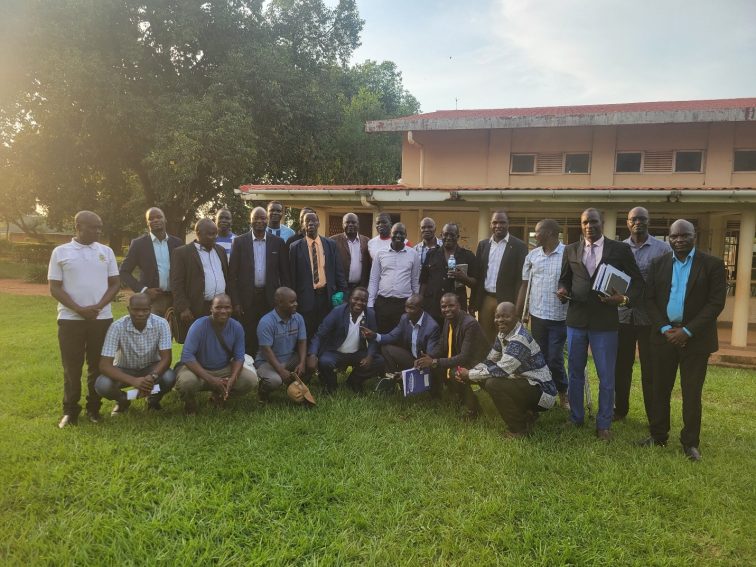
The different stakeholders pose for a group photo after the meeting
GULU CITY, November 22, 2026 – The Sir Samuel Baker School Old Boys Students Association (SSABOSA) has unveiled an ambitious development agenda centered on acquiring a tractor, expanding coffee farming to approximately 100 acres and partnering with development agencies to put the institution’s extensive land to productive use.
The proposals emerged during the association’s Annual General Meeting held on Saturday, November 21, 2026, at Sir Samuel Baker Secondary School’s main hall in Pongdwong, Gulu City, where former students, school administrators, members of the Board of Governors and other stakeholders discussed strategies for restoring the institution’s former glory.
The development agenda is intended to address the school’s growing maintenance costs, strengthen its financial sustainability, support agricultural learning and create additional resources for infrastructure and academic improvement.
Newly elected SSABOSA Chairperson Dr. Oling innocent Loum said the association had agreed to mobilize resources towards acquiring a tractor to help maintain the school’s extensive compound and prepare land for agricultural activities.
He explained that maintaining the compound has become an expensive undertaking, with the school spending approximately Shs3.3 million to Shs3.5 million during each maintenance cycle.
The alumni therefore resolved to contribute towards a more sustainable solution instead of relying entirely on recurring manual maintenance costs.
Dr. Oling said the association was appealing to well-wishers, organizations, development partners and government to support the acquisition of a tractor.
The proposed equipment would help maintain the compound and prepare agricultural land for the school’s planned coffee plantation.
He said one of the major agricultural ambitions is to establish a coffee demonstration farm covering approximately 100 acres.
The project is expected to serve both as an income-generating venture and a practical learning facility for students, while also contributing to the long-term financial sustainability of the institution.
Dr. Oling said several former students had already expressed willingness to contribute coffee seedlings towards the implementation of the project.
“We are going to put all this land into use. That is the only way we can protect our school land,” he said, adding that the association intended to work with development partners interested in projects that directly benefit the school and support learning.
The proposed coffee expansion builds on agricultural activities already underway at the institution.
Headteacher Nathan Mageni revealed that the school currently has approximately three-quarters of an acre under coffee, with about 250 plants growing.
He said the agricultural department had recently supported the existing coffee project with fertilizers, while one of the old boys had offered approximately 500 additional coffee seedlings.
Mageni said the school intended to expand its agricultural activities as part of a wider strategy to utilize its land and reduce operational costs.
Besides coffee, the institution has embarked on maize and bean cultivation to supplement food supplies for students and reduce expenditure on feeding.
He said agricultural production would become an important component of the school’s development strategy, with the involvement of former students, government agencies and other partners.
The headteacher also confirmed that the school has more than 300 acres of land, presenting an opportunity for agricultural investment and other carefully planned development projects.
He said a proposed development plan was already being considered to guide the productive use of the available land.
The question of land protection and utilization featured prominently during the AGM, with stakeholders emphasizing that the school’s land should not remain idle while the institution struggles with financial and infrastructure challenges.
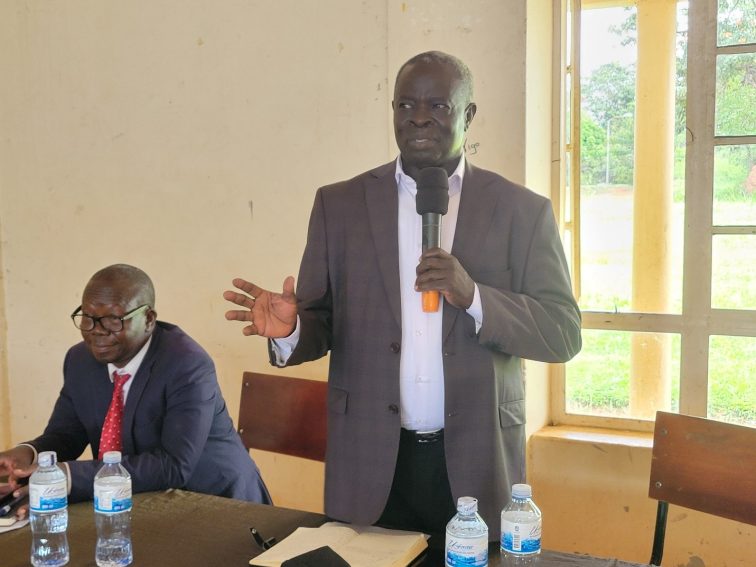
Dr James Lam Lagoro while addressing the OBs
Dr. James Lam Lagoro, the chief guest and former Academic Registrar at Muni University, said the school’s land represented an important asset that could support its recovery if properly managed.
He disclosed that he had been working with other stakeholders on an economic development concept intended to make Sir Samuel Baker a more financially viable institution.
Dr. Lagoro said he had presented the proposal to the Resident City Commissioner during a meeting held on Friday, November 20, 2026, and intended to submit it to the school leadership for further consideration.
He revealed that the school has approximately 339.5 acres of land and that the development concept was designed to identify productive ways of using this resource to support the institution.
According to him, the proposal includes agricultural and other income-generating initiatives, with requests for equipment such as tractors and mowing machinery.
Dr. Lagoro said the school’s land ownership documentation had also been traced after years of uncertainty.
He explained that efforts to establish the availability of the land title began when the school was preparing to benefit from a government-supported programme whose conditions required institutions to have documented land ownership.
After searching through available records, stakeholders received assistance from a surveyor who had information about the school’s land.
The process eventually led to the recovery of a land title reportedly issued in 1962.
Dr. Lagoro said the document was now in the hands of the school’s leadership and would be safeguarded as part of efforts to protect the institution’s ownership rights.
He further explained that the land was held under freehold tenure rather than leasehold, describing the documentation as an important safeguard against possible ownership disputes and unauthorized interests.
He warned that the school risked losing its identity and land if stakeholders failed to remain vigilant and participate in decisions concerning its future.
Dr. Lagoro said any development interest involving the institution should be discussed with the recognized school stakeholders, including the alumni, Board of Governors, PTA and other members of the school community.
He stressed that partnerships should not be viewed as opportunities for outsiders to take control of school property but as arrangements intended to benefit the institution.
Former headteacher Churchill Lacere Olanya also supported the idea of putting the school’s land to productive use, particularly areas along the Gulu–Kitgum Road.
Olanya, who studied at Sir Samuel Baker between 1971 and 1974 and later served as a teacher and headteacher, said the institution needed to think differently about its land resources.
He argued that allowing valuable land to remain covered by bush without generating income would deprive the school of opportunities to improve its infrastructure and financial position.
Olanya said carefully planned investment projects could generate revenue for constructing suitable school buildings and supporting other development priorities.
He, however, cautioned that the development of school land must be approached strategically and with the institution’s long-term interests in mind.
The tractor proposal also received support from Matthew Obol, the SSABOSA Electoral Commission Chairperson, who said the size of the school made mechanized compound maintenance and agricultural production necessary.
Obol described the school’s grounds as extensive, saying a tractor would serve two important purposes: mowing the compound and preparing land for farming.
He endorsed the coffee-growing initiative, describing the area around Pongdwong as fertile and suitable for agricultural production.
Obol argued that maintaining large portions of land without investment would not provide meaningful benefits to the school and urged alumni to support productive agricultural projects.
The school administration also wants the alumni to support improvements to existing infrastructure, particularly the library and dormitories.
Headteacher Mageni said the institution was seeking assistance to improve the condition of the dormitories, including painting, while continued compound maintenance remained a major financial burden.
He said the old boys had already agreed to contribute funds towards maintaining the compound on a more sustainable basis.
The development agenda comes against the background of the school’s efforts to recover from years of setbacks associated with the effects of the insurgency in northern Uganda.
Mageni said the institution currently has 223 students, compared with approximately 90 when he took over as headteacher about two and a half years ago.
He said the school had more than 40 teachers and was working to improve academic performance, discipline and security as part of its strategy to attract more learners.
The proposed agricultural projects are expected to complement these efforts by creating opportunities for practical learning while reducing the school’s dependence on limited financial resources.
Dr. Lagoro also proposed that government consider supporting student enrolment at Sir Samuel Baker through sponsorship arrangements involving communities historically associated with the institution.
He suggested that students from areas including Madi, Lango, Acholi and Karamoja could be supported to study at the school, which he described as an institution established through contributions from different communities.
He argued that the school’s historical role and its available teaching capacity, including its government-employed teachers, should be considered when planning such support.
Beyond the immediate development projects, stakeholders are looking towards the school’s 75th anniversary celebrations scheduled for September 2027.
The platinum jubilee is expected to provide another opportunity to mobilize resources, attract development partners and showcase the school’s contribution to education and society.
Dr. Lagoro called on the alumni to take an active role in organizing the celebrations and suggested that one of their members should chair the organizing committee.
Headteacher Mageni said the celebrations would include activities such as a dinner and a run, among other fundraising initiatives intended to support the school’s recovery.
The new SSABOSA leadership has pledged to mobilize former students and well-wishers to support the tractor acquisition, coffee expansion and other development initiatives.
For Dr. Sen, the central objective is to ensure that the school’s land becomes a productive asset rather than remaining underutilized.
He said the association would continue engaging government, development partners and individual well-wishers to secure the resources needed to implement the proposed projects.
With more than 300 acres of land, an existing coffee-growing initiative and renewed alumni commitment, Sir Samuel Baker Secondary School is seeking to turn its available resources into a foundation for long-term institutional recovery and sustainable development.
Upcoming on 90.9 FM
Upcoming on 94.5 FM
Upcoming on 101.4 FM
Upcoming on 104.8 FM









Comments
This post currently has no comments.