
TECHNOLOGY: A CORNERSTONE TO UGANDA’S WILDLIFE CONSERVATION
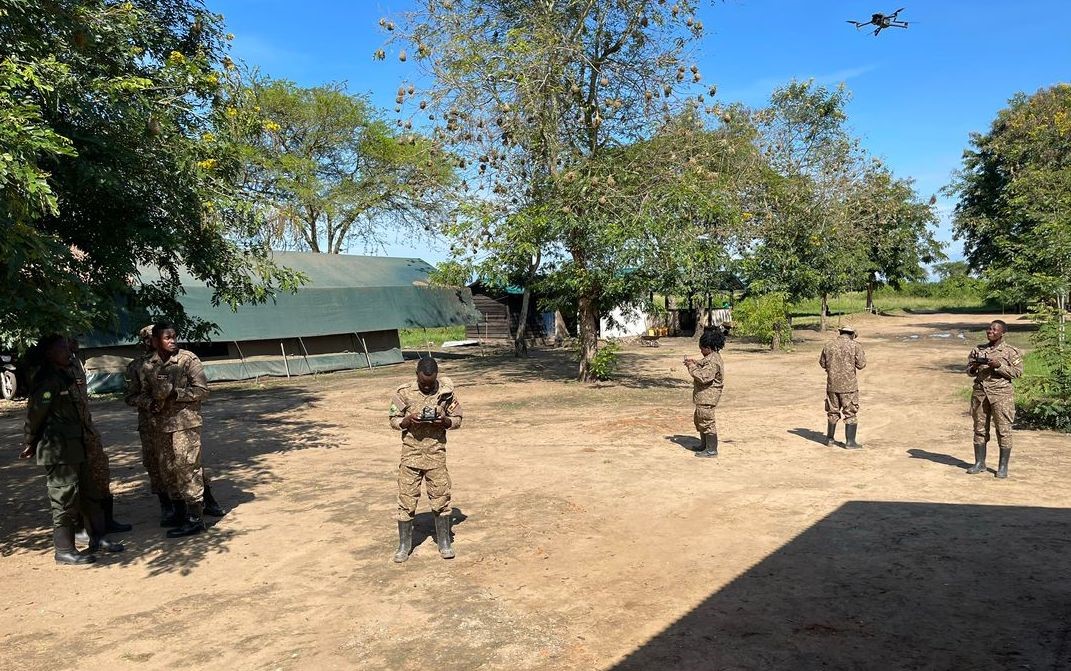
Rangers flying and controlling drones as a new technology in wildlife conservation. Credit/OKELLO JESUS OJARA
By Dramadri Federick
Arua city
Uganda is one of the richest countries in the World Boosting with biodiversity, hosting 53.9% of the world’s remaining population of mountain gorillas, 11% of the world’s recorded species of birds which is 50% of Africa’s bird species, 7.8% of the global mammal diversity accounting for 39% of Africa’s mammals, 19% of Africa’s amphibian species, 14% of Africa’s reptile species, 1,249 recorded species of butterflies and 600 species of fish.
This places the pearl of Africa one of the most destined tourism countries in Africa, attracting significantly a contribution to the country’s GDP of 7.7% and it is the highest foreign exchange earner.
For decades, Uganda’s wildlife has faced poaching, habitat loss, and human-wildlife conflicts that threaten the survival of species like elephants, lions, rhinos, and giraffes including the bird species. However various conservationists with the Uganda Wildlife Authority (UWA) are now turning to technology to curb the vices.
Uganda, during the 2021/2022 Financial Year, invented the use of silent technologies including Drones soaring above tree canopies, GPS collars transmit signals from lions and elephants, AI-powered cameras and sensors to scan for intruders geared towards protecting Uganda’s most iconic wildlife.
Frederick Kiiza, the Chief Warden Murchison Fall National Park says the digital Anti-Poaching Technology has improved their operations compared to the traditional means such as use of foot patrollers who rely on community information.
“We have moved steps forward, we now have all types of cameras. We have the still cameras, Spy Cameras, the Drone System, plane surveillance and many more which we use to deter the poachers from accessing the park but also follow those notorious ones, we have control rooms that are used to monitor what is happening around the reserve.” Kiiza explained.
Kiiza reveals that in order not to leave out the community vigilantes, they empowered the communities to use the digital strategies to send either their pin locations or a text which has actually plaid a key role in detecting poachers who are intending to enter or had sneaked the surveillance cameras and were already escaping with the poached animals.
“Before the technological advancement we started with SMS and pin locations that were embraced fully by the community for coordination purposes because poaching is not a local issue but an international coordinated crime,” The Chief Warden revealed.
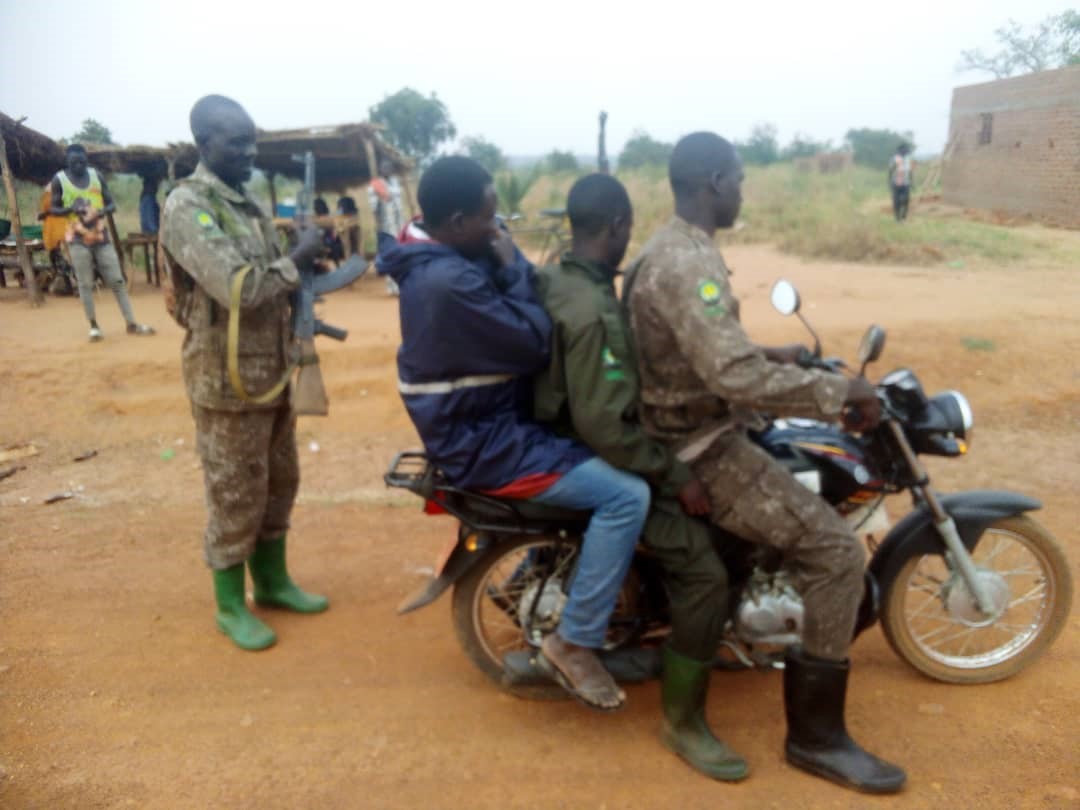
UWA rangers alongside community wildlife scouts board a patrol motorcycle after receiving alert of elephant raids and poaching. Credit/Federick Dramadri
The 2024 Uganda Wildlife Authority (UWA)’s report revealed that the entity registered an increase in the arrest of suspects by 35.2% and recovery of poaching implements by 27.7%. This is compared to 1,586 suspects arrested, and 23,939 implements recovered in the FY2021/2022, respectively.
Meanwhile, there was a reduction of 11% in the recovery of assorted wildlife and wildlife products compared to the 11,448 recovered in FY2021/2022 attributed to improved technological advancement.
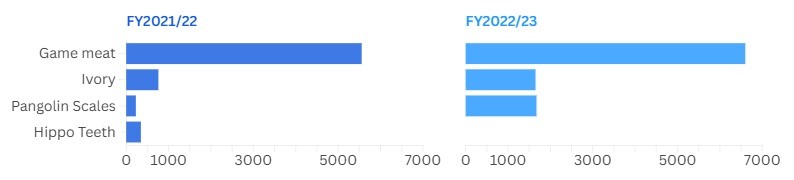
Recovered Wildlife Products by UWA for the FY2021/22 and FY2022/23
These have been measured in Kilograms
Night Zahara, the Madi – Okollo district tourism officer, says Poaching had eaten up most of Uganda’s wildlife reserves and National Parks before the introduction of sophisticated technologies to detect and improve surveillance across Uganda’s wildlife protected areas.
Zahara appreciates Uganda Wildlife Authority’s investments in technology saying it boasts the country’s economic growth as wildlife tourism is ideal for the country.
“We have been suffering much as we had community volunteers to report poachers on which we relied but there are difficulties in terms of conflict of interests among them, however at Ajai wildlife reserve, with the systems in Place we have realized multiplication in animal numbers and reduction in crimes.” Zahara stated
Uganda’s vast national parks stretch over thousands of square kilometers, making traditional monitoring methods costly and slow. As illegal wildlife trade surges, so does the need for smarter surveillance.
Babu Bakhit Olanya, a retired Chief Ward of the Uganda Wildlife Authority who worked between 1972 and 2022 confirmed that cases of poaching were extreme in most of Uganda’s wildlife protected areas due to limited personnel, use of traditional technologies to detect the crime and unclear boundaries before the idea of modern technologies which affected wildlife multiplication.
“We were almost defeated by poachers, we only had foot patrollers and sometimes communities would help us with information, that’s why you would hear of extinction of some of the species,” says Bakhit. “UWA started training staff in 2022 when I was retiring and I think this will surely improve the multiplication of wildlife species and curtail crimes.”
The 2024 Uganda Wildlife Authority (UWA) report highlights the impact of intensified operations against illegal poaching and other unlawful activities in Uganda’s protected areas revealing that a total of 2,145 suspects were arrested and 10,190 assorted wildlife and wildlife products were recovered.
Law enforcement teams also confiscated 30,578 poaching and trafficking implements, including 17 firearms, 13 magazines, and 174 rounds of ammunition. These were recovered from Murchison Falls Conservation Area (MFCA), Queen Elizabeth Conservation Area (QECA), Mount Elgon Conservation Area (MECA), Bwindi Mgahinga Conservation Area (BMCA), Gorilla Nest, and Kidepo Valley Conservation Area (KVCA).
Kiiza states that despite successes in curbing threats to wildlife, poachers are becoming increasingly sophisticated, making it insufficient to rely solely on foot patrols or community reports. He notes that much as the technologies are the ideal for cracking down on the poachers and other crimes related to wildlife, there is a need to up the game in order not to be caught off guard.
“As we’re advancing with technology, you find that the poachers are equally increasingly upping their game by deriving other mechanisms to maneuver their ways and most of these technologies need the internet to operate them which is also a challenge,” Kiiza said
Wire snares remain the most commonly used poaching devices across Uganda’s protected areas. For instance, between 2021 and 2023, park authorities recovered 30,369 wire snares, 2,731 Pangas, and 21 guns used for poaching wildlife.
Wildlife products are primarily transported by motorcycles, followed by bicycles and motor vehicles. During the same period, authorities intercepted 92 motorcycles, 33 bicycles, and 14 motor vehicles carrying illegally obtained wildlife products.
Comparison of the Poaching Implements Recoveries by UWA for the FY2021/22 and FY2022

According to UWA, the Drones facilitated aerial surveillance to track animal populations, detect illegal activities, and monitor habitat changes have become essential in the fight to protect wildlife while the GPS collars are devices fitted on animals such as elephants, rhinos, and lions, are meant to track their location data round-the-clock.
These technologies over the years have resulted in an increase in recorded animal sightings across most protected areas, which is attributed to improvements in monitoring accuracy, vegetation manipulation, and controlled burning activities.
Samuel Amanya, a Wildlife Conservationists says on top of Drones, GPS collars, plane surveillance among others, they have equally introduced Adventures, Open Data Kit (ODK) to ensure real time updates on the location of the animals widely used in game parks around the borders.
“The ODK is mostly in conflict situations to collect data and has been tested internationally whereas the Adventure is basically used for collection of GPS coordinates that can quickly be detected and enable us to send our drones to chase back the animals. We are largely concerned that each time our rangers go to do patrol they can find themselves in another country, so we had to think of an application without internet which could help us know our boundaries.” Amanya explained.
In the financial year 2023/2024, a total of 6,999 human-wildlife conflict incidents were reported across the country. Comparatively, this represents an 11% decrease from the 7,861 cases recorded in the financial year 2021/2022 attributed to heightened technologies that are able to detect and report cases through close monitored signals.
This has been particularly crucial in Murchison Falls National Park (MFNP), where increasing oil developments pose a growing concern.
The 2025 Tourism Trends and Statistics Report shows that wild lion numbers dropped from 373 in 2023 to 292 in 2024, citing human-wildlife conflict, poaching, and natural threats within lion habitats.
Murchison Falls National Park holds the majority of lions (240), followed by Queen Elizabeth (40) and Kidepo Valley (12), this has equally been confirmed by the GPS Collar Tracking in UWA’s 2023-2024 report, that revealed a continued decline in lion populations over the years.
This underscores the urgent need for strengthened conservation measures to counter emerging threats and safeguard the long-term survival of this keystone species.
At Murchison Falls National Park alone, more than 200 animals have been nabbed. According to park authorities, only one animal per herd is fitted with a GPS collar.
“Mostly animals that are not collared are often involved in human-wildlife conflicts but we closely monitor the movements of collared animals and promptly alert our rangers if they begin to stray beyond designated areas,” notes Kiiza.
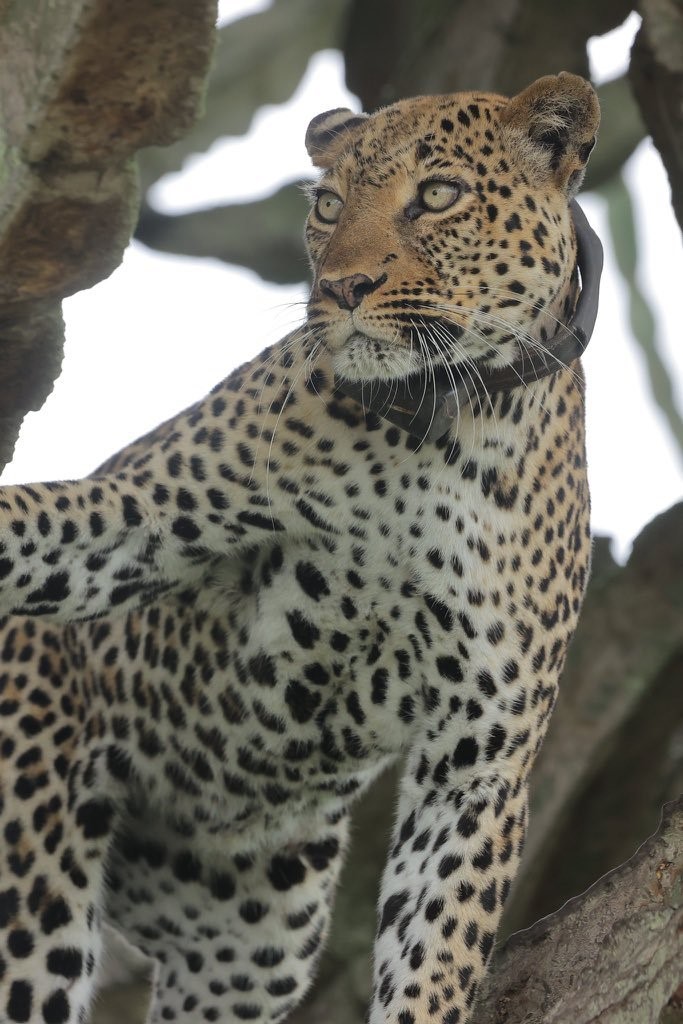
Collared climbing leopard as seen on top of a tree in one of the UWA’s
protected areas. Credit/Federick Dramadri
COMMUNITY VOLUNTEERS’
The shift to technology is transforming wildlife protection as well as quickening the coordination and collaboration between Uganda Wildlife Authority and the Communities who treasure the reserves and parks.
Peter Malo, the Chairman LCIII Karenga sub-county, Dodoth County in Kaabong District of northern Uganda that neighbors Kidepo Valley National Park appreciates government for the initiative investing in technology saying reporting wildlife crimes including poaching and human-wildlife conflicts were difficult as the perpetrators would easily see or detect the community members who physically run to report them in the UWA offices.
“This one is very timely, we can now report and UWA officials get the report timely, we take photos with our phones and even send them, we can report also destructions by animals as well as poachers and they respond timely,” Malo said.
Grace Atimango, a resident in Anaka Town council in Nwoya district that hosts Murchison Falls National Park says they used to witness a lot of havoc caused by wild animals that would destroy acres of crops annually but the rate has reduced.
“Am happy that they brought these technologies but the most important is the fencing that has saved our crops, government should add more.” Atimango explained
NAVIGATING CHALLENGES AROUND GLOBAL EDGE
The adoption of the new technologies presents with challenges as initial investment in equipment, training, and maintenance can be substantial, and some protected areas remain remote with limited internet or mobile network coverage, making real-time monitoring difficult cannot be underestimated. However the knowledge and internet driven devices pause critical challenges where they signals are weak.
Kiiza emphasizes that although most of these technologies rely on internet connectivity, they remain committed to their adoption. “As UWA, we are already embracing technology to enhance our conservation efforts and help sustain natural habitats, we navigate the challenges that come with the devices.” Kiiza added.
Bashir Hangi, UWA’s spokesperson says there’s hope for the better as the already established devices are yielding good results. “UWA is just getting started, in the future, we plan to introduce AI-powered tracking and expand real-time monitoring across all parks.” Hangi says
In April 2024, UWA joined the global Climate Friendly Network, aligning itself with the Sustainable Development Goals embedded in the Paris 1.5 Agreement of 2015, and committing to the goal of achieving climate neutrality by 2050.
UWA’s implementation of the new booking system represents an actionable strategy in support of Climate Friendly Travel ambitions.
Another example of this commitment is the adoption of QR codes in lieu of physical brochures, a change showcased at the Pearl of Africa Tourism Expo (POATE) in May, aimed at attracting high-value travelers.
The Uganda Wildlife Authority is responsible for managing and protecting wildlife in and outside protected areas now boosting with 10 national parks, 12 wildlife reserves, five community wildlife management areas, and 13 wildlife sanctuaries.
Upcoming on 90.9 FM
Upcoming on 94.5 FM
Upcoming on 101.4 FM
Upcoming on 104.8 FM
















Comments
This post currently has no comments.