
THE SEED KEEPER: ACHOLI FARMERS UNITE TO PRESERVE TRADITIONAL SEEDS
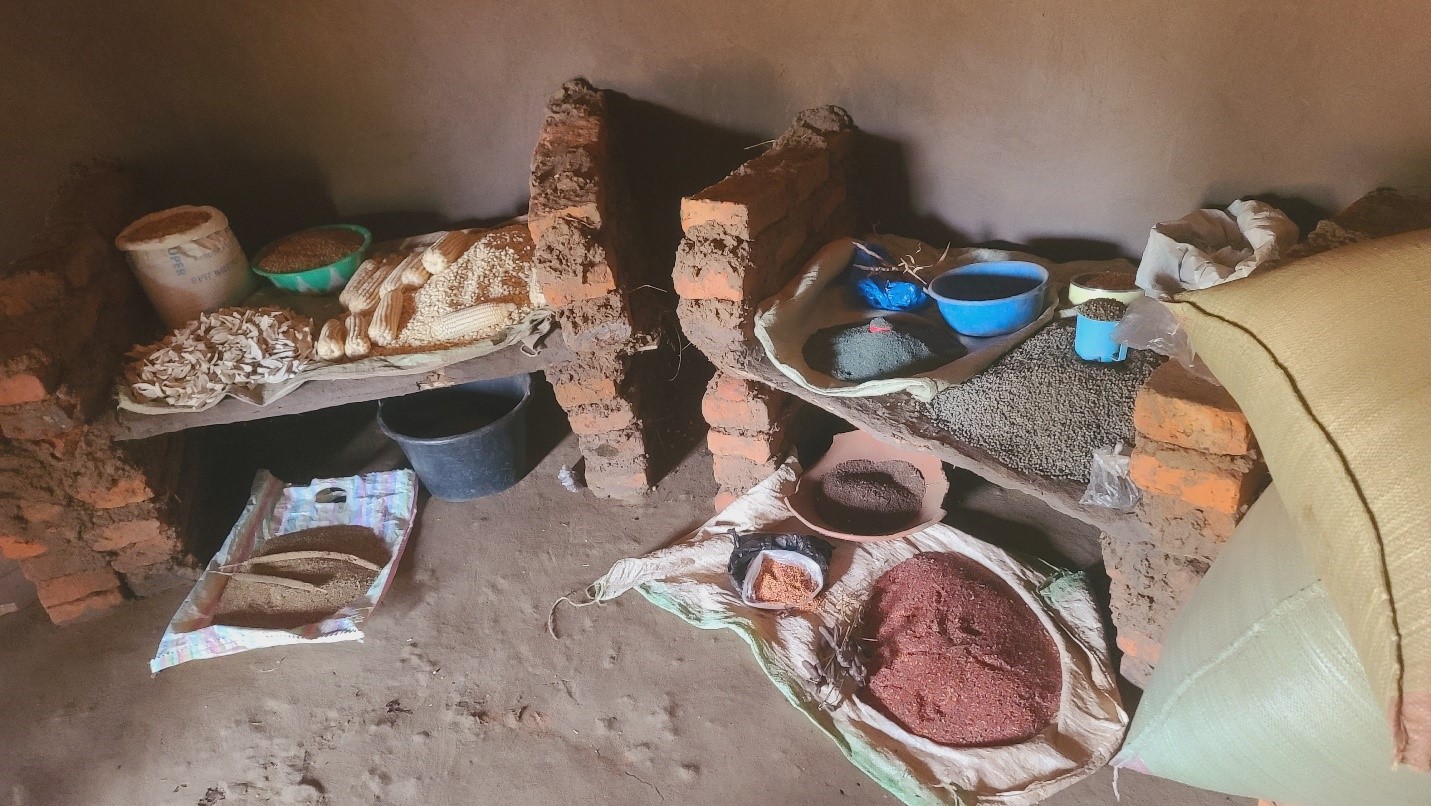
A traditional seed storage facility at Can Rwede Pe community seeds bank in Gulu district. All photos by Komakech Jimmy.
By Komakech Jimmy
Gulu City
In a heartening display of resilience and commitment to agricultural heritage, farmers in the Acholi sub-region have come together to safeguard their traditional seeds, ensuring food security and cultural identity in the face of modern agricultural challenges.
Groups like Can Rwede Pe in Gulu district and the Ongako Community Seed Bank in Omoro district are at the forefront of this movement, nurturing and multiplying indigenous seeds that have fostered resilience among local communities for generations.
As the world grapples with climate change and the loss of biodiversity, traditional seeds are becoming increasingly endangered. They are not just crops; they are a vital link to the community’s agricultural history and cultural practices. In response to these challenges, farmer groups in Acholi have taken a proactive approach by reviving and preserving these invaluable resources.
Lasted for six years now, Can Rwede Pe, a farmers' cooperative group based in Labongo Oguru village, Oding parish, Onyama Sub County in Gulu district is dedicated to the promotion of traditional agricultural practices.
This group has initiated programs that educate farmers on the importance of using local seeds, which are better adapted to the region’s unique climate and soil conditions. “We believe that our traditional seeds are our heritage and should be preserved for future generations. They are resilient and sustainable, and they boost our food security,” says the group's Secretary, Jackline Acayo.
She also revealed that in order to support and relieve farmers of the stress of constantly purchasing seeds, they plant the seeds, store them, and distribute them to farmers who return with a little percentage after harvest.
According to Acayo, the seeds are preserved locally by utilizing things like chili sauce instead of being treated with chemicals.
She encouraged Acholi farmers to keep growing native seed varieties that are both organically healthy for human health and resistant to the hard climate.
Acayo challenged Ker Kwaro Acholi to take the initiative up in ensuring traditional seeds are restored in order to also fight food insecurity as well as malnutrition.
The group's vice chairperson, Filder Anena, disclosed that they have been able to turn down multiple loan offers from microfinance organizations because they are committed to preserving the seeds locally and do not want the program to be hampered by credit problems.
Filder claims that they currently provide local variety seeds to more than 350 farmers in the sub-county, which they store, safeguard, and conserve annually in their seed bank.
Since seeds are still the most important component in the production of food, having access to them is essential to the livelihoods and food security of farmers.
Farmers in Africa have engaged in seed saving practices for millennia through seed selection, storage, conservation and identification of useful traits, generating knowledge that has passed down through many generations.
However, in Uganda, I’ve observed that unfortunately climate change, pests and diseases are drastically affecting crop production and leading to loss of precious genetic diversity. In addition, lack of capacity in management and conservation of local genetic resources poses a major challenge.
A promising practice that can facilitate the conservation of agro-biodiversity at the community level is the establishment of seed banks. In recent years this practice has grown in momentum; such as when groups of farmers have come together to set up the Kiziba community seed bank in Uganda with many local seed varieties benefitting over 2million farmers in Uganda.
Simultaneously, the Ongako Community Seed Bank in Te-tuku village, Kal parish, Ongako sub county in Omoro district has become a beacon of hope for many local farmers. Established to serve as a repository for traditional seeds, the seed bank focuses on collecting, conserving, and distributing indigenous varieties.
This initiative has not only helped in protecting these seeds but has also empowered local farmers to showcase their farming practices. “We have seen an increase in crop yields and improved food quality since we started using our traditional seeds,” says Beatrice Akello, a member and seed distribution officer of Ongako seed bank.
According to Akello, they only provide various seed varieties to group members who pay yearly membership fees, which are based on the number of kilograms of seeds a farmer desires.
In contrast to the enhanced seed type, "we continue to circulate the seeds among ourselves because the indigenous seeds are resistant and organically strong to withstand harsh weather, so they do not require spraying from the agronomist," Akello stated.
However, she said that they typically document issues with members' lack of dedication, since they are characteristically very dedicated to their own work, which ultimately hinders group activities and efficient planning.
Both organizations work collaboratively to multiply these seeds through a series of community-led planting initiatives. Farmers are trained in sustainable agricultural practices, such as intercropping and organic farming, which not only protect the environment but also enhance the nutritional value of the crops.
Furthermore, these groups are fostering a sense of community by organizing seed fairs where farmers can exchange seeds, share knowledge, and celebrate their agricultural heritage.
A Seed Testing machine at Ongako community seed bank donated by ESAFF Uganda.
Morrish Kisembo Odong, the chairperson of the Ongako Community Seed Bank, revealed that the bank, which was founded in June 2017 and currently has over 50 members, was established primarily to prevent farmers from being duped and defrauded of seeds from agro input dealers, which are occasionally fake.
He also said that the bank has decreased transportation costs and losses because farmers can now walk to the bank and receive the seeds for free.
Additionally, he said that the bank has decreased the high number of complaints from farmers about fake seeds.
Kisembo asserts that the program has been instrumental in reviving and accepting climate-resistant, high-yielding indigenous seeds.
However, he noted that some seed variations are at risk of extinction because some farmers engage in intercropping, which contaminates the seeds obtained from the seed bank and damages the seed variety. He also mentioned that the bank lacks "gurly bags," which are suggested seed packaging and storage materials.
Additionally, Odong mentioned that certain community members' bush burning has had a significant impact on casava seed stems, resulting in a shortage when planting time comes.
According to 2024 UBOS report, Uganda’s agricultural sector is the backbone of its economy, contributing approximately 24% to the GDP and employing over 70% of the population. However, this vital sector faces a significant threat, the erosion of indigenous seeds, livestock breeds, and other genetic resources.
Between 2000 and 2023, Uganda lost nearly 40% of its traditional seed varieties, according to the National Agricultural Research Organization (NARO 2023).
The Livelihood Development Eastern and Southern Africa Small Scale Farmers’ Forum -ESSAF Uganda program assistant, Engwedu Julius, revealed that native seeds are the most resilient and that their capital-intensive nature is reasonable when compared to modified ones. He claims that this is the reason they started utilizing agro-ecology techniques to increase farmers' ability to use traditional seeds.
"Most indigenous varieties that were lost along the way are being preserved, protected, and restored as a result of farmers' current shift towards indigenous varieties," Engwedu said.
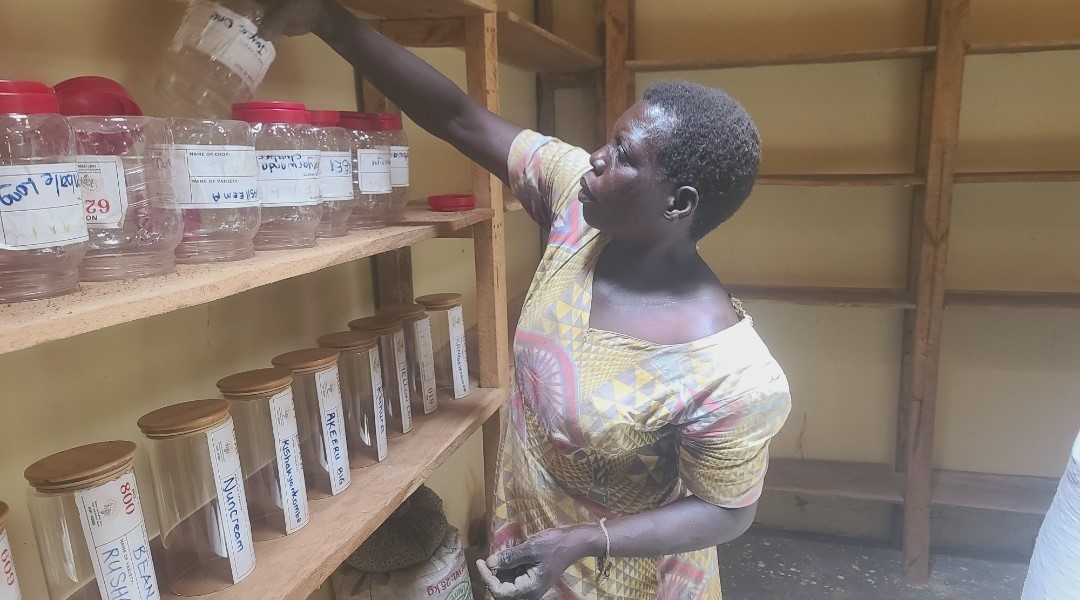
A member of the seed bank assembling packaging material at the Bank
Engwedu disclosed that ESSAF Uganda is urging farmers to locate, evaluate, choose, multiply, and perform seed variety cleaning in order to return them to their original locations by eliminating impurities, purifying through selection, and storing them in the community seed bank.
Ker Kwaro Acholi's role
Deputy Prime Minister Martin Okumu urged Ker Kwaro Acholi to establish their own seed banks as farmers and save high-quality seeds to endure the climate of Acholi.
"If new varieties are not good, we should abundant them," he said, adding that we should carefully plant them and explore how they can be kept.
In order to maintain the seed banks in the Acholi subregion, Okumu added, the institution's first objective is to support and encourage the growth of indigenous crops.
The efforts of Can Rwede Pe and the Ongako Community Seed Bank have garnered attention beyond the Acholi sub-region. Environmental activists and agricultural researchers have hailed their initiatives as models of sustainable farming practices. Local government officials have also expressed their support, recognizing the critical role these groups play in enhancing food security and biodiversity conservation.
As they preserve these traditional seeds, farmers in Acholi sub-region are not just safeguarding their crops; they are cultivating a sense of identity and pride. With every seed planted, they are nurturing their past while planting the seeds for a sustainable future.
In the face of adversity, these farmers and their communities are redefining resilience and sustainability. The call to conserve their agricultural heritage is resonating, earning them recognition as champions of biodiversity and sustainable practices inspiring movements across Uganda and beyond.
The Legal Framework,
Although the Ugandan Parliament has passed laws recognizing the Rights of Nature, there is still a need for a specific legal framework to implement these rights effectively. Efforts are ongoing to draft legal proposals that will support the protection of indigenous seeds and ecosystems.
Overall, the Ugandan government's current policy reflects a growing recognition of the importance of indigenous seeds in ensuring agricultural sustainability and food security, while also addressing the challenges posed by modern agricultural practices.
Upcoming on 90.9 FM
Upcoming on 94.5 FM
Upcoming on 101.4 FM
Upcoming on 104.8 FM



















Comments
This post currently has no comments.