
TRADERS DEMAND BALANCED TAX POLICY AS GOVERNMENT MOVES TO ENFORCE BAN ON 43 IMPORTED PRODUCTS
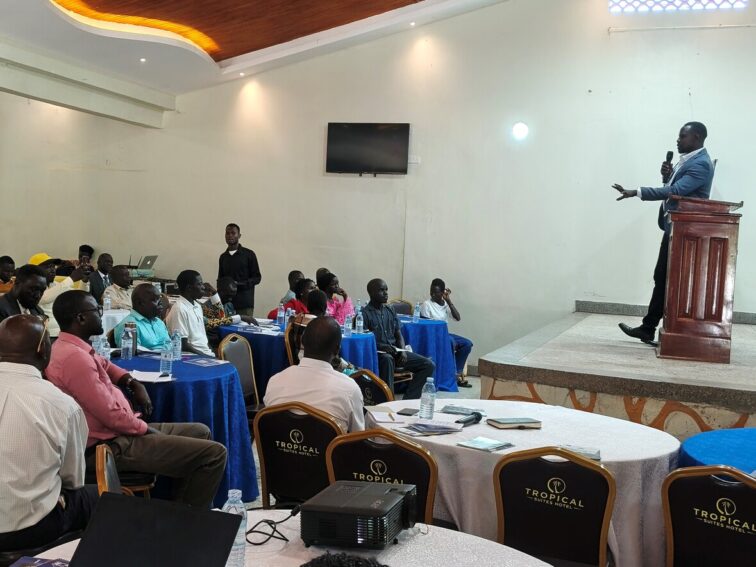
Mansuru Ajiga the URA Supervisor for Customs and Border Control in the West Nile region during URA-Business Community Baraza in Arua city.
By Dramadri Federick
Arua City
The government is stepping up enforcement against the importation and trade of 43 categories of prohibited goods, a policy intended to protect public health and the environment, support local industries and create employment.
The prohibited goods include second-hand motor vehicle tyres, used oil seals, shock absorbers, certain hazardous chemicals and products containing toxic substances, mercury-containing batteries, ivory and tortoise shell, underwater fishing guns, white phosphorus matches, toy pistols and guns with projectiles, and other restricted or prohibited imports.
The list is provided under the Consumer Protection (Control of Imports) Regulations, 2017, alongside other restrictions and penalties provided for under Uganda’s customs and related laws.
However, as government pursues import control and the Buy Uganda, Build Uganda (BUBU) policy, some traders are calling for a more balanced approach that protects local industry without placing excessive pressure on businesses and consumers who still depend on imported goods.
Miria Natal, a dealer in second-hand clothes, says the cost of clearing imported merchandise has increased significantly, affecting the profitability of small businesses.
“I used to pay about 900,000 shillings to clear a container of second-hand clothes imported through Mombasa Port in Kenya to Uganda. Now, the goods are cleared at about 1.2 million shillings. It is true that government is working towards BUBU, but we must accept that, given the nature of our economy, we cannot completely do away with the importation of used items.”
Natal says rising clearance costs and taxes are increasing the cost of doing business at a time when traders are also facing reduced consumer purchasing power.
For another Arua City business proprietor, Mori Samuel Sidoro, the government’s focus should be on expanding the number of taxpayers rather than continuously increasing the burden on those already paying taxes.
“Government should lower the tax rates and concentrate more on widening the tax base instead of putting more pressure on taxpayers who are already in the system. If only a small percentage of the population is paying taxes for the whole country, we are putting too much pressure on a few businesses, and they may no longer be able to grow because of over-taxation.”
The concerns raise a broader policy question: how can Uganda protect domestic industries and discourage harmful imports while ensuring that taxation and enforcement do not undermine legitimate businesses?
The Uganda Revenue Authority says the restrictions are not only about revenue collection, but also about protecting the public, the environment and local industries.
Mansur Ajiga, the URA Supervisor for Customs and Border Control in the West Nile region, says traders should understand the risks associated with dealing in prohibited goods. “We need to protect our environment, and we also need to protect our industries because we now have a number of industries established and operating in the country that employ our citizens.”
Ajiga says enforcement is intended to prevent unsafe and environmentally harmful products from entering the market while creating a fairer environment for locally established manufacturers.
In Arua City, Assistant Resident City Commissioner Poly Ongom has warned traders to abandon businesses dealing in prohibited products and instead seek lawful alternatives. “Exit that business and find an alternative which is clean; otherwise, the law will catch up with you.”
The warning comes as Uganda seeks to strengthen enforcement against smuggling and the circulation of prohibited, restricted and unaccustomed goods.
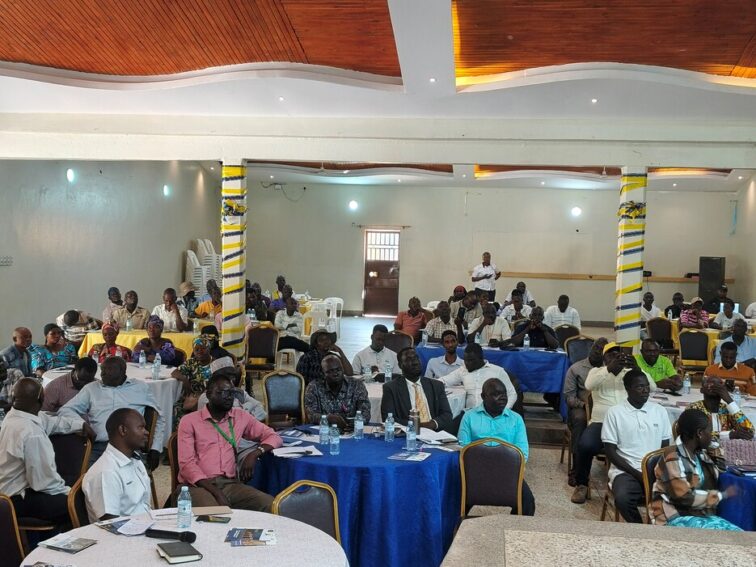
Business proprietors during the Barraza discussions
Under the East African Community Customs Management Act, smuggling and the importation, exportation, possession or dealing in prohibited, restricted or uncustomed goods are offences that can attract heavy penalties.
A person in charge of a vehicle used for smuggling may face a fine of up to 5,000 US dollars, while the vehicle and goods involved may also be liable to forfeiture.
For a master of a vessel or aircraft used for smuggling, the penalty may reach 7,000 US dollars for a vessel of less than 250 tonnes and 10,000 US dollars for a larger vessel or aircraft, in addition to possible forfeiture of the vessel, aircraft and goods involved.
Anyone convicted of importing, exporting, carrying, acquiring or possessing prohibited, restricted or uncustomed goods may face imprisonment of up to five years, a fine equivalent to 50 percent of the dutiable value of the goods, or both, depending on the applicable offence and legal provisions.
The policy challenge for government will be to ensure that enforcement against dangerous and prohibited imports goes hand in hand with measures to expand the tax base, support local production, improve the competitiveness of Ugandan-made goods and provide viable alternatives for traders whose businesses are affected by import restrictions.
URA is urging the public to report suspected smuggling and other customs offences, warning that traders dealing in prohibited goods risk prosecution, financial penalties and the forfeiture of their goods and means of transport.
The enforcement of the ban, therefore, presents a test for Uganda’s wider economic policy: protecting citizens and local industries while ensuring that legitimate businesses have a realistic path to transition, grow and contribute to the country’s tax base.

Comments
This post currently has no comments.