
UGANDA SECURES 3,000 EBOLA VACCINE TRIAL DOSES
Daily monitor
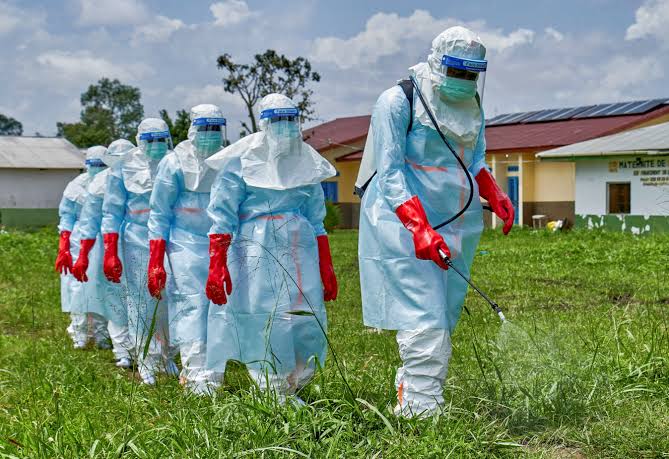
Researchers have confirmed that Uganda received part of the 3,000 investigational Bundibugyo Ebola Virus vaccine doses allocated for the country’s phase I clinical trial.
The study, launched in Masaka City last Monday, is being conducted through a partnership involving the Medical Research Council/Uganda Virus Research Institute, and the London School of Hygiene and Tropical Medicine (MRC/UVRI & LSHTM Uganda Research Unit).
Researchers said a similar study is also underway in the United Kingdom to evaluate the safety and capability of the vaccine candidate, ChAdOx BDBV, to trigger an immune response against the deadly disease.
“The Bundibugyo virus disease is a form of Ebola with no approved vaccine or specific treatment,” observed Prof Eugene Rugazira, the principal investigator for the Uganda study.
He added: “By evaluating the ChAdOx-based Bundibugyo Ebola vaccine candidate in Uganda, we are generating the evidence needed to determine whether it is safe and capable of stimulating the immune responses that could help protect at-risk communities in future outbreaks.”
While the Bundibugyo Ebola virus has triggered a recent outbreak in the DR Congo, Uganda has successfully defeated the virus within its borders, even as threats from four countries in the East African region and the globe. The vaccine candidate could help countries reduce transmission and deaths if the results come out successful.
The study is being conducted in partnership with the Oxford Vaccine Group and Pandemic Science Institute at the University of Oxford. In the study, researchers will test the vaccine candidate on healthy individuals to see if it stimulates an immune response against the disease.
Both trials in Uganda and the UK are funded by the Coalition for Epidemic Preparedness Innovations (CEPI), as part of a programme to advance the development of the vaccine candidate, according to the researchers.
The ChAdOx BDBV vaccine candidate was developed by scientists at the University of Oxford, with production and quality-testing of the viral seed stock that formed the starting material for large-scale vaccine manufacture carried out on-site by the Clinical Biomanufacturing Facility.
The researchers added that the Serum Institute of India (SII) has manufactured and stockpiled approximately 620,000 doses of the ChAdOx1 BDBV vaccine candidate in two weeks for potential future use. They further indicated that SII has “supplied 300 vials to the UK and additionally approximately 3,000 investigational doses for this Phase I trial in Uganda”.
Prof Moffat Nyirenda, the director of the MRC/UVRI&LSHTM Uganda Research Unit, said this trial demonstrates how sustained investment in scientific excellence, research infrastructure and long-term partnerships has positioned Uganda as a leading centre for vaccine research in Africa.
“Working alongside collaborators in Uganda, across Africa and internationally, we are contributing high-quality science that will accelerate the development of vaccines against emerging infectious diseases and strengthen global epidemic preparedness,” he said.
Dr Nicole Lurie, the executive director for preparedness and response at CEPI, noted that the Bundibugyo Ebola Virus outbreak raging in the DR Congo is now the fastest-growing Ebola epidemic in history and the deadliest Ebola outbreak the nation has ever experienced.
“We urgently need a safe and effective vaccine that could help bring this crisis to an end. The findings from this Ugandan trial will be essential in building the robust data to rapidly advance ChAdOx BDBV to the next stage of testing and bring the prospect of protection closer,” she said.
Dr Umesh Shaligram, the executive director of SII, on the other hand, said the initiation of the Phase I clinical study of the ChAdOx1 BDBV vaccine candidate in Uganda is a significant step forward in addressing an important unmet need in Ebola preparedness.
“The rapid manufacture, stockpiling and supply of investigational doses for clinical evaluation reflect what can be achieved when global partners work with urgency and shared purpose,” he said in an October 5 statement.
Dr Shaligram added: “We are pleased to contribute our manufacturing expertise to this collaborative effort and remain committed to supporting the development of innovative vaccines that can help protect communities at risk from emerging infectious diseases worldwide.”
Upcoming on 90.9 FM
Upcoming on 94.5 FM
Upcoming on 101.4 FM
Upcoming on 104.8 FM

















Comments
This post currently has no comments.