
UGANDA’S STAFFING CRISIS: OVER UGX400B RETURNED, 306,635 JOBS VACANT
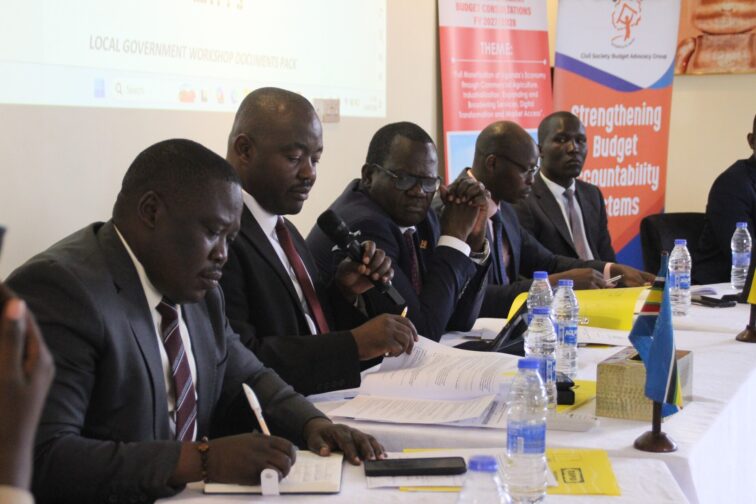
Stakeholders in a panel discussion during the Regional Budget consultative conference for the 2027/2028 FY budget at Le-confidentiel Hotel in Arua. Photo// Dramadri Federick
By Dramadri Federick
Arua City
Local government leaders and civil society actors in Uganda’s West Nile sub-region are calling for reforms in public service recruitment and decentralization, as a national assessment reveals that nearly half of the country’s approved public service positions remain vacant.
The staffing gaps are raising concerns about the ability of local governments to deliver essential services, particularly in health, education and other sectors that directly affect communities.
The concerns emerged during a regional budget conference for 2027/2028 Financial Year Budget held under the them; ‘Full Monetization of Uganda’s Economy through Commercial Agriculture, Industrilization, Expansion and Broadening services, Digital Transformation and Market Access’, where government officials, political leaders and civil society actors questioned why local governments continue to experience critical staffing shortages despite the availability of funds and approved positions for recruitment.
According to figures presented by the Ministry of Public Service, 306,635 of Uganda’s 681,277 approved public service positions are vacant, representing a national vacancy rate of about 45 percent.
The health sector accounts for the largest share of the staffing deficit, with 102,693 positions vacant, while the education sector has 87,080 teaching vacancies, equivalent to a 35 percent staffing gap.
The shortages come as Uganda seeks to accelerate economic transformation and achieve its ambitious development targets, placing additional pressure on local governments to provide adequate public services.

Balikuddembe the Senior Human Resource Officer at Ministry of Public Service explain what exactly is happening across the country. Photo// Dramadri Federick
Joseph Balikuddembe, a Senior Human Resource Officer at the Ministry of Public Service, said the staffing problem is partly linked to weaknesses within local government recruitment structures.
Balikuddembe said more than 20 local governments had been cleared to recruit during the previous financial year, but many failed to utilise the funds allocated for recruitment leading to return of more than UGX 400 billion in wage and recruitment-related funds by June this year.
“Last financial year most of the votes for recruitment returned to the treasury, over UGX 400 billion returned to treasury. We found out that most of the local governments did not have operational service commissions and contract committees, as a result they failed to utilise the funds,” Balikuddembe explained.
The revelation has shifted attention from the availability of funding alone to the administrative systems required to translate approved budgets into actual recruitment.
Official records from Ministry of Public Service indicate that a total of UGX 8.4 billion was released during the 2025/2026 Financial Year to local governments for recruitment across the country of which UGX 400Billion remained Unspent and was returned. In the current financial year 2026/2027 the ministry has allocated UGX 9.7billion to push the country’s staffing to 56%. The same ministry is now advocating for increment of funding to UGX 11.4billion to raise the country’s staffing to 70% across all the country from central government to local government administrative units.
Local governments blame approval delays
However, local government officials argue that recruitment challenges cannot be blamed entirely on weak local structures.
Nikolas Ogwang, Chief Administrative Officer of Koboko District, said local governments are ready to recruit but face delays in obtaining the necessary approvals and operationalising recruitment bodies.
He said delays in approving district service commissions and contracts committees can stall the entire recruitment process.
“Most of the district Service Commissions and contracts committees faced delays in approval from the Ministry of Public Service, yet without them recruitment can’t take place.”
According to Ogwang, such delays create a situation where funds may be available on paper, but local governments are unable to use them within the financial year.
The competing explanations point to a broader challenge in Uganda’s decentralized public service system while local governments are responsible for delivering many essential services, key administrative and financial decisions remain dependent on central government processes.
Civil society calls for deeper decentralization
Feni Twaib, Executive Director of the West Nile Regional Civil Society Network, who represented the Civil Society Budget Advocacy Group (CSBAG) at the regional budget conference, said Uganda needs to move beyond decentralisation in name and give local governments’ greater control over resources and administration.
Twaib said financial and administrative authority should be transferred closer to the communities that depend on public services.
“We need to decentralize financial powers to local governments so that the central government can only do oversight.”
For civil society, the staffing crisis is therefore not simply a question of recruiting more workers. It also raises questions about how Uganda’s decentralised governance system is designed and whether local governments have sufficient authority and resources to respond to the needs of their populations.
Parliamentary concern over funding
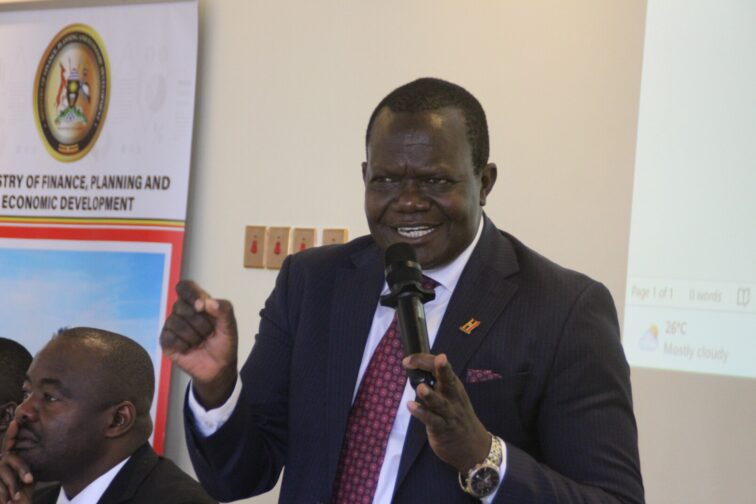
Fungaaro rallies support for the local governments. Photo// Dramadri Federick
Hassan Kaps Fungaro, Obongi County Member of Parliament and Chairperson of the West Nile Parliamentary Caucus, said inadequate financing remains a major constraint on local government service delivery.
Fungaroo called for closer coordination between the ministries responsible for Finance and Public Service and local governments to address staffing shortages and strengthen service delivery.
“The local governments are given little money and yet very little money is also allocated for development and service delivery and worst of it, very little funds are sent to the local governments,” Fungaroo said.
He argued that adequately staffing public institutions will be critical if Uganda is to achieve its long-term economic transformation ambitions.
A national problem with local consequences
Uganda’s public service staffing gap is not unique to West Nile. The national figures indicate a structural challenge affecting local governments across the country.
With 306,635 approved positions unfilled, nearly one in every two positions in the approved public service establishment is vacant.
The consequences are particularly significant in health and education, where staffing levels directly influence the quality and availability of services.
The 102,693 vacancies in health come amid continued pressure on public health facilities, while the 87,080 teaching vacancies place additional pressure on schools and existing teachers.
For West Nile, where local governments are responsible for delivering services across geographically large and often underserved communities, officials say addressing recruitment bottlenecks will require both adequate financing and faster administrative processes.
The debate now centers on whether the problem is primarily a failure by local governments to utilise available resources, delays in central government approvals, inadequate decentralization, or a combination of all three.
As Uganda pursues its long-term economic transformation agenda, the ability to fill approved public service positions could become an increasingly important measure of whether public resources are translating into services for citizens.
Upcoming on 90.9 FM
Upcoming on 94.5 FM
Upcoming on 101.4 FM
Upcoming on 104.8 FM



















Comments
This post currently has no comments.