
WHERE DO ARV TINS GO? STAKEHOLDERS RAISE CONCERNS OVER HIV MEDICINE WASTE
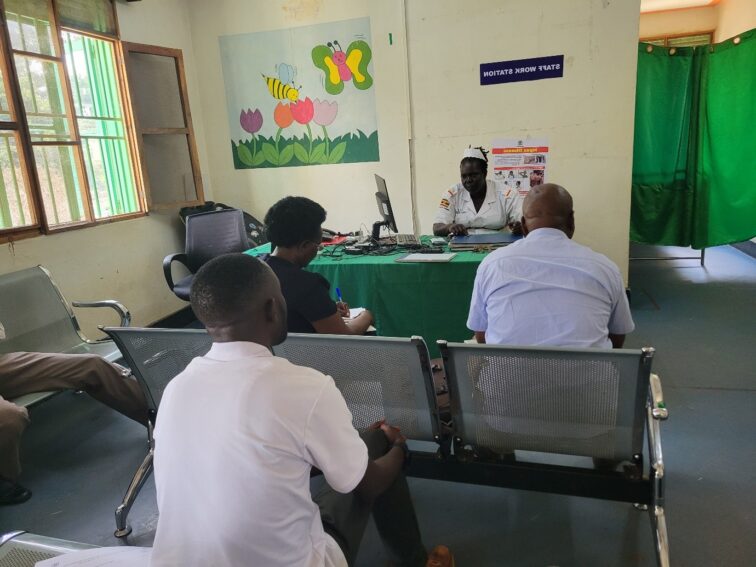
A team from CCM board while engaging a nurse at GRRH about HIV treatment and management at the Hospital (Photo by Biko Rombe)
By Biko Rombe
Gulu city
Stakeholders working in HIV and community health have raised concerns over how empty antiretroviral therapy, ARV, medicine tins are disposed of, warning that the issue is becoming both a health and environmental concern.
The concern emerged during an engagement involving stakeholders and a Global Fund oversight team, where district officials and health workers described how people living with HIV, particularly children and adolescents in schools, sometimes discard empty medicine tins in pit latrines, toilets and other inappropriate places.
Gulu District Resident District Commissioner Alanyo Anna Florence said the problem has become noticeable in schools, where empty medicine containers are increasingly being found in latrines.
She says the challenge goes beyond the physical disposal of the containers, as some young people who started HIV treatment at an early age may later struggle with treatment adherence because of stigma and inadequate information about their condition.
According to Alanyo, some children begin treatment when they are still young, often without fully understanding why they are taking the medicines. As they grow older, stigma and lack of information can contribute to some abandoning treatment, which can also affect their education.
The Global Fund oversight delegation says the concern requires attention beyond schools, questioning how thousands of empty ARV tins used by people in communities are eventually disposed of.
Immaculate Owomugisha, the team lead for the delegation from the CCM Board, says waste management for ARV containers needs to be incorporated into HIV programming, particularly as communities increasingly face concerns around health and environmental protection.
She says families with one or more people living with HIV may accumulate several empty medicine tins each month, yet there is little discussion about where those containers should go after the medicines have been consumed.
Owomugisha says the Global Fund, which invests in waste-disposal management, needs to consider interventions that can help communities safely manage the empty containers.
At Gulu Regional Referral Hospital, health workers say stigma is one of the major reasons some patients choose to hide empty ARV tins rather than dispose of them openly.
Akwiya Christine, an assistant nursing officer at the hospital’s STI and Skin Clinic, says patients, including students, may carry their empty tins with them and eventually throw them into toilets because they fear being identified as people living with HIV.
She says this practice can contribute to pit latrines filling up much faster, especially where large numbers of people dispose of medicine containers in the same facility.
Christine says schools and other institutions need designated rubbish pits or appropriate containers where waste, including empty medicine tins, can be safely discarded.
She also links the disposal problem to a wider gap in health education, arguing that students need more information about HIV, treatment, hygiene and stigma so that they can seek support without fear.
She says proper health education can also make it easier for learners to disclose their treatment needs to trusted teachers, matrons or other school authorities, allowing them to access medicines and refills without unnecessary questioning.
For adolescents and young people in the community, access to HIV services presents another challenge.
Pauline Adok Kijange, an HIV focal person in Amuru District, says the closure of some community drug distribution points has made it harder for health workers to reach adolescents and other clients living far from health facilities.
She says health facilities have responded by dispensing longer supplies of medicines, including giving school-going clients enough ARVs to cover an entire school term.
But when it comes to empty containers, Adok says patients should return the tins to health facilities when they come for their next refill.
She says this would serve two purposes: ensuring that the containers are properly disposed of while also helping health workers monitor whether patients are taking their medicines as prescribed.
Adok says returning empty tins can provide an additional indication of treatment adherence, although adherence is ultimately assessed through clinical monitoring, including viral-load suppression.
The discussions therefore point to a problem that sits at the intersection of HIV treatment, stigma, school health and environmental waste management.
While health workers continue to focus on ensuring that patients remain on life-saving ARV treatment, stakeholders say equal attention is needed on what happens after the medicine is taken.
For people living with HIV, particularly children and adolescents, the lack of safe and confidential disposal options can expose them to stigma while also creating waste-management problems in schools and communities.
Stakeholders are now calling for clearer systems to enable patients to return empty ARV tins to health facilities, as well as better health education and appropriate disposal facilities in schools and other public institutions.
Upcoming on 90.9 FM
Upcoming on 94.5 FM
Upcoming on 101.4 FM
Upcoming on 104.8 FM



















Comments
This post currently has no comments.