
WHY KING OYO’S HEALTH WAS KEPT WITHIN A SMALL CIRCLE
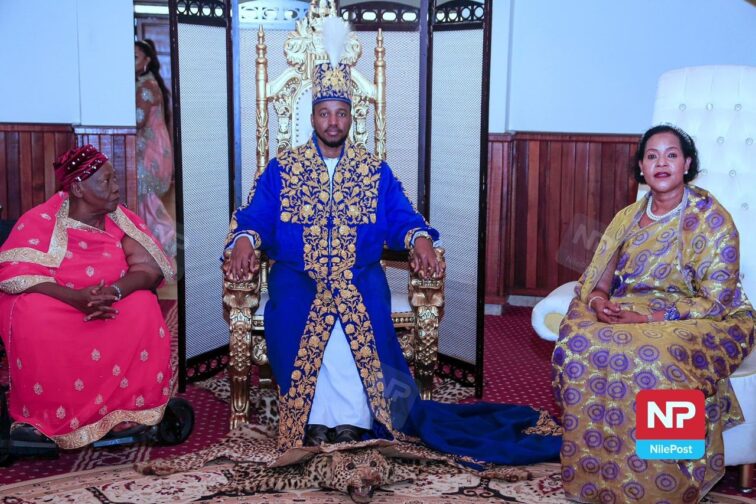
The late King Oyo on his throne.
NILE POST
The death of Tooro King Oyo Nyimba Kabamba Iguru Rukidi IV has offered a glimpse into the closely guarded world surrounding the health of reigning monarchs, where even members of the wider royal family may not necessarily have access to detailed information about the sovereign’s condition.
King Oyo died at about 10pm on Thursday, August 27, aged 34, after a period of critical illness, bringing to an end a reign that began when he was only three years old.
His death was announced by Tooro Kingdom Prime Minister Calvin Armstrong Rwomiire Akiiki, who said the King had been critically ill and asked the people of Tooro to remain calm, united and prayerful.
The Kingdom did not disclose the nature of the illness or provide details about the medical treatment the King had been receiving in the United States.
That discretion has come into focus following comments from members of the wider Babiito royal family who said they had not initially been fully informed about the King’s travel or medical condition.
Prince Kasagama, a member of the Babiito royal family, said the wider royal family only knew that Oyo had travelled to the United States together with Queen Mother Best Kemigisa, without being given detailed information about his condition.
“What we heard as the royal family was that His Majesty left the country and went to the US together with the Queen Mother. We were not initially informed of the trip,” Kasagama said during an interview with Voice of Tooro FM.
Kasagama said the circumstances surrounding the King’s final days were difficult to understand because members of the wider royal family had previously understood that Oyo was abroad for official engagements and further studies.
He said he personally began making calls to contacts in the United States on Thursday afternoon after seeking information about the King’s condition.
The comments provide an insight into the different layers of information that can exist within a royal institution, but they do not necessarily mean that the King’s health was mishandled or that every member of the royal family was expected to know the details.
In monarchies, information about a reigning sovereign’s health is often treated as highly sensitive and is normally restricted to a small circle of people directly responsible for the monarch’s medical care, security, administration and immediate welfare.
A royal family may include numerous princes, princesses and other members of the ruling dynasty, while the group entrusted with the sovereign’s personal affairs can be considerably smaller.
The distinction is important because knowledge of a monarch’s illness can have consequences far beyond the private health of an individual.
A serious illness can immediately generate anxiety among subjects, speculation about succession, political intrigue and competing accounts about the future of the institution.
For that reason, royal households have historically exercised considerable caution over medical information, often communicating through designated officials rather than allowing information to circulate freely among relatives or the public.
The principle is not unique to traditional monarchies.
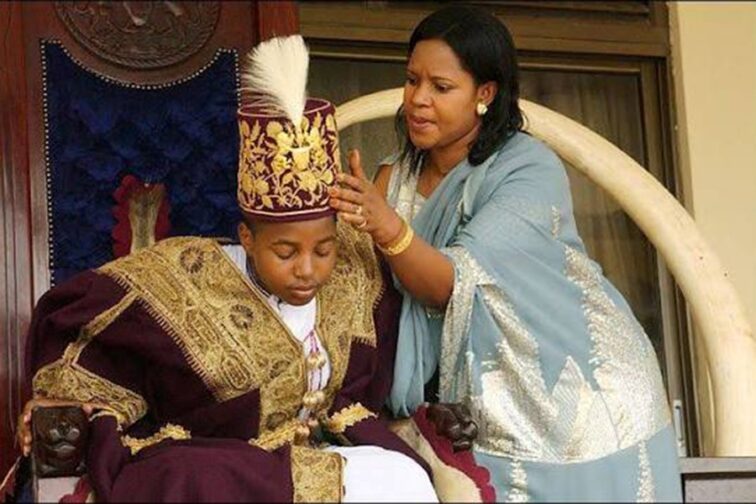
Queen Mother Best Kemigisha helping the young King Oyo.
Political institutions similarly restrict sensitive information about the health of senior leaders, with only a small inner circle necessarily having complete knowledge of a leader’s medical circumstances.
In Uganda, President Museveni only publicly disclosed in June this year that First Lady Janet Kataaha Museveni had suffered a serious health crisis on March 21, 2026.
Her absence from public engagements had generated speculation, but detailed information about what had happened remained unavailable to even top officials at State House and those in the Office of the First Lady until the President chose to disclose it.
The episode illustrated that even within the highest levels of government, sensitive medical information can remain confined to those directly involved until an appropriate time for wider disclosure.
The same principle can apply to a royal institution. The practice has historical precedents.
In the British monarchy, medical records relating to the illness of King George III show that detailed reports from his physicians were communicated to the Prince of Wales and selected members of the royal family, rather than being treated as information automatically available to the wider royal establishment or public.
The approach reflects a long-standing understanding that the sovereign’s medical condition is simultaneously a private matter and an issue with institutional consequences.
Uganda’s traditional monarchies have faced the same tension in recent years.
The experience surrounding Buganda’s Kabaka Ronald Muwenda Mutebi II provides one of the clearest recent examples.
When the Kabaka spent an extended period abroad receiving treatment and recuperating in 2024, Buganda Kingdom officials faced increasing pressure from subjects, clan leaders and the public to provide details about his condition.
Katikkiro Charles Peter Mayiga nevertheless defended the guarded approach, saying the Kabaka’s privacy had to be respected and that he would return when his doctors determined he was ready.
“When they see the Kabaka here, they say that now the Kabaka should be taken for treatment, but when he goes for treatment, they claim the Katikkiro is hiding him,” Mayiga said at the time.
The Kingdom eventually confirmed that the Kabaka was receiving treatment and recuperating in Namibia, while still limiting the medical details released publicly.
The sensitivity surrounding the matter became particularly evident when a group of Buganda clan heads, commonly known as Bataka, attemped to reach the Kabaka in Namibia seeking to establish the condition for themselves.
The episode illustrated the difficulty faced by traditional institutions when subjects and members of the royal establishment want information that the institution considers private.
It also demonstrated the risks of allowing medical information about a monarch to become fragmented across multiple unofficial channels.
The issue is therefore not simply whether people should be told that a King is sick, but who is responsible for knowing the details, who is authorised to communicate them and when disclosure becomes necessary.
That distinction is particularly important in understanding the events surrounding Oyo.
Weeks before his death, reports about his health circulated on social media, with speculation ranging from claims that he was critically ill to reports about the nature of his alleged illness.
The Tooro Kingdom did not publicly confirm those claims.
On Thursday, however, as concern intensified, the Kingdom issued an official communication confirming that the King was critically ill and asking the public to remain calm.
Hours later, the Kingdom announced his death.
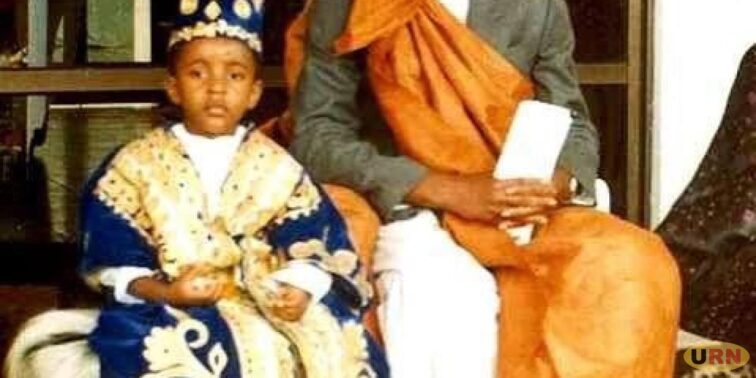
King Oyo.
The sequence should not necessarily be interpreted as the Kingdom changing its story. It can equally be understood as a controlled disclosure of information as the King’s condition changed and as the institution reached the point where public communication became necessary.
There is a significant difference between informing subjects that their King is critically ill and disclosing a diagnosis, treatment details or prognosis.
The former can become necessary because the monarch’s condition directly affects the kingdom. The latter remains personal medical information.
Tooro’s communication followed that distinction by confirming the King’s critical condition without publicly disclosing the nature of his illness.
Kasagama also raised another issue concerning the traditional handling of the King’s death.
He said Chief Prince Charles Kamurasi, the Omusuga, had previously sought clarification from kingdom officials about the King’s whereabouts.
He also questioned how some traditional procedures surrounding the death of a Tooro monarch could be carried out because Oyo died outside Tooro.
According to Kasagama, the Kateerampamo, the traditional official associated with announcing the death of the King, could not perform the role in the customary setting because the monarch was outside the kingdom.
The observation points to the challenge that modern circumstances can present to ancient royal traditions, rather than necessarily suggesting a failure by the Kingdom.
Tooro’s monarch was receiving medical attention outside the country, while the traditional institution surrounding him remained rooted in customs developed for a very different era.
The circumstances also demonstrate why royal institutions have designated officials and protocols for communicating major developments.
If every relative, prince, official or clan leader were expected to independently communicate information about a monarch’s condition, conflicting accounts could quickly emerge.
In the age of social media, such contradictions can become even more damaging. A single unverified claim about a monarch’s health can reach millions of people before the royal institution has an opportunity to respond.
That pressure has increasingly forced traditional institutions to navigate between the public’s demand for immediate information and the monarch’s right to privacy.
For Tooro, the next challenge will be managing the same balance during mourning and succession.
The Kingdom has announced that the Crown’s continuity is assured and that Oyo leaves behind a Prince who will become heir to the throne. His identity, however, will be formally disclosed at an appropriate time in accordance with Tooro customs and traditions.
That announcement itself demonstrates that some information surrounding the royal family is released according to custom and institutional timing rather than the demands of immediate public curiosity.
Oyo’s death marks the end of one of Uganda’s most remarkable royal stories.
He ascended the Tooro throne in 1995 following the death of his father, Omukama Patrick David Matthew Kaboyo Olimi III.
He was only three years old and became internationally known as the world’s youngest reigning monarch.
For almost 31 years, his life was inseparable from the institution he inherited as a child.
His final illness was handled away from the public spotlight, with information remaining within a relatively small circle until the Kingdom confirmed that he was critically ill.
For some members of the wider royal family, that meant they did not have the same information as those closest to the King. But that difference in knowledge should not automatically be understood as evidence that the institution failed to communicate.
Royal institutions have always operated through layers of responsibility, with the people directly responsible for the sovereign’s health and security necessarily possessing information that may not be shared with every relative.
For Tooro, however, the immediate task is now clear.
The Kingdom must guide its subjects through mourning, communicate funeral arrangements and eventually manage the succession while preserving the customs and dignity of an institution that has survived for generations.
The debate over what members of the wider royal family knew about Oyo’s illness will continue.
But his death also offers a broader lesson about monarchy: the King’s health may be of enormous public interest, yet that does not make every detail of his medical life public property.
Sometimes, royal silence is not an absence of information management. It is the management of information itself.
Upcoming on 90.9 FM
Upcoming on 94.5 FM
Upcoming on 101.4 FM
Upcoming on 104.8 FM














Comments
This post currently has no comments.