
WOMEN ENTREPRENEURS URGED TO EMBRACE GROW PROJECT OPPORTUNITIES
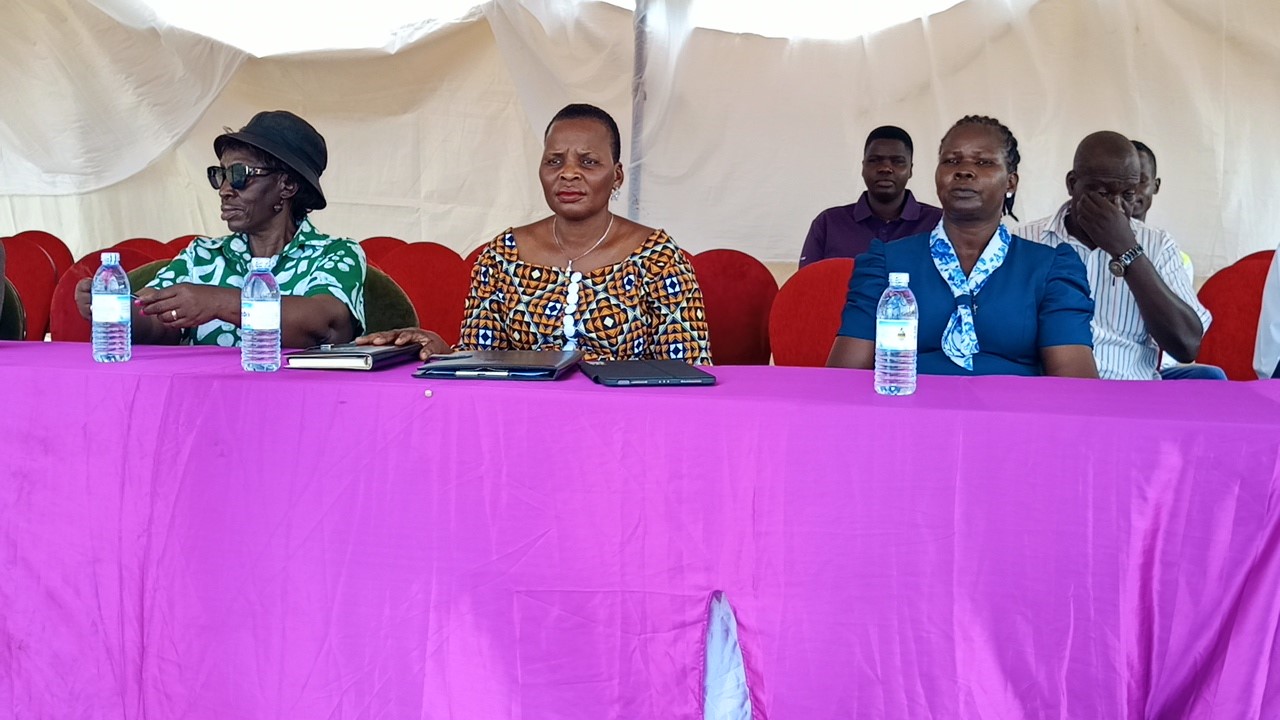

Minister Akori in the middle and on her left is Winny Lawoko Olwee, on the right is Salume Amuge of Thrive Gulu
By Odong stephen
The Minister for Northern Uganda, Hon. Beatrice Akello Akori, has urged women entrepreneurs in Northern Uganda to take advantage of government programmes designed to provide financial support and help them grow their businesses.
Minister Akori said cultural barriers have historically limited women’s opportunities to own businesses and assets across Africa, including Uganda, particularly in Northern Uganda.
She noted that although the Government of Uganda has made significant progress in promoting women’s participation in education and leadership through affirmative action, women continue to lag behind men in business ownership due to persistent cultural barriers.
According to the minister, the increasing number of girls enrolling in primary and secondary schools, alongside the growing participation of women in leadership positions, demonstrates progress in women’s empowerment. However, she stressed that more efforts are needed to bridge the gender gap in business ownership and economic empowerment.
To address these challenges, the government has introduced several programs aimed at empowering women economically and supporting business growth. These include the Generating Growth Opportunities and Productivity for Women Enterprises (GROW) Project, which offers loans at interest rates of 8–10%, the Uganda Women Entrepreneurship Program (UWEP), which provides financing at an interest rate of 6%, the Emyoga program and the forthcoming National Social Security Fund (NSSF) IV initiative, among others.
“The GROW Programme is being implemented by the Ministry of Gender, Labour and Social Development in partnership with commercial banks, where women can access the funds. This money is intended for women who are already in business and need support to grow their enterprises, register their businesses and gain access to markets,” Minister Akori said.
She encouraged women entrepreneurs to prioritise these opportunities and utilise the available financial support to expand their businesses. She added that embracing the programme would help women strengthen their business capacity, grow their enterprises and overcome poverty.
Social entrepreneur Winny Lawoko Olwee pledged that women were ready to do whatever it takes to grow their businesses and benefit from the opportunities offered under the GROW Project.
However, she called on the minister’s office to work closely with women entrepreneurs to ensure that government initiatives and projects benefit the communities they are intended to serve.
“We request your office to work with us to ensure that logistics hubs and other government projects benefit our women. This should not be limited to women alone, but should also include small and medium-sized businesses that cannot grow independently and need partnerships to expand,” Olwee said.
She also urged women entrepreneurs to register their businesses and comply with tax requirements, noting that formalising their enterprises would open doors to more business opportunities, financial support and access to markets.
Salume Amuge, Country Director of Thrive Gulu, said that although Northern Uganda had made significant gains following the restoration of peace, sustaining those achievements required continued investment in jobs, enterprises, markets and local production.
She emphasised that sustainable peace depends on people having access to meaningful economic opportunities, noting that women and young people play a critical role in maintaining peace and driving economic growth.
According to Amuge, businesses owned by women and young people contribute to household incomes, create employment opportunities and keep money circulating within local communities.
She reaffirmed Thrive Gulu’s commitment to supporting entrepreneurship and business development through financial literacy training, savings initiatives, market and financial linkages, digital marketing, business formalisation, diversification and value addition.
Amuge also highlighted the importance of combining economic empowerment with gender-transformative approaches that challenge harmful social norms while strengthening women’s voices, leadership and participation in decision-making.
She said the organisation also planned to bring women entrepreneurs together through economic symposiums, giving them opportunities to gain exposure, build networks and access markets that could support business growth.
Amuge called for continued government support through financial programmes aimed at expanding women-owned enterprises and strengthening their economic independence.
Agness Ange, a soap maker from Gulu City, said she intended to apply for a loan under the GROW Project, despite concerns raised by other women entrepreneurs about the challenges involved in accessing the funds.
Ange said some women had reported that the loan application process involved extensive paperwork, forcing some applicants to abandon their applications before completing the process.
Despite these concerns, she said she remained determined to apply for a loan through one of the commercial banks participating in the GROW Project.
As an emerging entrepreneur, Ange said she would first work towards registering her business to improve her chances of accessing available opportunities and expanding her market reach both locally and beyond.
A representative of Centenary Bank said women entrepreneurs could access loans under the GROW Project through the bank, provided they had an established business and could demonstrate proof of ownership.
She clarified that a trading licence was not a mandatory requirement for obtaining a loan from Centenary Bank, although applicants needed to provide evidence that the business belonged to them.
“You don’t need a trading licence to qualify for a loan at Centenary Bank; it is not a must. However, we need proof that the business belongs to you. Sometimes, we accept a letter from the Local Council (LC) or rental payment receipts as evidence, and we are able to provide you with the money,” she explained.
The bank representative added that some women had approached the bank with unregistered businesses but had received guidance and support to help them meet the necessary requirements.
She noted that the bank had also guided some entrepreneurs on how to obtain assistance from the Uganda Registration Services Bureau (URSB) to register their businesses and improve their access to formal business opportunities.
The GROW Project provides financing and other entrepreneurial support services to eligible women entrepreneurs who own micro and small businesses in Uganda. The loans are intended to help beneficiaries expand their enterprises, strengthen business operations and access new growth opportunities.
Women interested in applying are encouraged to familiarise themselves with the loan terms, eligibility criteria and application procedures before approaching a participating financial institution.
The Generating Growth Opportunities and Productivity for Women Enterprises (GROW) Project is a Government of Uganda initiative funded by the World Bank and implemented by the Ministry of Gender, Labour and Social Development in partnership with the Private Sector Foundation Uganda. The project operates across districts, municipalities and cities, including refugee-hosting districts.
Its main objective is to increase women entrepreneurs’ access to business development services and other forms of support that enable them to grow their enterprises from micro to small businesses and from small to medium-sized enterprises. The project also targets refugee women and women living in refugee-hosting communities.
Through improved access to finance, business development services and markets, the GROW Project seeks to strengthen women’s economic independence, create employment opportunities and contribute to sustainable economic growth.
Upcoming on 90.9 FM
Upcoming on 94.5 FM
Upcoming on 101.4 FM
Upcoming on 104.8 FM


















Comments
This post currently has no comments.