
UGANDA LAUNCHES FIRST REGIONAL AMBULANCE CALL AND DISPATCH CENTER IN WEST NILE
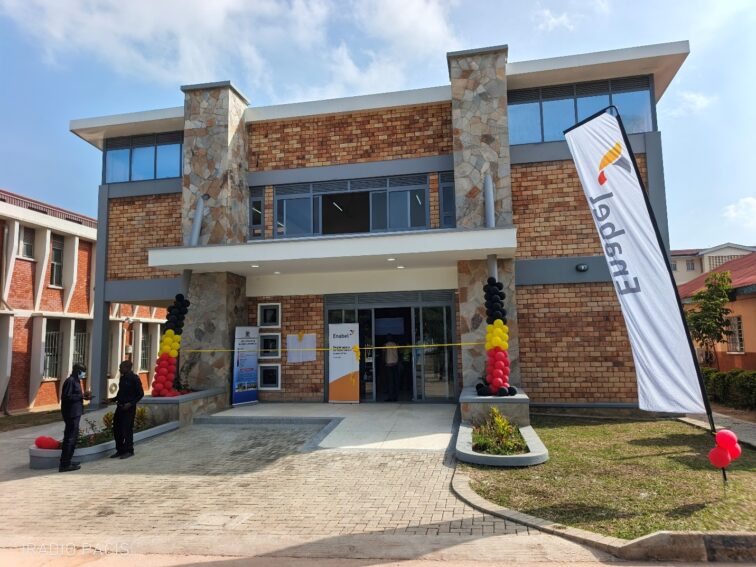
The newly Commissioned Regional Ambulance Call and Dispatch Center at ARRH (All photos by Onzoma Albert)
By Onzoma Albert
Arua City
The Ministry of Health of Uganda has inaugurated a regional ambulance call and dispatch center at Arua Regional Referral Hospital designed to enhance emergency medical services across the West Nile region.
Officially commissioned by Honorable Chris Baryomunsi, the Minister of Health, the center aims to receive emergency calls, coordinate ambulance deployment, and facilitate timely referrals. This will improve patient outcomes by reducing delays in accessing life-saving emergency medical care.
Constructed by Enabel and funded by the Kingdom of Belgium at a cost of UGX 2 billion, the facility comprises a call and dispatch center, an ambulance disinfection room, conference rooms, and offices for operational and support staff.
Minister Baryomunsi emphasized that while Uganda has increased investments in ambulance and emergency care capacity, the lack of an integrated communication and dispatch infrastructure has impeded the effectiveness of emergency services.
He highlighted the need for collaboration and professionalism among healthcare workers tasked with managing emergencies at the new facility.
“I call upon all the personnel working in this call and dispatch center and the hospital at large to exhibit the highest standard of professionalism, integrity, accountability and excellence, every call received through this call and dispatch center represents a citizen in need of help, reassurance for protection, such calls must be met with urgency, competence and compassion, let the center serve as a model of efficiency, reliability and responsiveness in public service delivery,” he said.

Minister of Health Dr Chris Baryomunsi accompanied by Belgium Ambassador Hugues Chantry and other stakeholders at the commissioning of the facility.
Ambassador Hugues Chantry of Belgium to Uganda noted that global evidence shows that having extensive ambulance fleets alone does not improve health outcomes.
Instead, the critical determinant is the presence of an organized dispatch and communication system that coordinates the deployment of ambulances to those in need with maximum efficiency.
He urged all stakeholders in the West Nile region to maximize the benefits offered by the new dispatch facility.
“In an emergency every minute counts that’s why an ambulance however much well equipped to save a life is only when it traces the patient on time and brings them quickly enough to an appropriate care, this is the actual purpose of establishing the ambulance call and dispatch center and for the people of West Nile this should translate to faster emergency response care, well-coordinated ambulance services, more efficient referrals and more equitable access to life saving care” he said.
Dr. Gilbert Aniku, Acting Director of Arua Regional Referral Hospital, expressed gratitude to the Ministry of Health and the Belgian government, through Enabel, for the substantial investment.
He pledged that the hospital’s management is committed to maintaining and supporting the facility’s operations. “We are very happy for this investment and we pledge that we shall put it into use to be able to functionalize this facility together with the installed communication and the monitoring gadgets, we believe that the objective of which this facility has been established will come to serve its purpose, we therefore to maintain the facility by ensuring the security, standard at which it is existing to a level of excellence which is our goal and mission as the regional referral hospital,” he said.
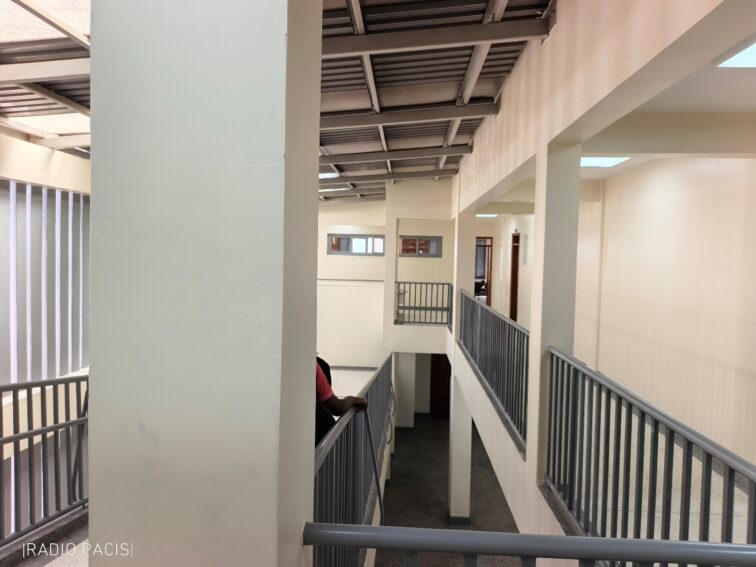
Section of the interior of the newly commissioned regional ambulance call and dispatch center at Arua RRH in Arua City.
The establishment of this center aligns closely with Uganda’s broader emergency medical services agenda and incorporates emerging global guidance that recognizes dispatch centers as critical components of effective emergency care systems.
Despite increased investment in ambulance resources, the absence of integrated communication infrastructure has limited the capacity to deliver timely emergency care. Evidence from international emergency systems confirms that ambulance fleets contribute little to improved health outcomes without a centralized dispatch mechanism capable of coordinating emergency calls, triaging cases, tracking ambulance availability, and directing patients to appropriate health facilities.
The new center, a pioneering establishment in Uganda, was conceived as a prototype to support regional emergency medical dispatch operations. This innovation replaces the previous decentralized system, where ambulances were stationed at various locations and dispatched manually by hospital in-charges when emergencies occurred.
The new centralized system will allow for more efficient deployment by dispatching the nearest available ambulance to the scene while alerting the receiving health facility to prepare for the patient’s arrival.
The facility’s design includes state-of-the-art communication and operational components intended to serve as a demonstration model for similar call and dispatch centers across Uganda. This will facilitate future scaling of integrated emergency communication systems nationwide.
Strategically, the center is positioned to serve a population of approximately four million people, coordinating the evacuation of around 15,000 emergency cases annually. It will manage a fleet of 19 ambulances and cover 13 districts, including one city within the West Nile region. By centralizing ambulance coordination, the center is expected to improve response times, enhance patient outcomes, and provide a critical pillar for Uganda’s emerging emergency care infrastructure.
In summary, the Arua Regional Referral Hospital’s ambulance call and dispatch center represents a significant advancement in Uganda’s emergency medical service delivery.
Supported by international partnership and funding, the facility introduces a modern, integrated approach to emergency response that promises to improve health outcomes across the West Nile region by minimizing delays in care, optimizing ambulance use, and fostering collaboration among health workers.
This initiative serves as a model for future regional dispatch centers, aligning with global standards and Uganda’s national health strategies to bolster emergency medical systems.
Ultimately, by combining investment in ambulance resources with advanced communication and dispatch infrastructure, Uganda is poised to strengthen its capacity to save lives in emergencies effectively.
Upcoming on 90.9 FM
Upcoming on 94.5 FM
Upcoming on 101.4 FM
Upcoming on 104.8 FM









Comments
This post currently has no comments.