
FOOD SECURITY: JICA COMMISSIONS RICE SEED STORAGE FACILITY IN RHINO CAMP REFUGEES SETTLEMENT CAMP
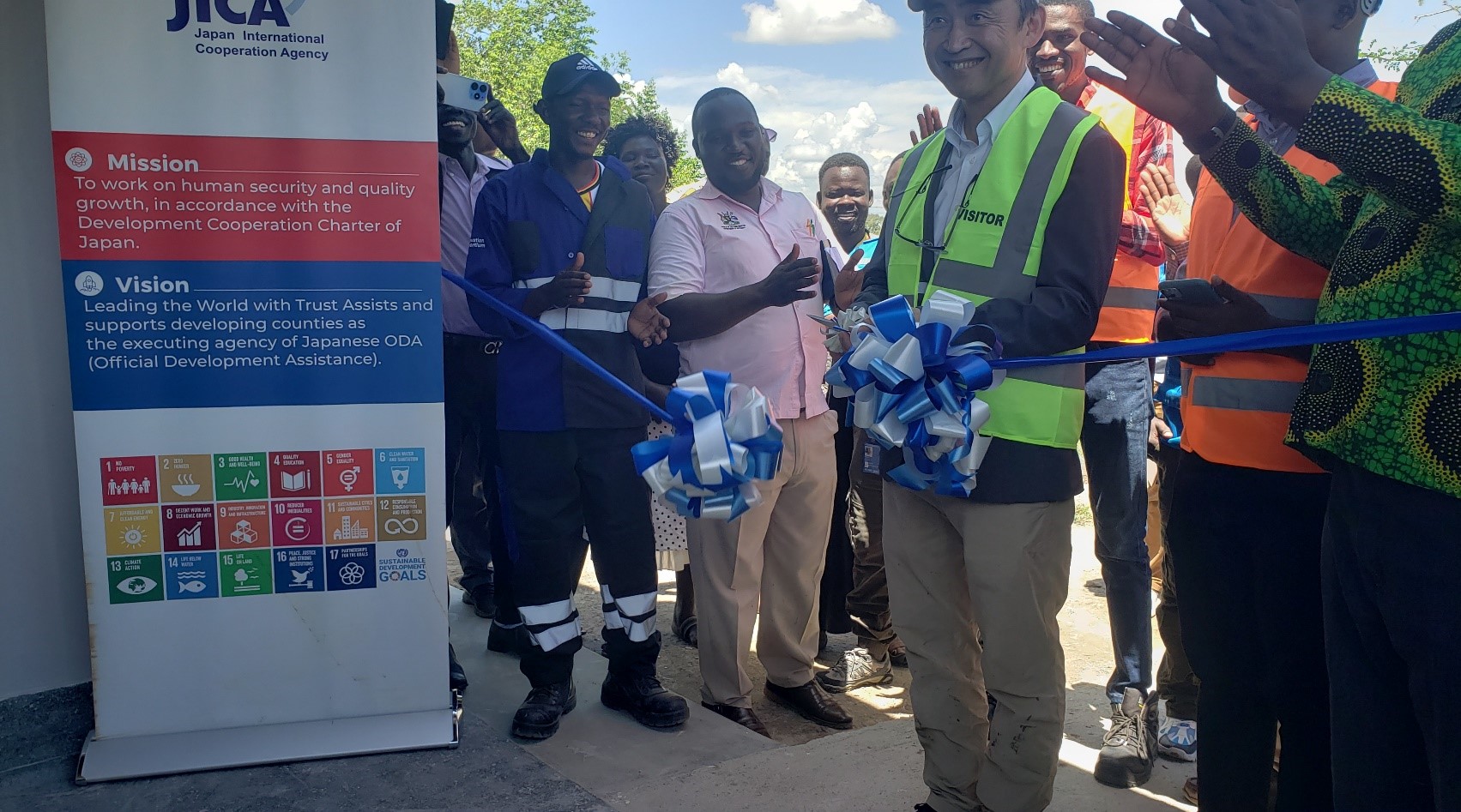
The Vice President of JICA Naoki Ando (centre), the Senior Settlement Commandant Kintu Khalid (Second Left) and other stakeholders cutting the ribbon during the commissioning of the New Rice Seed Storage Building at Rhino camp refugee settlement. Photo by Desire Alimocan
By Desire Alimocan
Madi-Okollo
In order to improve the livelihoods of the refugees in the settlement of Rhino camp, Japan International Cooperation Agency (JICA) commissioned a rice seed storage facility in Madi Okollo District on October 14, 2024.
The vice president of JICA, who graced the event, Naoki Ando, said that they are implementing a number of projects geared towards improving the livelihoods of both the refugees and host communities.
“Our approach in supporting refugees is not just humanitarian, humanitarian approach is really important but sustainability and self-resilience is really important. So, rice production and storage facility are important to make you sustainable, self-resilient, self-developing, and we are really happy to do this kind of job, so please make this a success,” Naoki said.
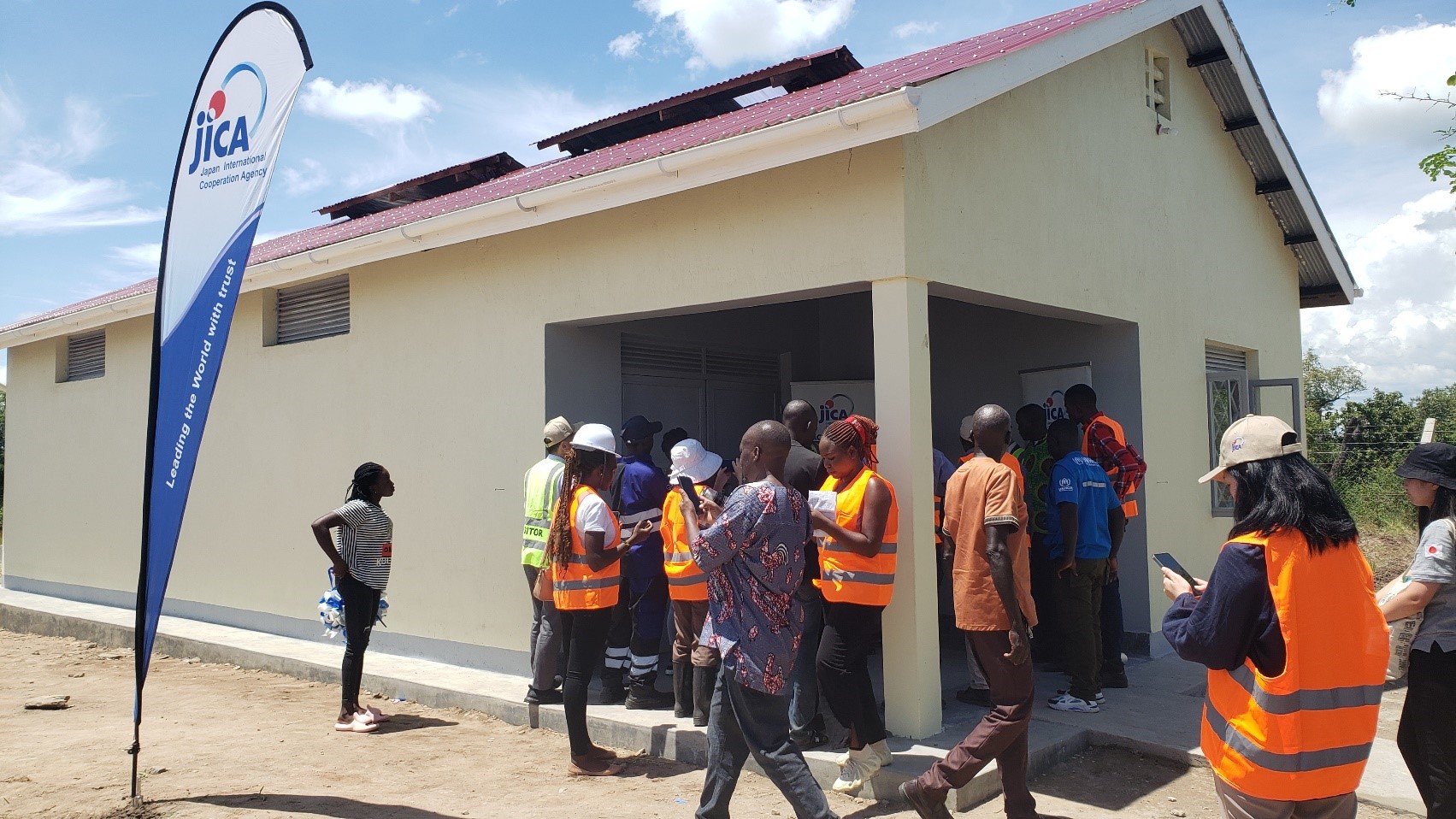
The stakeholders touring the newly commissioned Rice Seeds Storage facility.
photo by Desire Alimocan
The Senior Settlement Commandant, Kintu Khalid urged the partners to render more support to the farmers to increase production.
“The farmers in front of us have great potential in growing rice.
The team that went to the field today, I believe you were seeing vast land that has the potential for rice growing. It is not that the farmers fail to grow rice, they have the potential but the support is still needed. UNHCR (United Nations Human rights Commission for Refugees) has secured a tractor for them and we are continuing to look at partners who can give support to these farmers. The land lords are ready to give land, the farmers have the vigor to grow the rice but we are only cut down by the seasons,” Khalid explained.
%2C%20stakeholders%20in%20JICA%20and%20United%20Nations%20Human%20rights%20Commission%20for%20Refugees%2C%20and%20the%20rice%20farmers%20in%20one%20of%20the%20rice%20fields%20during%20the%20field%20inspection.%20Photo%20by%20Desire%20Alimocan.jpg)
Naoki Ando (third left), stakeholders in JICA and United Nations Human rights Commission
for Refugees, and the rice farmers in one of the rice fields during the field inspection.
Photo by Desire Alimocan
However, the community members requested for connections to the market for their rice as explained by the LC 3 Chairperson of Oribu Subcounty, Wilson Agelle as he represented the Chief Administrative Officer of Madi Okolo District.
“I think what we are remaining with is how we can connect these farmers to have available market because as we were in the field, this is one of the challenges I noticed, they have the rice and the market seems not to be there. I think as leaders we can bring our voice together to ensure that we have readily available market. I think this the beginning, having a store to store your rice here, I think as you wait for market.”
JICA has been collaborating with National Agriculture Research Organization to implement the ECO PRIDE project which aims at carrying out different activities in the settlement. It was under this project that the farmers were taught to plant rice and the storage facility built with a vision of producing 1.5 tons of rice seeds.
Upcoming on 90.9 FM
Upcoming on 94.5 FM
Upcoming on 101.4 FM
Upcoming on 104.8 FM















Comments
This post currently has no comments.