
GULU ARCHDIOCESE PRIESTS TRAINED IN PEACEBUILDING, RECONCILIATION
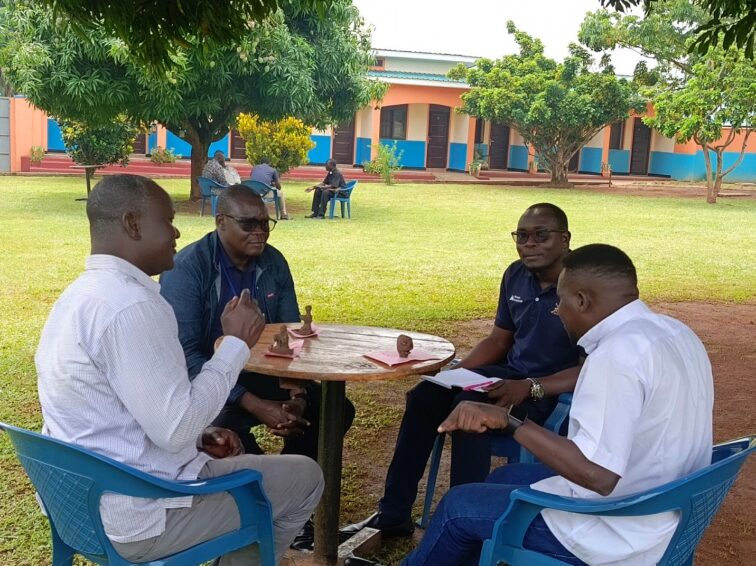
Gulu Archdiocese priests engage in a group activity during peacebuilding and trauma healing training in Gulu City.
By Proscovia Achomo
Gulu City
Priests of the Archdiocese of Gulu have undergone intensive training in Non-violence, Trauma Healing and Restorative Justice, aimed at strengthening their capacity to promote peace, reconciliation and healing within their communities.
The five-day training, organised by the Justice and Peace Commission of the Archdiocese of Gulu, took place from November 9 to 13, 2026, at Palms Garden in Gulu City.
The training brought together priests to deepen their understanding and practical skills in conflict resolution, trauma healing and restorative justice, equipping them to respond more effectively to community challenges and foster peaceful coexistence in their respective parishes.
According to David Oyet, Project Assistant, the programme was designed to reach priests from all 35 parishes of the Archdiocese of Gulu, with over 30 priests participating in the training.
Oyet emphasized that priests are often among the first people approached by individuals and families experiencing trauma, placing them in a critical position to provide pastoral guidance and support.
“Priests are at the forefront of addressing trauma in our communities. In many instances, people turn to them for guidance and support when dealing with traumatic experiences,” Oyet said.
He explained that the training was intended to strengthen the priests’ ability to recognize signs of trauma, understand the underlying causes of certain behaviors and identify appropriate ways of responding.
“We want to equip them with the knowledge and skills to assess and identify trauma, understand why someone may behave in a particular way and determine the most appropriate support. This will also help them recognize what they can address through spiritual and pastoral interventions and when professional assistance may be necessary,” he added.
Rev. Fr. Alfred Okumu, Parish Priest of Patongo Parish and Dean of Kalongo Deanery, reflected on the lasting effects of political insurgencies on communities in the region, noting that many people, including priests, continue to bear deep emotional and psychological wounds from years of conflict.
He observed that the effects of the insurgencies went beyond the loss of human life, with families losing loved ones, livestock and other sources of livelihood. He added that livestock theft and insecurity continue to affect some communities, prolonging the suffering of those who experienced the conflict.
“Many of us have lived through political insurgencies, and some of us are victims of the violence. We lost loved ones, family members and livestock, and even today, some of our communities continue to experience livestock theft. These experiences have left deep wounds within individuals and families, and healing remains an ongoing process that requires continuous counselling, mediation and support,” Fr. Okumu said.
He noted that priests regularly encounter parishioners seeking guidance and healing from deeply rooted personal and community challenges, some of which require considerable emotional investment and pastoral attention.
“As priests, many people come to us seeking healing and guidance, sometimes with very complex experiences. There are moments when, after counselling someone, you find yourself emotionally exhausted because of the weight of the issues they bring to you. It is not an easy responsibility, and that is precisely why this training is so important,” he explained.
Fr. Okumu said the training would strengthen priests’ capacity to respond to such challenges with greater understanding, practical skills and sensitivity, enabling them to become more effective agents of healing within their communities.
“Although we, too, carry our own wounds, we must not allow them to prevent us from supporting others. With the right knowledge, skills and support, we can turn our experiences into a source of strength and become instruments of healing and reconciliation for those who look to us for guidance,” he added.
Rev. Fr. James Okello, Parish Priest of Paicho Parish and Dean of Gulu Cathedral Deanery, said the training had profoundly broadened his understanding of trauma healing and reconciliation, particularly the need to recognize healing as a gradual process that requires patience, sensitivity and respect for individual experiences.
“The training has fundamentally changed my understanding of trauma and reconciliation. I have come to appreciate that healing is not an overnight process; it takes time, patience and understanding. We must allow people the space to heal rather than compel them to reconcile before they are emotionally ready,” Fr. Okello said.
He added that he intends to cascade the knowledge and practical skills acquired to members of the parish pastoral councils, equipping them to provide informed guidance and support to believers facing trauma and conflict.
“I intend to use the knowledge gained to strengthen the capacity of our pastoral council members by equipping them with practical skills and techniques to support the faithful. Our communities face numerous challenges, including land disputes, political disagreements and social conflicts, which require informed and constructive approaches to resolution,” he said.
Fr. Okello further emphasized that truth-telling remains central to addressing underlying tensions, rebuilding trust and achieving meaningful reconciliation.
“I believe that confronting the truth is one of the most important steps towards resolving conflict and restoring relationships,” he added.
Rev. Fr. Samuel Ocaya Moi, Pastoral Coordinator of the Archdiocese of Gulu and Parish Priest of Opit Parish, underscored the importance of strengthening the capacity of priests and other pastoral agents to respond to the growing need for trauma healing, conflict resolution and reconciliation within communities.
He noted that priests occupy a strategic position in accompanying individuals and families through difficult experiences, making it essential for them to possess the knowledge and practical skills required to address trauma and promote lasting healing.
Fr. Ocaya emphasized that the training would strengthen the Church’s pastoral response by equipping priests to offer more effective support, nurture reconciliation and help communities rebuild relationships affected by conflict and division.
He further encouraged priests to translate the knowledge acquired into practical action within their respective parishes, extending the skills to other Church leaders and pastoral structures to ensure that peacebuilding and reconciliation become a shared responsibility.
The training forms part of a broader three-year capacity-building programme that commenced in 2026 and is expected to run until 2028.
The programme has also benefited catechists and religious sisters, recognizing their important role in pastoral ministry, community engagement and promoting peaceful coexistence.
The initiative is being implemented with support from the Maryknoll Missionaries and St. Claude.
Comments
This post currently has no comments.