
GULU HEALTH CAMP EXPOSES GROWING EYE PROBLEMS AS SPECIALIST WARNS OF RISING TREATMENT GAPS
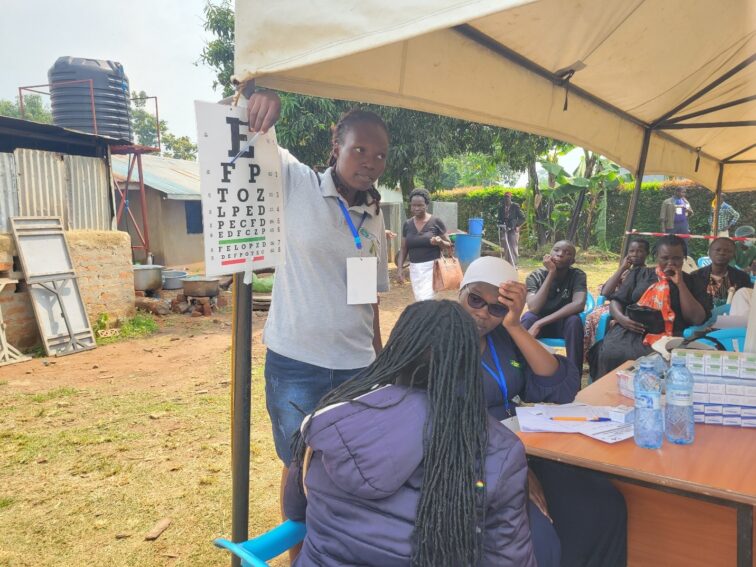
Medical team from Victory Medical Centre administering help to patients
By Biko Rombe
Gulu City
Eye health challenges, delayed treatment and the high cost of specialised care have emerged as major concerns following a free eye screening exercise conducted during PACTA Uganda’s Integrated Mental Health and Addiction Camp at its For God Centre in Gulu City on Thursday 12th November 2026.
Dr Sam, an eye specialist at Victory Eye Care and Optics, who partnered with Victory Medical Centre during the November 12 camp, said many people in Northern Uganda continue to live with untreated eye conditions because they cannot afford consultations, medication, corrective glasses and surgery.
The team examined 105 people, including 72 females and 33 males, with most of the common conditions observed among older people being cataracts and presbyopia.
Drawing from his more than five years of experience serving communities in Northern Uganda, Dr Sam said free medical outreaches consistently attract large numbers because many people postpone seeking treatment until an opportunity to receive free services becomes available.
He expressed concern that some patients repeatedly attend medical camps without completing treatment because they cannot afford prescribed medication or specialized procedures.
“Some people are always moving from one camp to another, hoping that they will get medication, treatment, glasses or surgery, which is a little bit hard because our department is quite costly,” he explained.
He warned that delayed treatment can result in worsening conditions and permanent loss of sight, sharing two recent cases of patients who had completely lost their eyes after failing to access appropriate medication.
Among the people who benefited from the screening was Judith Acan, who shared her experience of struggling with an eye problem despite making approximately four visits to the regional referral hospital.
Acan said that during her repeated visits, she had not received a clear explanation of the condition affecting her eyes. However, at the PACTA Uganda camp, she was assessed, informed about what she was suffering from and given medication.
Her experience highlighted the importance of accessible eye examinations and proper diagnosis, particularly for people who have struggled to obtain answers and treatment through previous hospital visits.
Dr Sam said cataracts and presbyopia were particularly common among people above 40 years. While cataracts can be managed through appropriate treatment and surgery, presbyopia affects near vision, making ordinary activities such as reading, sewing and sorting food difficult.
He also raised concern about eye complaints among young people, which he associated with prolonged exposure to smartphones, computers and other digital screens. Symptoms include itching, redness, excessive tearing and sensitivity to light.
He advised people who spend long hours on digital devices to practise the 20-20-20 rule, taking a break every 20 minutes to look at an object about 20 feet away for 20 seconds. He also cautioned against purchasing corrective glasses without first undergoing a professional eye examination.
The specialist appreciated Abacus Pharmaceuticals for donating eye medication that enabled the team to provide free treatment to beneficiaries. More than 80 people went home with medication, although those requiring surgery and corrective glasses could not all be assisted during the exercise.
The screening was part of the wider Integrated Mental Health and Addiction Camp organised by PACTA Uganda, which brought together several health service providers to offer free medical assessments, screening and support to the community.
Dr Ivan Fabio Olal, Medical Officer at PACTA Uganda, said the camp had achieved its target, with more than 500 people accessing different services.
The exercise highlighted the need for stronger partnerships to ensure that people identified with eye conditions during community screenings can access not only diagnosis but also the medication, glasses and surgical procedures required to protect their sight.

Comments
This post currently has no comments.