
HOW CARITAS NEBBI CATHOLIC DIOCESE CHAMPIONED ORGANIC FARMING AMONG 750 FARMERS
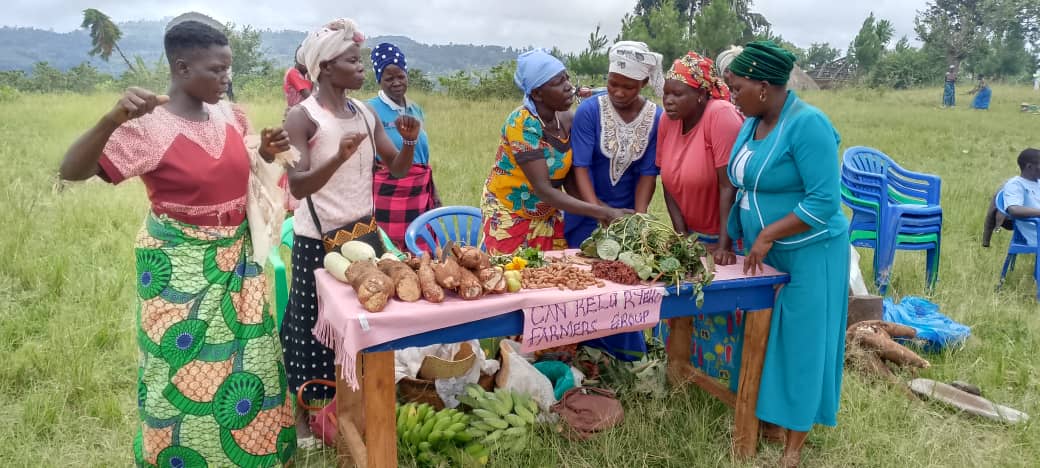
Farmers display some of the products realized out of their organic farming during exhibition day at Erussi Sub-County headquarters on Oct 2, 2024. Photo by Mike Rwothomio.
By Mike Rwothomio
Zombo
At least 750 farmers under different farmer groups from the Sub- counties of Dhew and Erussi in Nebbi District, have recounted success stories from Caritas Nebbi Catholic Diocese food and economic security project.
Through training in Agroecology which is the application of ecological concepts and principals in farming, Caritas empowered farmers and communities to adapt agricultural techniques to suit the local area – and its specific social, environmental and economic conditions.
The three year project dubbed " food and economic security project ", funded by organization Bread for the world Germany, majored on training of farmers on Agroecology , organic farming and climate smart agriculture in response to climate change impact.
Moreen Wilembe, the field officer for the project in Erussi Sub County, encouraged the farmers, to extend the knowledge and skills attained through the years to other farmers outside the groups.
"We have 750 farmers in Dhew and Erussi Sub-Counties. These farmers went through a lot of trainings on Agroecology and organic farming, if you visit them, you can also see the visible changes on the ground" Wilembe noted in an interview with RadioPacis on Wednesday October 2, 2024.
She added that, "My advice to these farmers, if the project is ending like in this year 2024, let it not end with you, you continue with the project through trainings of other farmers in the community wherever you are."
The church project models how the transition to a food and farming model can reduce climate impacts, and feed a growing population with a healthy diet.
As part of the project component, a two- day mega exhibition and training on Agroecology and organic farming was held in Dhew and Erussi Sub-counties headquarters on Oct 1 and 2nd respectively.
Farmers from over 20 groups exhibited varieties of crops like maize, beans, sim sim, and groundnuts amongst others and also received training on Agroecology.
Under this project that is coming to an end this year, a sizable number of rural Farmers were taken for exposure visits to notable places like Masaka in Central Uganda, Adra in Madi-Okolo District and Shida Na Kazi Farm in Zombo amongst other places.
This enabled farmers to interact with those from other regions and learn from each other, allowing them to view practical examples of successful integration of sustainable practices in farming communities.
Ronald Okweda, the agriculture officer for Dhew Sub County, admitted that, "there is improvement in coffee production in the area due to effective training by Caritas".
Farmers recount success stories
Cikawun Sakina From Pajur Parish, Erussi Sub-County said, "Ever since Caritas came here in 2022, we were able to go to Masaka and Adra to learn good farming practices, this has increased production and am able to pay all my four children in different schools."
Bill Clinton Mangala, from Dikiri Ene Tegu group in Padolo Parish said "we used to spray our crops anyhow but Caritas came in and trained us on how to use our indigenous leaves as pesticides. They also trained us on how to control soil erosion that is common in this hilly area."
Yahaya wod Nyapadolo from Pacaka Parish under Thwolo Cwiny group noted that, "they came in and donated indigenous and nutritious Irish potatoes breeds. We realized much sales from the varieties which we are still using."
The organization championed sustainable farming that works with nature, which is a truly sustainable alternative at local and Global stage according to local extension workers.
Stella Amony, the field officer for the project in Dhew Sub-County in an earlier interview with this Publication observed that, “we still have people who have poor farming practices like bush burning, clearing bushes and massive cutting of trees to create expansive space for farming, blocking channels in valleys which is not environment- friendly."
Organic agriculture under its principles sustain and enhance the health of the soil, plants, animals, humans and planet as one and indivisible.
It's based on living ecological systems and cycles, build on relationships that ensure fairness with regard to the common environment and life opportunities and in a precautionary and responsible manner protect the health and well-being of current and future generations and the environment.
As the impactful "food and economic security project" come to an end this year, many farmers in an exclusive interview with this Publication requested for the extension of the project, that they say has brought a visible transformation in their life.
Upcoming on 90.9 FM
Upcoming on 94.5 FM
Upcoming on 101.4 FM
Upcoming on 104.8 FM















Comments
This post currently has no comments.